

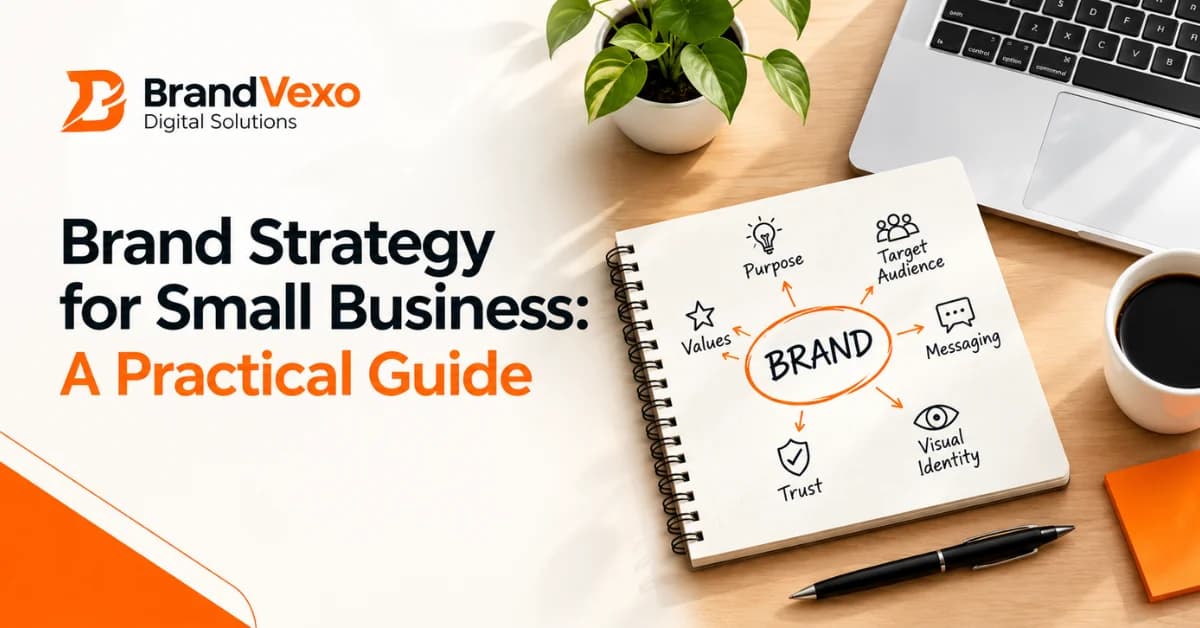
Brand Strategy for Small Business: A Practical Guide
A strong brand is not simply a logo, color palette, or catchy tagline. For a small business, branding works best when every part of the customer experience communicates a clear and consistent idea about who the business is, who it serves, and why customers should choose it. A well-planned Brand Strategy for Small Business gives those decisions direction. It connects your target audience, business values, positioning, messaging, visual identity, and customer experience into one practical system.
Whether you run a service business, online store, consultancy, restaurant, or growing startup, a clear strategy can help you avoid inconsistent messaging and make your marketing more focused.
What Is Brand Strategy for Small Business?
A brand strategy is a plan that defines how a business wants to be understood by its target audience and how it will communicate that position consistently.
Unlike a logo or visual identity, brand strategy focuses on the thinking behind the brand.
It answers important questions such as:
Who are we trying to reach?
What problem do we solve?
What makes our business different?
What should customers associate with our brand?
How should we communicate?
What experience should customers expect?
For example, imagine a small accounting firm that wants to attract startups. Instead of presenting itself as a general accounting provider, it could position itself around simple financial guidance for growing businesses.
That positioning can then influence its website copy, social media content, service packages, visual identity, and customer communication.
Why Small Business Branding Needs a Clear Strategy
Small business branding becomes more effective when the business knows what it wants to communicate before creating marketing materials. Without a strategy, a business may use one message on its website, another on social media, and a completely different tone in advertisements.
Builds Brand Recognition
Consistent branding helps customers recognize a business across different channels. Your website, social media profiles, advertisements, emails, and other customer touchpoints should feel connected rather than like separate brands.
Creates Customer Trust
Customers often form impressions from repeated interactions. Clear messaging, consistent visuals, and reliable customer experiences can make a business easier to understand and remember.
Helps You Stand Out
Small businesses do not always need to compete by offering the lowest price. A clearly defined specialty, customer experience, expertise, or approach can give customers a reason to consider one business over another.
Build Your Brand Foundation Before Designing Anything
Your brand foundation provides the strategic base for everything that follows. Many businesses start with colors, fonts, and logos. Those elements matter, but they should support the brand rather than define it.
Define Your Brand Purpose
Start by identifying why your business exists beyond simply making sales.
Ask:
What problem does the business solve?
Who benefits from the solution?
What value do you want to create?
What should customers remember about your business?
A clear purpose can help guide marketing decisions when the business expands into new products, services, or markets.
Identify Your Ideal Customer
A useful brand strategy starts with a specific understanding of the audience.
Consider:
Their main problems
Their goals
Their buying concerns
Their expectations
Their preferred communication style
What influences their purchasing decision
For example, a premium home cleaning company may target busy professionals who value reliability and convenience more than the lowest possible price.
That insight should influence both the brand message and customer experience.
Define Your Brand Values
Choose a small number of meaningful values that can guide business decisions.
These might include:
Reliability
Simplicity
Innovation
Transparency
Quality
Accessibility
The goal is not to list impressive words. Your values should reflect how the business actually operates.
Establish Your Brand Personality
Your brand personality determines how your business sounds and behaves. A financial technology company may want to sound clear, modern, and confident. A family-focused food business may use a warmer and more conversational style. The personality should remain recognizable across customer interactions.
How to Create a Strong Brand Positioning Strategy
Brand positioning explains how you want customers to understand your business compared with alternatives in the market. Strong positioning does not mean claiming that your business is the best at everything. It means making your most relevant difference clear.
Identify Your Competitive Difference
Look beyond generic claims such as “high quality” or “excellent service.”
Consider whether your business stands out through:
A specific specialization
Faster service
A unique process
Deep industry expertise
Personal service
Convenience
Product quality
A particular customer segment
For example, instead of saying, “We provide digital marketing services,” a small agency could focus on helping professional service businesses generate qualified leads through search and content.
The second statement gives the audience a clearer reason to understand the business.
Define Your Target Market
Trying to speak to everyone often produces generic marketing. A stronger approach is to identify the audience most likely to value your offer. Your target market could be based on factors such as industry, business size, location, customer needs, purchasing behavior, or level of expertise.
Create a Simple Positioning Statement
A practical positioning formula is:
For [target audience], [brand] is the [category] that [key benefit] because [reason to believe].
For example:
“For growing service businesses, Brand X is a digital marketing partner that helps turn online visibility into qualified opportunities through focused SEO and content strategies.”
This statement does not need to appear publicly word for word. It acts as an internal guide for marketing decisions.
Develop Your Brand Messaging
Once your positioning is clear, turn it into messaging customers can understand quickly.
Create a Clear Brand Promise
Your brand promise should communicate what customers can reasonably expect from your business. Avoid promises that sound impressive but are difficult to prove. A good promise connects directly to the experience your business can consistently deliver.
Define Your Key Messages
Create three to five core messages that appear repeatedly across your marketing.
These can focus on:
The customer's problem
Your solution
Your main benefit
Your difference
The result customers can expect
These messages can then support website pages, social media posts, advertisements, sales materials, and email campaigns.
Use a Consistent Brand Voice
Your brand voice should make communication recognizable.
For example, a business may choose a voice that is:
Clear rather than complicated
Helpful rather than aggressive
Professional rather than overly formal
Confident rather than exaggerated
Consistency matters more than trying to sound impressive.
Turn Your Brand Strategy Into a Visual Identity
Once the strategic foundation is clear, translate it into visual branding.
Your visual identity can include:
Logo
Color palette
Typography
Photography style
Graphic elements
Website design
Social media templates
The visual system should reinforce your positioning.
For example, a premium consulting business may use a restrained visual system and professional photography, while a youth-focused creative brand may use more expressive graphics.
Create Simple Brand Guidelines
Small businesses do not necessarily need a large brand manual.
A practical brand guide can document:
Logo usage
Brand colors
Fonts
Image style
Writing tone
Core messages
Social media design
Examples of correct and incorrect usage
This makes it easier for employees, freelancers, and marketing partners to maintain consistency.
Apply Your Brand Strategy Across Every Customer Touchpoint
A brand is experienced through more than advertising.
Apply your strategy consistently across:
Website
Social media
Email marketing
Paid advertising
Google Business Profile
Sales presentations
Customer support
Packaging
Proposals and invoices
For example, if your positioning is built around simplicity, your website should not overwhelm visitors with complicated language. Your sales process and customer support should reflect the same principle.
This is where strategy becomes part of the actual customer experience.
Common Brand Strategy Mistakes Small Businesses Make
Avoid these common problems when developing your strategy:
Starting with the logo: Visual design should support strategy, not replace it.
Trying to appeal to everyone: A broad audience can lead to generic messaging.
Copying competitors: Similar branding makes differentiation harder.
Changing the brand voice constantly: Customers need recognizable communication.
Focusing only on visuals: Strong branding also depends on positioning, messaging, and experience.
Making vague promises: Specific benefits are easier for customers to understand.
Ignoring customer feedback: Customer perceptions can reveal gaps between intended and actual positioning.
Using inconsistent messages: Different platforms should support the same core brand idea.
How to Build a Brand Strategy With a Small Budget
You do not need a large branding budget to establish a strong foundation.
Start with the elements that influence your marketing most:
Define your target audience.
Clarify the problem you solve.
Identify your competitive difference.
Create a positioning statement.
Establish your core messages.
Define your brand voice.
Create a simple visual identity.
Document basic brand guidelines.
Apply them consistently.
A smaller business can improve its branding gradually rather than attempting a complete rebrand all at once.
How to Measure Whether Your Brand Strategy Is Working
Brand performance should not depend on one metric.
Instead, monitor several indicators over time, such as:
Brand recognition
Branded search activity
Direct website traffic
Quality of customer inquiries
Engagement from the target audience
Conversion rates
Repeat customers
Referrals
Customer feedback
The right metrics depend on the business model.
For example, a local service business may pay closer attention to qualified inquiries and repeat customers, while an ecommerce company may monitor branded searches, returning customers, and conversion behavior.
The purpose of measurement is to identify what is working and where the strategy needs refinement.
Brand Strategy for Small Business: A Practical Checklist
Use this checklist to review your current brand strategy:
Define your brand purpose
Identify your ideal customer
Establish your brand values
Define your brand personality
Identify your competitive difference
Create your positioning statement
Develop your brand promise
Define three to five core messages
Establish your brand voice
Create your visual identity
Document basic brand guidelines
Apply the strategy across customer touchpoints
Measure results and customer feedback
Refine the strategy as the business evolves
How BrandVexo Digital Solutions Can Help With Brand Strategy
A clear strategy becomes more valuable when it connects with the rest of your digital presence. BrandVexo Digital Solutions helps businesses build practical digital growth systems across branding, digital marketing, SEO, web development, AI automation, and business solutions. Our approach focuses on creating clear brand foundations, consistent messaging, useful digital experiences, and marketing systems that support real business objectives.
If your business needs help turning its brand strategy into a stronger digital presence, you can contact BrandVexo at +971 52 356 5409, info@brandvexo.com, or www.brandvexo.com.
Frequently Asked Questions
What is brand strategy for a small business?
A brand strategy is a framework that defines how a business presents itself, communicates with its target audience, differentiates itself, and creates a consistent customer experience.
What are the key elements of a small business brand strategy?
The main elements include brand purpose, target audience, values, personality, positioning, messaging, visual identity, brand voice, and customer experience.
How much does a brand strategy cost for a small business?
The cost varies depending on the business's needs and whether the work is handled internally, by a freelancer, or by a professional agency. A business can begin with a focused strategic foundation before investing in more extensive branding work.
What is the difference between brand strategy and brand identity?
Brand strategy defines the direction and positioning of the brand. Brand identity is the visual and verbal system used to express that strategy, including elements such as logos, colors, typography, imagery, and messaging.
How long does it take to build a brand strategy?
A basic strategy can be developed in a relatively short period when the business already understands its audience and market. However, effective branding continues to evolve as the business gathers customer feedback and enters new markets.
Can a small business create its own brand strategy?
Yes. A business owner can establish a basic strategy by defining the target audience, purpose, positioning, messaging, and brand identity. Professional support can become useful when the business needs deeper research, repositioning, or a more coordinated marketing system.
Final Thoughts
A strong Brand Strategy for Small Business does not start with a logo. It starts with understanding your audience, defining your value, establishing your positioning, and deciding how you want customers to experience your business. From there, your messaging and visual identity can support the same strategic direction across your website, social media, advertising, and customer interactions.
For a small business, the goal is not to create the biggest brand. It is to create a clear, recognizable, and consistent brand that makes sense to the people you want to reach.
Disclaimer: This article provides general information about brand strategy and small business branding and is intended for educational purposes only. Branding needs vary by business, audience, industry, and market, so consider your specific goals before applying any strategy.
Free growth plan
Ready to grow your business?
Reading is a start — now let's build it. Tell us where you want to grow and a senior strategist will map the fastest, most profitable way to get there. Free, no obligation.
Discussion
Join the conversation
Be the first to comment. Comments are reviewed before they appear, so yours won't show up instantly — but we read every one.
Leave a comment
Keep reading
All articles Branding
Brand Positioning: How to Stand Out in a Crowded Market
Learn how brand positioning helps businesses stand out, build brand differentiation, define a clear value proposition, and create a focused positioning strategy.
 Branding
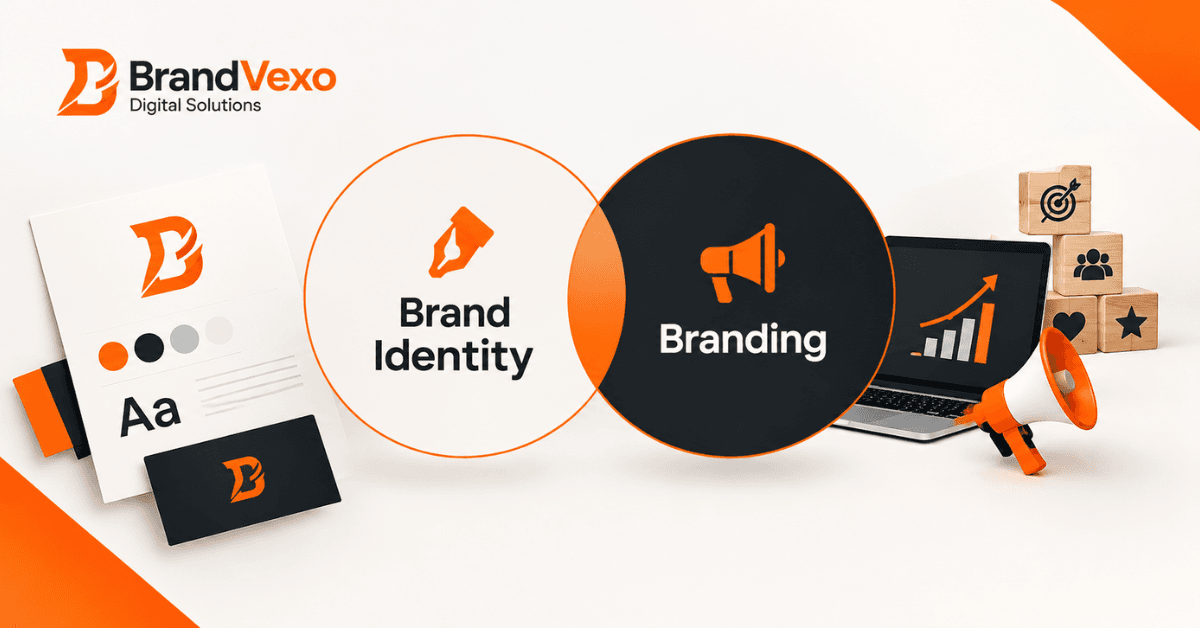
Brand Identity vs Branding: What's the Difference?
Brand Identity vs Branding explained clearly, including visual identity, logo vs brand, brand systems, and practical steps for building a consistent brand.
 Branding
One brand, said the same way, everywhere.
Consistency is what makes a small brand look inevitable. Why a brand is a system — not a logo — and how that system earns a premium.