

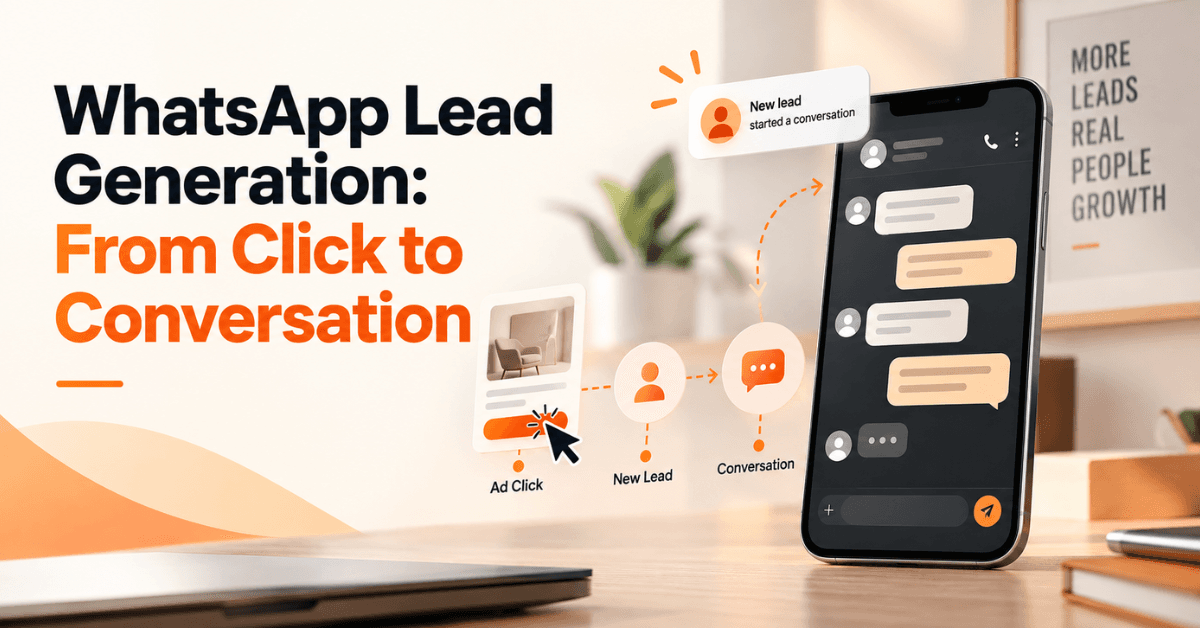
WhatsApp Lead Generation: From Click to Conversation
A person clicking a WhatsApp button is not automatically a sales lead. The real opportunity begins when that click turns into a useful conversation. WhatsApp Lead Generation connects advertising, social media, websites, and other digital touchpoints with direct customer conversations, giving businesses a faster way to understand what a prospect needs and guide them toward the next step.
Meta supports ads that click directly to WhatsApp from Facebook and Instagram, allowing businesses to move users from discovery into a chat without sending them through a long contact form or separate landing-page process.
But generating conversations is only one part of the process. A strong strategy also needs lead qualification, fast responses, relevant follow-up, and conversion tracking.
The journey can be simple:
Click → Conversation → Qualification → Follow-Up → Conversion
What Is WhatsApp Lead Generation?
WhatsApp Lead Generation is the process of using WhatsApp to attract potential customers, start conversations, understand their needs, and move qualified prospects toward a business goal. That goal could be a consultation, appointment, quote request, product purchase, demo, or another meaningful action. The important distinction is between a WhatsApp conversation and a qualified WhatsApp lead. Someone who clicks an ad and sends “Hi” has shown some interest, but the business still needs to understand their intent.
A stronger lead might explain what service they need, ask about pricing, provide contact details, request an appointment, or indicate when they plan to buy.
WhatsApp itself describes a high-quality lead as someone who engages with real intent rather than simply opening a chat.
How the WhatsApp Lead Journey Works
A practical WhatsApp lead journey can follow six stages:
Traffic: A prospect sees an ad, search result, social post, website CTA, or other digital touchpoint.
Click: The prospect chooses a WhatsApp CTA.
Conversation: WhatsApp opens with the business chat.
Qualification: The business identifies the prospect's needs, timeline, and buying intent.
Follow-up: The business provides information and guides the prospect toward a decision.
Conversion: The prospect books, buys, requests a quote, or takes another desired action.
This approach shifts the focus from simply generating clicks to creating conversations that have business value.
How Click to WhatsApp Campaigns Generate Leads
Click to WhatsApp campaigns reduce the distance between an advertisement and a conversation. Instead of asking a prospect to remember a phone number, complete a long form, or search for a contact page, the ad can open a WhatsApp chat directly. Meta's current WhatsApp business resources show that businesses can create ads through Ads Manager with WhatsApp selected as the messaging destination. These ads can support lead generation, sales, and other marketing objectives.
Where to Use a Click to WhatsApp CTA
Businesses can use WhatsApp as a direct response channel across several digital touchpoints:
Facebook and Instagram advertising
Website service pages
Landing pages
Social media profiles
Product pages
Promotional campaigns
QR codes
Existing customer touchpoints
WhatsApp Business also supports native entry points such as website buttons and QR codes, making it easier for people to start conversations.
What Makes a WhatsApp CTA More Effective?
The CTA should tell people what happens after they click.
Instead of a vague:
“Contact Us”
a more specific CTA could be:
“Message us for a free consultation”
or:
“Chat with us to request a quote.”
The message should match the user's intent. If an advertisement promotes a consultation, the WhatsApp conversation should continue that same topic rather than suddenly asking unrelated questions.
This consistency reduces friction and makes the conversation feel like a natural continuation of the customer's journey.
How to Turn WhatsApp Leads Into Qualified Prospects
Getting WhatsApp leads is only useful when a business can identify which conversations represent genuine opportunities. Not every person who starts a conversation will become a customer. Some may be researching, comparing providers, asking a general question, or simply exploring an offer.
The goal is therefore not to force every conversation toward a sale. The goal is to understand intent quickly and provide the right next step.
Ask the Right Questions
Qualification questions should be short and relevant.
For example, a digital marketing agency might ask:
What service are you interested in?
What type of business do you operate?
What are you trying to achieve?
When would you like to start?
Would you like a consultation or proposal?
Avoid turning the first interaction into a long questionnaire.
Meta's lead-generation guidance recommends starting with easy qualifying questions and setting clear expectations about what happens next.
Separate New Enquiries From Sales-Ready Leads
A simple lead classification system can help a sales team manage conversations:
New enquiry: The person has just started a conversation.
Qualified lead: The person has a relevant need and shows buying intent.
Follow-up required: The prospect needs more information or time.
Not ready: The person is interested but has no immediate buying intent.
Converted: The person has completed the desired action.
This structure prevents sales teams from treating every WhatsApp message as having the same value.
Building a WhatsApp Sales Funnel From Click to Conversion
A WhatsApp sales funnel is a customer journey that uses conversation as a central part of the sales process. Instead of moving prospects through only web pages and forms, the business uses WhatsApp to answer questions, qualify needs, provide information, and guide prospects toward conversion.
Stage 1 — Attract the Right Traffic
The process starts before the WhatsApp conversation. Your advertisement, social post, search campaign, or landing page should target people who have a genuine connection with your offer. For example, a business selling accounting services should avoid creating a broad message that attracts anyone interested in “business.” A more specific message could target business owners looking for accounting support.
The better the targeting, the more relevant the conversations are likely to become.
Stage 2 — Start the Conversation
Once someone clicks, the opening interaction should make the next step obvious. A pre-filled message can help establish context.
For example:
“Hi, I’m interested in your SEO services and would like to discuss my website.”
The sales team immediately knows why the person has contacted them.
Stage 3 — Qualify the Lead
Next, identify the customer's actual requirement.
You might ask about:
Service requirement
Business type
Project scope
Timeline
Budget, where appropriate
The questions should help the customer move forward rather than make the conversation feel like an interrogation.
Stage 4 — Follow Up
A conversation should not end simply because the prospect did not buy immediately.
Some prospects need:
More information
A proposal
A product demonstration
Internal approval
Time to compare options
An appointment
Relevant follow-up keeps the opportunity active without overwhelming the customer.
Stage 5 — Convert and Retain
The final step could be:
Booking an appointment
Purchasing a product
Accepting a proposal
Starting a service
Requesting a demo
WhatsApp can also support post-purchase communication and customer care. Meta describes WhatsApp Business as a channel that can support multiple stages of the customer journey, including pre-purchase, purchase, and post-purchase interactions.
WhatsApp Lead Generation Strategies That Improve Conversion
A good WhatsApp Lead Generation strategy is not about sending more messages. It is about creating a better path from initial interest to meaningful action.
Use Intent-Based WhatsApp Messages
A generic “Hello” provides little context.
A more useful opening message can communicate intent:
“Hi, I’d like to get a quote for your website development service.”
This gives the business an immediate starting point.
Match the Ad With the Conversation
Suppose an ad says:
“Book a free website consultation.”
The WhatsApp experience should continue that promise.
The opening message could be:
“Hi, I’d like to book a website consultation.”
The person should not have to explain from scratch why they contacted the business.
Respond While the Lead Is Engaged
A delayed response can create a poor customer experience, particularly when the prospect is actively comparing options.
Businesses can use greeting messages, quick replies, routing, and other tools to acknowledge new conversations and organize responses. WhatsApp Business Platform also supports interactive messaging and automation features for businesses that need more structured conversations.
Give the Lead a Clear Next Step
Avoid ending with:
“Let us know if you need anything else.”
Instead, guide the person toward an action:
“Would you like to book a consultation?”
“Can I prepare a quote based on these requirements?”
“Would you like to see the available packages?”
“Which appointment time works for you?”
A clear next step makes the conversation easier to continue.
How to Automate WhatsApp Lead Follow-Up Without Losing the Human Touch
Automation can make WhatsApp lead management more efficient, but it should not turn every customer interaction into a robotic sequence.
The WhatsApp Business Platform supports automated messaging, interactive messages, media, product information, and other business communication features.
What to Automate
Businesses can automate repetitive tasks such as:
Initial acknowledgements
Basic FAQs
Lead categorization
Appointment requests
Common information
Lead routing
Follow-up reminders
For eligible businesses in selected markets, Meta also offers an AI Business Agent designed to respond to customers, gather information, answer questions, and escalate situations that require human attention.
What Should Stay Human
Human involvement remains valuable for:
Complex requirements
Pricing discussions
High-value prospects
Complaints
Negotiations
Customized recommendations
Final sales conversations
The goal is not to automate everything. The goal is to automate repetitive work while giving people more time for conversations that require judgment and personalization.
Common WhatsApp Lead Generation Mistakes
Several problems can reduce the value of a WhatsApp campaign even when the ads receive plenty of clicks.
1. Sending Traffic Without a Clear Reason to Message
A WhatsApp button alone does not create a compelling offer. Tell users why they should start a conversation.
2. Treating Every Conversation as a Qualified Lead
A conversation is an opportunity, not necessarily a sales-ready prospect. Qualification helps separate genuine demand from casual enquiries.
3. Taking Too Long to Respond
If people receive no useful response, they may move on before the business understands their needs.
4. Asking Too Many Questions
A long form inside a chat can recreate the same friction businesses were trying to remove. Start with the most useful questions.
5. Using Generic Copy-Paste Replies
Templates can save time, but excessive repetition can make conversations feel impersonal.
6. Measuring Clicks Instead of Outcomes
A campaign can generate thousands of clicks without producing meaningful business results. Track what happens after the click.
7. Having No Follow-Up Process
Some prospects need time. Without a structured follow-up process, valuable conversations can disappear.
8. Over-Automating the Experience
Automation should make conversations easier, not make customers work harder to reach a person. WhatsApp has also emphasized customer control over business messaging, including opt-in choices, message feedback, and controls around business communications.
How to Measure WhatsApp Lead Generation Performance
The right metrics depend on the business goal, but a useful measurement framework should follow the customer journey.
Track:
WhatsApp clicks
Conversations started
Qualified WhatsApp leads
Response time
Appointments booked
Quotes requested
Lead-to-customer conversion rate
Cost per WhatsApp lead
Cost per qualified lead
Revenue generated
Don't Measure Clicks Alone
Think of the funnel as:
Click → Conversation → Qualified Lead → Customer
Each stage answers a different question.
If clicks are high but conversations are low, the messaging or user experience may need attention. If conversations are high but qualified leads are low, targeting or qualification may be the issue. If qualified leads are high but conversions are low, the problem may sit further down the sales process.
This approach creates a more useful picture than judging a campaign by click volume alone.
Meta currently provides optimization options for eligible ads that click to WhatsApp, including optimization for leads and purchases rather than only conversations. Meta reports that, in one cited experiment involving 116,000 campaigns across 43,000 businesses during November 4–10, 2024, campaigns optimized for leads had an average 24% lower cost per lead than campaigns optimized for conversations. This is a Meta-reported experiment, not a guarantee for individual campaigns.
WhatsApp Lead Generation Example for a Service Business
Consider a digital agency promoting a free website consultation.
The campaign could follow this path:
Ad → Click to WhatsApp → Pre-filled message → Qualification → Consultation booking → Follow-up → Client
The advertisement attracts business owners interested in improving their website.
When someone clicks, WhatsApp opens with a message such as:
“Hi, I’d like to discuss improving my business website.”
The agency then asks a few relevant questions about the website, business goals, and timeline.
If the prospect is a good fit, the team offers a consultation. After the consultation, the agency can send the proposal and continue relevant follow-up through the appropriate messaging process.
The important point is that the WhatsApp click starts the journey. The qualification and follow-up process creates the opportunity for conversion.
Best Practices for a Sustainable WhatsApp Lead Generation Strategy
Use this checklist when building or reviewing a campaign:
Define your ideal customer before launching ads.
Give people a clear reason to start a WhatsApp conversation.
Match your advertisement with the opening chat experience.
Keep initial qualification simple.
Respond quickly and consistently.
Personalize conversations where possible.
Use automation for repetitive tasks.
Escalate complex conversations to people.
Track qualified leads instead of clicks alone.
Connect lead data with your CRM or reporting process where appropriate.
Review conversion data and improve the funnel over time.
A scalable WhatsApp strategy should make the customer journey easier, not simply increase the number of incoming messages.
About BrandVexo Digital Solutions
BrandVexo Digital Solutions helps businesses build practical digital growth systems across digital marketing, SEO, web development, AI automation, and business solutions. Our approach focuses on connecting digital activity with meaningful business outcomes rather than chasing vanity metrics.
If your business is generating WhatsApp conversations but struggling to turn them into qualified opportunities, a clearer funnel, better messaging, and structured follow-up can help identify where the process needs improvement.
Phone: +971 52 356 5409
Email: info@brandvexo.com
Website: www.brandvexo.com
Frequently Asked Questions
What is WhatsApp Lead Generation?
WhatsApp Lead Generation is the process of attracting potential customers to WhatsApp, starting conversations, qualifying their needs, and guiding relevant prospects toward a business goal such as a booking, quote, or purchase.
What is click to WhatsApp?
Click to WhatsApp is a type of advertising or digital entry point that allows users to click a CTA and open a conversation with a business on WhatsApp. Meta supports click-to-WhatsApp ads across Facebook and Instagram.
How do I generate leads through WhatsApp?
Start by attracting the right audience, provide a clear WhatsApp CTA, create a useful opening message, qualify the conversation, respond promptly, follow up appropriately, and measure conversions rather than clicks alone.
What is a WhatsApp sales funnel?
A WhatsApp sales funnel is a customer journey that moves prospects from an initial WhatsApp interaction through qualification, follow-up, and conversion. It can also support post-purchase communication.
How can I improve WhatsApp lead conversion?
Focus on relevant targeting, clear CTAs, fast responses, useful qualification questions, personalized follow-up, clear next steps, and accurate conversion tracking.
Final Takeaway
A WhatsApp click is not the final result. It is the starting point. Effective WhatsApp Lead Generation connects the first click with everything that happens afterward: the opening message, qualification, response time, follow-up, and final conversion. Businesses that focus only on generating more conversations can miss the bigger opportunity. A better approach is to build a complete journey from click to conversation to qualified lead to customer.
Disclaimer: This article provides general information about WhatsApp Lead Generation and digital marketing practices. Platform features, advertising options, and policies may change, so businesses should verify current requirements before implementation.
Free growth plan
Ready to grow your business?
Reading is a start — now let's build it. Tell us where you want to grow and a senior strategist will map the fastest, most profitable way to get there. Free, no obligation.
Discussion
Join the conversation
Be the first to comment. Comments are reviewed before they appear, so yours won't show up instantly — but we read every one.
Leave a comment
Keep reading
All articles Growth
Lead Response Time: How Quickly Should You Respond?
Learn how lead response time affects conversions, why speed to lead matters, and how to build faster lead response and follow-up workflows.
 Growth
Sales Funnel vs Marketing Funnel: What’s the Difference?
Sales funnel vs marketing funnel explained with stages, examples, metrics, conversion funnel differences, and practical tips for improving both.
 Growth
Lead Nurturing: How to Turn Enquiries Into Customers
Learn how lead nurturing turns enquiries into customers with practical follow-up sequences, email nurturing, sales nurture and conversion strategies.