

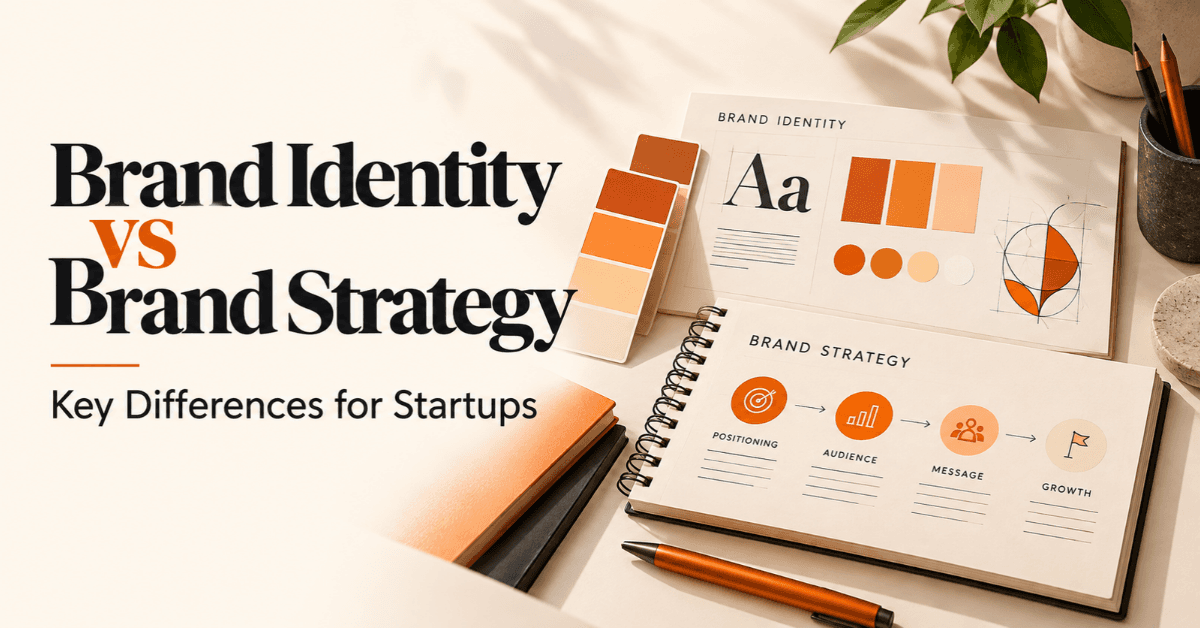
Brand Identity vs Brand Strategy for Startups: Key Differences
Starting a business involves more than creating a logo, choosing brand colors, or launching a website. Startups also need a clear understanding of who they serve, what makes them different, and how they want customers to perceive them. This is where brand identity vs brand strategy becomes an important distinction. Brand strategy defines a business's direction, positioning, audience, and value proposition. Brand identity expresses that direction through visual and verbal elements, including logos, typography, colors, and messaging.
Both are essential for building a consistent brand, but they serve different purposes. Understanding the difference between brand identity and brand strategy helps founders make better branding decisions, use their budgets wisely, and create a business that can grow without losing its identity.
What Is the Difference Between Brand Identity and Brand Strategy?
The main difference between brand identity and brand strategy is their purpose. Brand strategy defines what a business stands for and how it competes, while brand identity determines how people recognize and experience that business.
What Is Brand Strategy?
Brand strategy is the plan that guides how a business presents itself in the market and builds relationships with its target audience. It connects the company's goals with customer needs and explains why people should choose its products or services over alternatives.
A startup's brand strategy typically includes:
Target audience: The customers the business wants to reach.
Value proposition: The specific benefit the business offers.
Brand positioning: How the business wants customers to perceive it compared with competitors.
Mission and vision: The company's purpose and long-term direction.
Competitive advantage: The meaningful differences that make the business relevant to its customers.
Brand voice: The communication style that reflects its personality and values.
A clear strategy helps founders make consistent decisions about marketing, messaging, customer experience, and future growth.
What Is Brand Identity?
Brand identity is the collection of visual and verbal elements a business uses to express its personality and communicate with its audience. It turns the brand's strategic direction into recognizable experiences across different channels.
Common brand identity elements include:
Logo design and supporting brand assets
Typography and color palette
Tone of voice and messaging style
Website and social media design
Photography, illustrations, and graphic elements
Brand guidelines and visual standards
For example, a startup that positions itself as a simple, approachable financial technology provider might use clear typography, accessible language, and a clean visual system to support that promise.
Brand Strategy vs Brand Identity for Startups
The two disciplines work together, but they answer different questions:
Strategy: Who are we serving, what do we offer, and why does it matter?
Identity: How should our brand look, sound, and feel?
Strategy: How do we differentiate ourselves from competitors?
Identity: How do we communicate that difference consistently?
Strategy: What position do we want to own in the market?
Identity: Which visual and verbal elements help express that position?
A startup needs both. A strong strategy without a consistent identity may be difficult to communicate, while an attractive identity without a clear strategy may fail to distinguish the business from its competitors.
Why Do Startups Confuse Brand Strategy With Brand Identity?
Many founders associate branding with logos, websites, and social media graphics because these are the most visible parts of a business. They may feel pressure to create professional-looking materials quickly, especially before a product launch, funding presentation, or marketing campaign.
However, visual design is only one part of building a brand.
Common reasons startups confuse the two include:
Limited budgets: Founders may prioritize a logo because it feels like a tangible deliverable.
Time pressure: A launch deadline can encourage businesses to skip audience research and positioning.
Unclear differentiation: Founders may focus on how their brand looks before defining why customers should choose them.
Misunderstanding branding: Some businesses assume a polished website automatically creates customer trust.
Consider a Dubai-based technology startup that invests in an attractive website but uses the same generic messaging as several competitors. Although the website looks professional, potential customers still struggle to understand what makes the company different.
The solution is not necessarily a new logo. The startup should first clarify its audience, value proposition, and positioning, then align its identity with those foundations.
What Comes First, Brand Strategy or Brand Identity?
Brand strategy generally comes first because it provides the direction that guides brand identity decisions. Before choosing colors, designing a logo, or creating a website, founders should understand their audience, positioning, and business goals.
A practical startup branding process follows these steps.
1. Research Your Audience and Competitors
Identify the people most likely to need your product or service. Understand their challenges, priorities, expectations, and alternatives.
Review competing brands to identify common messages, customer expectations, and opportunities to communicate a more distinctive value.
2. Define Your Value Proposition
Explain what your startup offers, whom it helps, and why the offer matters. Keep the statement specific enough that potential customers can understand the benefit quickly.
3. Establish Brand Positioning and Personality
Decide how you want customers to describe your business. Your positioning might emphasize simplicity, specialist expertise, convenience, affordability, or another benefit that matters to your audience.
4. Develop Your Brand Identity
Translate your strategic decisions into a logo, color palette, typography, messaging style, and other essential brand assets.
5. Apply Brand Guidelines Consistently
Use the same core identity across your website, social media profiles, proposals, presentations, and other customer touchpoints.
6. Review and Improve
Gather customer feedback, monitor how people respond to your messaging, and update your brand when your market, offering, or business goals change.
Branding is not a one-time task. Startups should revisit their strategy and identity as they learn more about their customers and achieve product-market fit.
What Are the Core Components of Startup Brand Strategy?
A useful startup branding guide begins with a small number of clear strategic foundations. Founders do not need a complicated document to get started, but they should make deliberate decisions about the following areas.
Target audience: Define your ideal customers, their problems, and the circumstances that influence their buying decisions.
Value proposition: Explain the main benefit your business delivers and why customers should consider your solution.
Brand positioning: Establish how you want your business to compare with competing options.
Mission and vision: Describe why the business exists and what it aims to achieve over time.
Competitive advantage: Identify the strengths, expertise, service model, or product features that make your offer relevant.
Brand personality: Choose the traits that should shape your communication, such as knowledgeable, friendly, practical, or innovative.
Brand promise: Set a clear expectation for the experience customers should receive.
Messaging framework: Create consistent language for explaining your offering, benefits, and key differentiators.
For example, a startup offering project management software to small agencies might position itself around simple onboarding and straightforward collaboration rather than trying to compete with larger platforms on every feature.
That decision can guide its website copy, product demonstrations, social media content, and visual identity. It also gives the team a clearer basis for evaluating future marketing ideas.
How Does Visual Identity Impact Startup Growth?
Visual identity helps people recognize a business and understand its personality across different channels. For startups competing with established companies, a consistent identity can make the business easier to identify and remember.
A well-planned identity can support growth in several ways:
Brand recognition: Consistent colors, typography, and visual assets help customers identify the business across platforms.
Clear communication: Design choices can make information easier to understand and navigate.
Professional presentation: A coherent identity supports the presentation of a business to customers, partners, and potential investors.
Consistent customer experience: Brand guidelines help different team members produce materials that feel connected.
Scalability: A flexible visual system makes it easier to create new pages, campaigns, presentations, and product materials as the business expands.
However, design alone does not guarantee sales, trust, or funding. Customers also evaluate product quality, service, pricing, reliability, and the experience they receive.
The most effective visual identity reflects a clear brand strategy rather than following design trends without a business purpose.
Can You Have a Brand Identity Without a Brand Strategy?
Yes. A startup can create a logo, choose brand colors, and launch a website without developing a formal brand strategy. However, it may find it harder to maintain consistent messaging and differentiation as the business grows.
Without strategic foundations, founders may repeatedly change their design, rewrite their website, or adjust their messaging because they have not decided whom they want to serve or how they want to position the business.
For example, a startup might initially market itself as an affordable service provider and later try to appear premium without changing its messaging or customer experience. This inconsistency can confuse potential customers.
A startup does not need an extensive branding project before launching. It should, however, establish a basic understanding of its audience, value proposition, positioning, and personality before investing heavily in visual assets.
Is a Logo Part of Brand Strategy or Brand Identity?
A logo is part of brand identity, not brand strategy. It provides a recognizable visual mark that helps people identify a business. However, brand strategy should guide the logo's design. The designer needs to understand the audience, positioning, brand personality, and intended perception before choosing an appropriate direction.
For example, a startup targeting enterprise clients may need an identity that communicates clarity and reliability, while a youth-focused creative business may choose a more expressive visual style.
Neither approach is automatically better. The right logo is the one that supports the business's positioning and works consistently across relevant applications.
Startup Launch Branding Checklist
Before launching your brand, review the following checklist to identify gaps and prioritize essential work.
Define your target audience and the problem your business solves.
Write a clear value proposition.
Research competitors and identify your differentiation.
Establish your brand positioning and personality.
Define your messaging and tone of voice.
Create a logo, color palette, and typography system.
Prepare practical brand guidelines.
Align your website, social profiles, and sales materials.
Check readability and usability on mobile and desktop screens.
Collect feedback and identify improvements after launch.
This startup launch branding checklist helps founders focus on the essentials instead of trying to create every possible brand asset immediately.
Early-stage startups can prioritize a clear strategy, a usable identity, a professional website, and consistent communication. They can expand their brand assets as their business needs develop.
How Much Should Startups Invest in Brand Strategy and Brand Identity?
Branding costs depend on the project's scope, the level of research required, the number of deliverables, and whether a startup works with freelancers, an agency, or an internal team.
Before purchasing brand identity design packages, founders should consider:
Strategic support: Does the project include audience research, positioning, and messaging, or only design?
Design deliverables: Will the package include a logo, color palette, typography, and supporting assets?
Brand guidelines: Will the business receive instructions for using its identity consistently?
Revisions and ownership: What revisions, file formats, usage rights, and final assets are included?
Future requirements: Can the identity support new products, services, and marketing channels?
Founders with limited budgets can begin with a focused strategy and essential identity elements. They can invest in more detailed research, expanded guidelines, and additional assets as their requirements become clearer.
The goal is not to spend as much as possible. It is to make informed decisions that support the business's current needs and future direction.
Common Branding Mistakes Startups Should Avoid
Even well-funded startups can make branding decisions that create unnecessary work or confusion. Avoid these common mistakes:
Designing before defining: Establish your audience and positioning before approving visual concepts.
Copying competitors: Learn from the market without adopting another brand's identity or messaging.
Using inconsistent messaging: Align your website, social media, sales materials, and customer communications.
Ignoring brand guidelines: Document basic standards so team members can produce consistent materials.
Following trends blindly: Choose design elements that fit your audience and positioning rather than changing everything to match a trend.
Expecting instant results: Branding supports recognition and differentiation, but sustainable growth also depends on product quality, customer experience, and effective execution.
A clear strategy gives founders a practical reference point for making decisions. A consistent identity helps the team express those decisions across the business.
FAQs
1. What is the main difference between brand identity and brand strategy?
Brand strategy defines a business's audience, positioning, value proposition, and direction. Brand identity includes the visual and verbal elements used to express that strategy, such as logos, colors, typography, and messaging.
2. What comes first, brand strategy or brand identity?
Brand strategy generally comes first. It provides the foundation for choosing visual elements and developing messaging that reflects the business's goals and target audience.
3. Can a startup build a brand without hiring an agency?
Yes. Founders can define their audience, value proposition, and positioning internally and create basic brand assets. Professional support may be useful when the business needs deeper research, specialist design, or a scalable identity system.
4. How long does startup brand development take?
The timeline depends on the complexity of the project, the research involved, the number of decision-makers, and the number of deliverables. A focused project may take less time than a comprehensive strategy and identity engagement.
5. When should a startup invest in professional branding?
A startup should consider professional branding when it needs clearer market differentiation, consistent messaging, a more scalable identity, or support preparing for a launch or expansion. The scope should match its goals and available resources.
Conclusion
Understanding brand identity vs brand strategy helps startups build a brand that looks consistent and communicates a meaningful purpose. Brand strategy defines the audience, value proposition, and market position, while brand identity expresses those foundations through design, messaging, and recognizable brand assets.
Start by clarifying what your business offers, whom it serves, and why customers should choose it. Then develop an identity that communicates those decisions consistently across your website, social media, and customer touchpoints.
Disclaimer: This article is for informational purposes only and provides general guidance on brand identity and brand strategy for startups. Branding decisions should reflect your business goals, target audience, and market conditions.
Free growth plan
Ready to grow your business?
Reading is a start — now let's build it. Tell us where you want to grow and a senior strategist will map the fastest, most profitable way to get there. Free, no obligation.
Discussion
Join the conversation
Be the first to comment. Comments are reviewed before they appear, so yours won't show up instantly — but we read every one.
Leave a comment
Keep reading
All articles Branding
Product Page SEO: How to Rank and Convert
Product Page SEO tips to improve ecommerce rankings, product descriptions, schema, visibility, user experience, and conversions with practical steps.
 Branding
Shopify SEO: How to Rank Products and Collections
Learn Shopify SEO strategies to optimize product pages, collection pages, technical SEO, internal links, and content for stronger organic visibility.
 Branding
Ecommerce Marketing Strategy: A Full-Funnel Playbook
Build an ecommerce marketing strategy with SEO, paid ads, CRO, retention, and full-funnel tactics designed to support sustainable ecommerce growth.