

Digital Marketing Agency Brief for Clinics: A Practical Guide
Learn how clinics can prepare a digital marketing agency brief, choose the right services, set marketing goals and measure patient acquisition results.
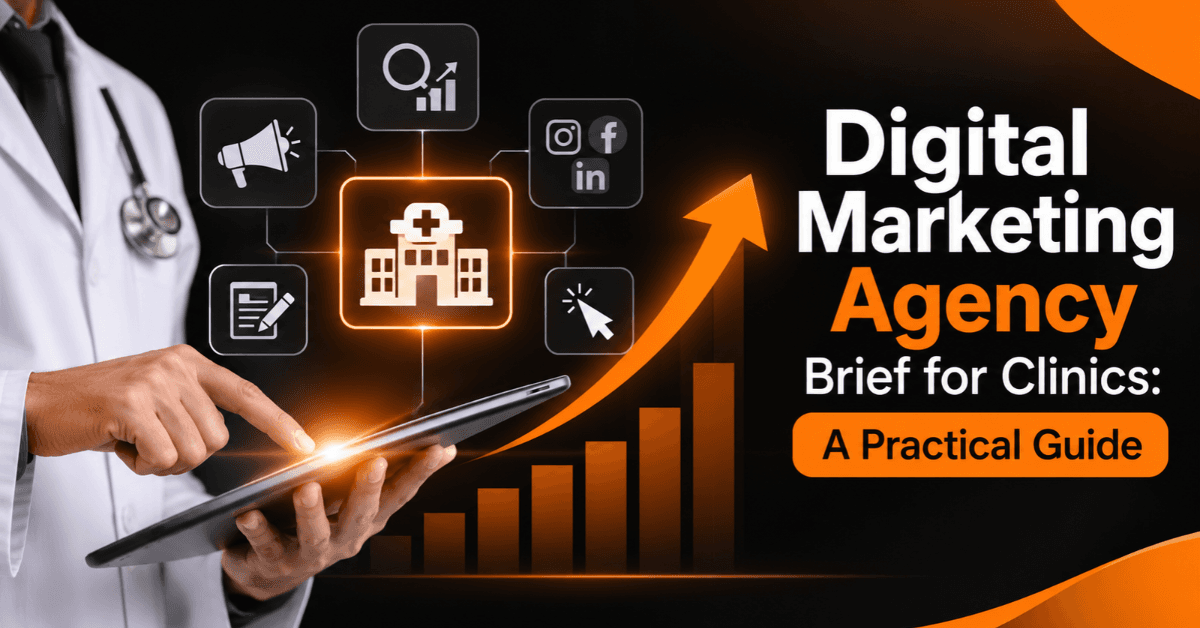
A successful clinic needs more than qualified doctors and quality healthcare services. It also needs a strong online presence so potential patients can find the clinic, understand its services and feel confident about booking an appointment. This is where a professional Digital Marketing Agency can make a difference. However, choosing an agency without a clear marketing brief can lead to wasted budgets, unclear expectations and campaigns that fail to generate meaningful enquiries. Clinics need a structured plan that explains their services, target patients, marketing goals, budget and expected results.
A well-prepared brief helps a marketing agency understand the clinic's requirements and recommend suitable strategies. From healthcare SEO and local search optimisation to social media marketing, website development and paid advertising, every activity should support measurable business objectives.
Why Do Clinics Need a Digital Marketing Agency?
Patients increasingly use search engines, websites and social media to research healthcare providers before making appointments. They may compare nearby clinics, check doctor profiles, read patient reviews or search for specific treatments. A professional Digital Marketing Agency for Clinics can help healthcare businesses reach relevant audiences through targeted online campaigns and consistent digital communication.
Healthcare digital marketing also helps clinics build credibility. A clear website, useful educational content, accurate business information and genuine patient feedback can make it easier for people to evaluate their options.
Key benefits include:
Better online visibility: Help patients find clinic services through relevant search results.
Local patient reach: Improve visibility among people searching for healthcare providers nearby.
More qualified enquiries: Connect marketing campaigns with people interested in specific services.
Stronger patient trust: Present doctor credentials, clinic information and educational resources clearly.
Improved appointment bookings: Make it easier for website visitors to contact the clinic or request appointments.
Consistent communication: Keep patients informed through appropriate digital channels.
The objective is not simply to increase website traffic. Clinics should focus on attracting relevant visitors and making the next step, such as calling or booking an appointment, straightforward.
What Should a Digital Marketing Agency Brief for Clinics Include?
A digital marketing brief gives an agency the information it needs to understand a clinic's business and develop a suitable strategy. Without this information, an agency may recommend generic campaigns that do not address the clinic's actual requirements.
Clinics should prepare the following details before requesting proposals.
1. Clinic Overview and Business Information
Start with a clear introduction to the clinic. Explain what the business offers, where it operates and which medical services it wants to promote.
Include:
Clinic name and business background.
Clinic location and branch details.
Medical specialties and treatment services.
Number of doctors and relevant qualifications.
Existing website and social media profiles.
Current marketing activities.
Main business priorities.
For example, a dental clinic offering general dentistry, orthodontics and cosmetic dentistry may want to increase enquiries for orthodontic consultations. Its marketing brief should identify this priority rather than simply requesting more website traffic.
2. Target Audience and Patient Demographics
A marketing agency needs to understand the people the clinic wants to reach. Different medical services attract different audiences, and their search behaviour may vary.
Explain the following:
Age groups: Identify the relevant age ranges for each service.
Location: Define the neighbourhoods, cities or areas the clinic serves.
Service interests: Identify the treatments and specialties patients search for.
Patient concerns: Understand common questions and reasons for seeking care.
Booking preferences: Consider phone calls, website forms and online appointments.
Search behaviour: Identify the information patients need before choosing a provider.
For example, a dermatology clinic may target people searching for skin consultations, acne treatment or other relevant dermatological services. Its content should address genuine patient questions while avoiding unsupported treatment claims.
3. Marketing Goals and Business Objectives
Clinics should define what they expect their marketing campaigns to achieve. Clear goals help agencies select appropriate channels and measure performance.
Common objectives include:
Increasing qualified appointment enquiries.
Improving Google search visibility.
Promoting specific medical specialties.
Increasing relevant website traffic.
Improving local search performance.
Strengthening clinic brand awareness.
Improving appointment booking conversions.
Encouraging patient engagement.
Each objective should have a measurable indicator. For example, a clinic that wants more appointment enquiries should track qualified calls, booking requests and completed appointments rather than relying only on social media impressions.
4. Competitor and Market Analysis
Competitor research helps clinics understand their position in the local healthcare market.
Ask the agency to review competing clinics and identify opportunities in their digital marketing activities.
The analysis should consider:
Competitors' website structure and service pages.
Local search visibility.
Google Business Profile information.
Content topics and frequently answered questions.
Social media activity.
Advertising approaches.
Patient review patterns.
For example, if competing dental clinics have detailed orthodontic service pages but your clinic only has a short service description, improving that page could be a useful opportunity.
Which Digital Marketing Services Should Clinics Expect?
A healthcare marketing agency should recommend services based on the clinic's goals, competition and target audience. Not every clinic needs every marketing channel. The right combination depends on whether the priority is improving search visibility, generating appointment enquiries or building long-term brand awareness.
1. Healthcare SEO and Local SEO
Healthcare SEO services help clinics improve their visibility when potential patients search for relevant medical services.
Local SEO is particularly important for clinics because many patients prefer healthcare providers within a convenient distance.
Important activities include:
Medical service page optimisation.
Local keyword research.
Google Business Profile optimisation.
Location-specific landing pages.
Technical website SEO.
Local citation management.
Genuine patient review management.
For example, a clinic offering physiotherapy can create informative service pages targeting relevant searches in its service area. These pages should explain available treatments, practitioner qualifications and appointment options.
2. Healthcare Website Design and Development
A clinic website often provides the first detailed impression of a healthcare business. It should make essential information easy to find and help visitors understand the clinic's services.
A professional website should include:
Mobile-friendly design.
Clear medical service descriptions.
Doctor profiles and professional credentials.
Clinic location and contact information.
Appointment booking functionality.
Fast-loading pages.
Accessible navigation and readable content.
A useful medical website design should also communicate trust. Clinics should present accurate information, avoid unsupported treatment claims and make it easy for visitors to contact the appropriate team.
3. Healthcare Social Media Marketing
Social media marketing helps clinics communicate with their audiences, share educational information and maintain a consistent online presence.
Depending on the target audience, a clinic may use Facebook, Instagram, LinkedIn, YouTube or other suitable platforms.
A healthcare social media marketing strategy can include:
Educational medical posts.
Doctor introductions and professional profiles.
Clinic announcements.
Preventive healthcare awareness campaigns.
Short educational videos and reels.
Answers to common general health questions.
Community engagement and appropriate patient communication.
For example, a dental clinic can publish content explaining routine dental check-ups, oral hygiene and common dental procedures. Medical content should be accurate and reviewed by appropriately qualified professionals.
4. Google Ads and Healthcare PPC Advertising
Google Ads can help clinics reach people actively searching for particular healthcare services. Unlike SEO, paid search campaigns can provide immediate opportunities for visibility once campaigns are approved and launched.
A healthcare PPC advertising strategy may include:
Relevant service-based search campaigns.
Location targeting.
Carefully selected keywords.
Dedicated landing pages.
Call and appointment conversion tracking.
Regular search-term and budget reviews.
However, healthcare advertisers must follow applicable advertising policies, including restrictions concerning sensitive health information and personalised advertising. Clinics should also review the regulations of their local healthcare authority.
5. Healthcare Content Marketing and Online Reputation Management
Useful content helps patients understand clinic services and find answers to common questions. It can also support SEO by giving search engines clear information about the clinic's expertise and services.
A content marketing plan may include:
Educational healthcare articles.
Detailed medical service pages.
Frequently asked questions.
Doctor-reviewed health information.
Preventive healthcare guides.
Clinic news and updates.
Online reputation management is equally important. Clinics should monitor reviews, respond professionally and encourage honest feedback without pressuring patients or offering incentives for positive reviews.
These services work best as a connected system. SEO attracts relevant visitors, the website provides useful information, and clear contact options help interested visitors take the next step.
How to Choose the Right Digital Marketing Agency for Your Clinic
Selecting a medical marketing agency requires more than comparing service packages. Clinics should evaluate whether an agency understands their business, communicates clearly and can measure meaningful results.
Before signing an agreement, consider the following:
Healthcare industry experience: Ask whether the agency has worked with healthcare providers or other regulated service businesses.
SEO capabilities: Review its approach to medical service pages, local SEO and technical optimisation.
Advertising knowledge: Ask how it handles healthcare advertising policies and campaign approvals.
Website expertise: Check whether it can improve website usability and appointment conversion paths.
Reporting process: Confirm that reports include meaningful business metrics.
Transparent pricing: Understand what the monthly fee includes and which expenses are separate.
Communication: Identify who manages the account and how often the agency provides updates.
Realistic expectations: Avoid agencies promising guaranteed rankings or a fixed number of patients without evidence.
Ask potential agencies to explain how they would approach your clinic's specific marketing challenges. A useful proposal should connect recommended activities with clear objectives rather than simply listing services.
How Much Does Digital Marketing Cost for a Clinic?
The cost of digital marketing for clinics depends on the services required, competition, location, website condition and campaign objectives. A clinic investing in SEO and content marketing may have different requirements from one running paid advertising across several branches.
Before approving a budget, consider:
Website design and development costs.
Monthly SEO and local SEO services.
Paid advertising management fees.
Separate advertising spend.
Social media management.
Content writing and production.
Analytics and conversion tracking.
Clinics should also distinguish between agency fees and advertising budgets. These are often separate expenses.
Rather than choosing the cheapest package, evaluate what the agency will deliver, how it will report progress and whether its strategy supports the clinic's actual business goals.
How Should Clinics Measure Digital Marketing Performance?
A digital marketing campaign should produce measurable business outcomes. Clinics should work with an agency that tracks meaningful performance indicators and explains how each marketing activity contributes to business growth.
Important KPIs include:
Organic website traffic: Measures visitors coming from unpaid search results.
Local search visibility: Tracks how often the clinic appears in relevant local searches.
Google Business Profile interactions: Measures calls, website clicks and other available interactions.
Qualified patient enquiries: Tracks relevant enquiries about clinic services.
Appointment booking conversion rate: Measures how many visitors or enquiries turn into bookings.
Cost per qualified enquiry: Shows how much the clinic spends to generate a relevant enquiry.
Patient acquisition cost: Estimates the marketing cost associated with acquiring a patient.
Advertising conversion rate: Measures how effectively paid campaigns generate desired actions.
Online reputation: Monitors patient feedback, review trends and responses.
Clinics should distinguish between a lead, a confirmed appointment and an attended appointment. These represent different stages of the patient journey.
For example, an advertising campaign may generate 50 enquiries, but the clinic should also evaluate how many resulted in confirmed appointments. This helps identify whether the challenge lies in advertising, website experience, enquiry handling or appointment availability.
Common Digital Marketing Mistakes Clinics Should Avoid
Even a well-funded marketing campaign can underperform when clinics overlook important details. A clear strategy and regular performance reviews can help prevent unnecessary spending.
Common mistakes include:
Choosing an agency based only on low prices.
Ignoring local SEO and Google Business Profile optimisation.
Publishing generic or medically inaccurate content.
Running paid advertising without conversion tracking.
Using a website that performs poorly on mobile devices.
Buying fake reviews or followers.
Ignoring patient privacy and consent requirements.
Expecting immediate results from long-term SEO campaigns.
Measuring success through impressions rather than meaningful enquiries and bookings.
Clinics should also ensure that marketing teams use appropriate processes when handling patient information. Avoid sharing identifiable patient details in advertising platforms or marketing reports without a valid legal basis and suitable safeguards.
30-60-90 Day Digital Marketing Action Plan for Clinics
A structured 90-day plan gives clinics and their marketing agencies a practical starting point. The exact timeline will depend on the clinic's website, competition, available resources and campaign objectives.
First 30 Days – Research and Planning
Review the existing website and SEO performance.
Research competitors and target audiences.
Identify priority medical services.
Define marketing goals and KPIs.
Prepare a campaign and content strategy.
Days 31–60 – Implementation
Improve website structure and service pages.
Optimise the Google Business Profile.
Publish relevant educational content.
Launch suitable advertising campaigns.
Set up enquiry and appointment tracking.
Days 61–90 – Evaluation and Optimisation
Review campaign performance.
Analyse qualified enquiries and bookings.
Identify underperforming pages and campaigns.
Improve landing pages and conversion paths.
Adjust budgets and marketing priorities.
This framework helps clinics establish a clear working relationship with their digital marketing agency. It also creates opportunities to review progress and make informed decisions instead of relying on assumptions.
Frequently Asked Questions
1. What does a digital marketing agency do for clinics?
A digital marketing agency helps clinics improve online visibility through SEO, website development, social media marketing, paid advertising and content strategies designed to attract relevant audiences.
2. Which digital marketing services are best for medical clinics?
Healthcare SEO, local SEO, professional website development, social media marketing and targeted advertising are useful options. The right combination depends on the clinic's services, audience and marketing goals.
3. How can digital marketing help clinics attract more patients?
Digital marketing helps clinics reach people searching for relevant healthcare services, build online credibility and make appointment enquiries easier through optimised websites and targeted campaigns.
4. Is SEO or Google Ads better for clinics?
SEO supports long-term organic visibility, while Google Ads can generate paid search exposure more quickly. Many clinics benefit from combining both approaches according to their budget and objectives.
5. How long does healthcare SEO take to show results?
SEO timelines depend on competition, website quality and the work required. Some improvements may appear earlier, while meaningful organic growth can take several months or longer.
6. How can clinics choose a reliable healthcare marketing agency?
Clinics should evaluate healthcare experience, SEO capabilities, advertising knowledge, reporting methods, pricing transparency and the agency's ability to develop a strategy around specific business objectives.
How BrandVexo Can Help!
A successful clinic marketing strategy requires more than individual campaigns. It needs a connected approach that brings website development, search visibility, content and advertising together. At BrandVexo, we help businesses build practical digital growth strategies that connect online visibility with commercial objectives. Our services include SEO, website development, social media marketing, paid advertising and business automation.
We focus on building digital systems that support measurable growth rather than vanity metrics.
If your clinic wants to strengthen its digital presence, improve search visibility or develop a more effective marketing strategy, our team can help you identify the right starting point.
Get in touch with BrandVexo:
Phone: +971 52 356 5409
Email: info@brandvexo.com
Website: www.brandvexo.com
You can also explore our digital marketing and growth services to understand how different channels can work together.
Disclaimer: This article is for general informational and educational purposes only. Digital marketing strategies and results may vary depending on a clinic’s services, target audience, location, budget, and competition. Clinics should ensure all marketing activities comply with applicable healthcare advertising, patient privacy, and data protection regulations. Consult a qualified digital marketing professional before making decisions based on this information.
Free growth plan
Ready to grow your business?
Reading is a start — now let's build it. Tell us where you want to grow and a senior strategist will map the fastest, most profitable way to get there. Free, no obligation.
Discussion
Join the conversation
Be the first to comment. Comments are reviewed before they appear, so yours won't show up instantly — but we read every one.
Leave a comment
Keep reading
All articles
Digital Transformation Roadmap: A Practical Guide for Growing Clinics
Build a Digital Transformation Roadmap for your growing clinic. Explore essential technologies, implementation steps, automation and patient experience.
AEO vs GEO vs SEO for Clinics: A Practical Guide to Online Visibility
Understand AEO vs GEO vs SEO for clinics and learn how to improve Google rankings, AI search visibility, and patient acquisition with practical strategies.