
Growth Strategy vs Digital Marketing Strategy: What Is the Difference?
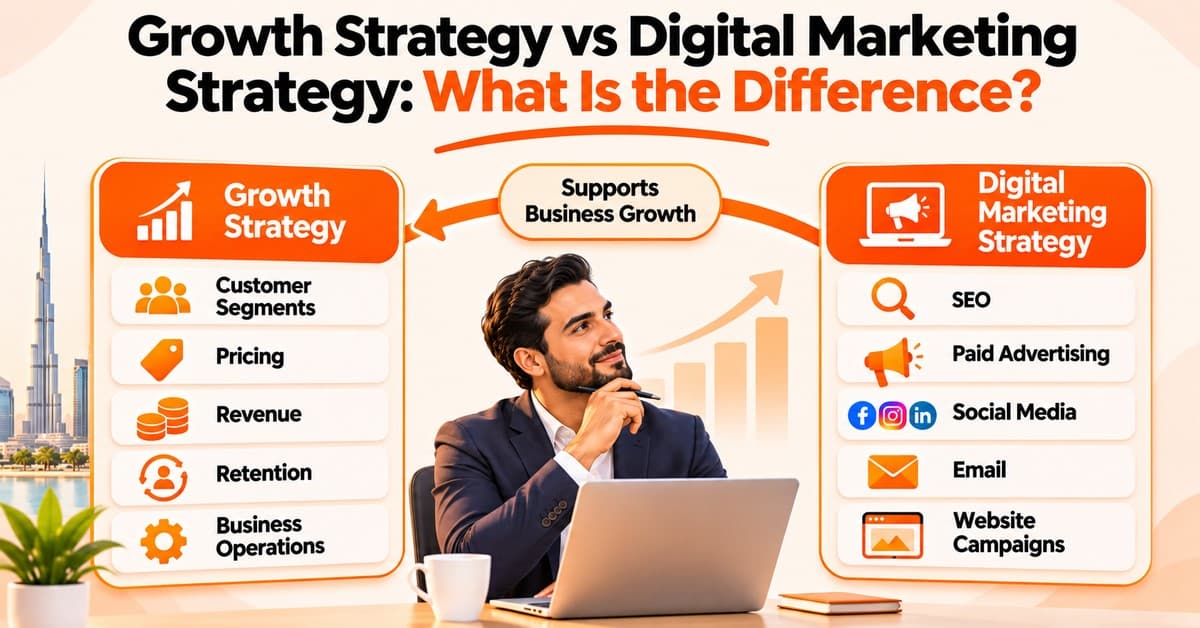
A business can run excellent social media campaigns, rank for valuable search terms and generate a steady flow of enquiries, yet still struggle to grow profitably. The problem may not be its marketing. It may be the decisions behind the marketing: an unclear offer, weak margins, poor retention, limited delivery capacity or a sales process that loses interested buyers.
That is why growth strategy vs digital marketing strategy is more than a wording debate. The two plans answer different business questions. Confusing them can lead a company to spend more on promotion when the real growth constraint sits somewhere else.
Introduction
A growth strategy defines how a business intends to create sustainable commercial progress. It considers the market, customers, offer, pricing, revenue model, operations, sales, retention and resources. A digital marketing strategy is narrower. It determines how digital channels such as search, paid advertising, social media, email and content help the business reach and convert its chosen audience.
The two strategies should work together, but one does not replace the other. A business-wide growth plan sets direction and priorities. Digital marketing translates relevant parts of that direction into audience, channel, content, campaign and measurement decisions.
This guide explains the difference, compares their scope and metrics, shows how they fit together, and helps founders and marketing managers decide what to build first.
1. What Is a Growth Strategy?
A growth strategy is a business-level plan for increasing the value and performance of a company over time. The SBA's business-plan guide covers related planning decisions. It identifies where growth should come from, which customers the business should serve, what value it will offer and what capabilities are needed to deliver that value profitably.
Growth does not always mean acquiring more customers. Depending on the business, it may come from increasing average order value, improving retention, entering a new segment, introducing a service, improving pricing, expanding distribution or reducing the cost of serving customers. A company may even decide not to pursue a particular opportunity because it would stretch the team or weaken margins.
For a founder, the output should be a set of choices: priority customer, offer, growth route, investment limits, capabilities, owners and measures. It should help leadership decide what to do and what not to do.
2. What Is a Digital Marketing Strategy?
A digital marketing strategy is a plan for using online channels to reach a defined audience and achieve specific marketing objectives. It sets out the audience, positioning, messages, channels, content, campaigns, budget, responsibilities and performance measures.
For example, a professional services firm may use search engine optimisation to reach people actively looking for its expertise, LinkedIn content to build credibility, paid search to capture high-intent demand and email to nurture prospects who are not ready to speak to sales. These activities should support a clear objective, such as generating qualified consultation requests or increasing relevant product enquiries.
A digital marketing strategy is not simply a list of platforms. Choosing Instagram, Google Ads or email without defining the audience and desired action is channel selection without a strategy. Google's campaign objective guidance makes a similar practical point: campaign objectives should match the intended result, such as sales, leads or website traffic, and campaign setup should follow that objective.
A good digital marketing strategy defines its audience, message, channels, desired action and performance measures. For a channel-planning perspective, see HubSpot's guide to digital strategy.
3. Growth Strategy vs Digital Marketing Strategy: The Main Differences
The clearest way to understand growth strategy vs digital marketing strategy is to compare the decisions each one owns. Growth strategy looks across the business. Digital marketing strategy focuses on the online marketing contribution to the business goal.
Area | Growth strategy | Digital marketing strategy |
|---|---|---|
Main question | Where should the business find sustainable growth? | How should digital channels reach and convert the chosen audience? |
Scope | Market, offer, pricing, sales, retention, operations and resources | SEO, paid media, social, email, content, website journeys and campaigns |
Primary owner | Founder, CEO or growth leadership | Marketing leader, strategist or digital marketing team |
Time horizon | Usually longer-term, reviewed through quarterly priorities | Campaign and channel plans, often reviewed weekly or monthly |
Typical measures | Revenue quality, gross margin, retention, customer value, market expansion | Reach, qualified traffic, leads, conversion rate, cost per lead and campaign return |
Key decisions | Which customers to serve, what to sell, how to price and what capabilities to build | Which audiences, messages, channels, content and campaign objectives to use |
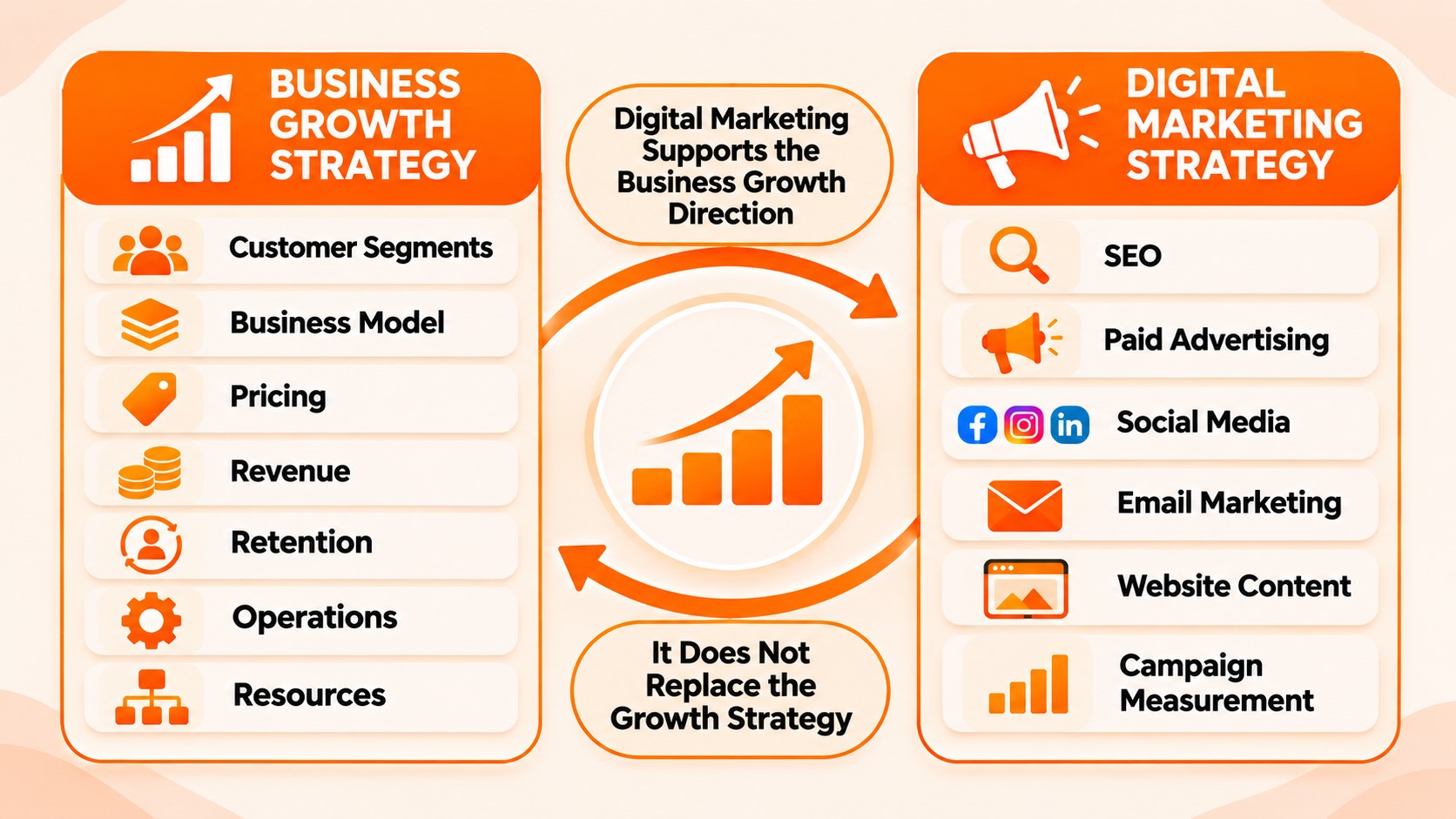
These are differences in emphasis, not rigid job descriptions. In a small company, one person may own both plans. The distinction matters because the decisions and measures differ.
A digital campaign can meet its lead target while the business remains unprofitable. Equally, a business may have a sound growth opportunity but lack a digital marketing plan to reach the customers who would buy. Each strategy exposes a different part of the problem.
4. How the Two Strategies Work Together
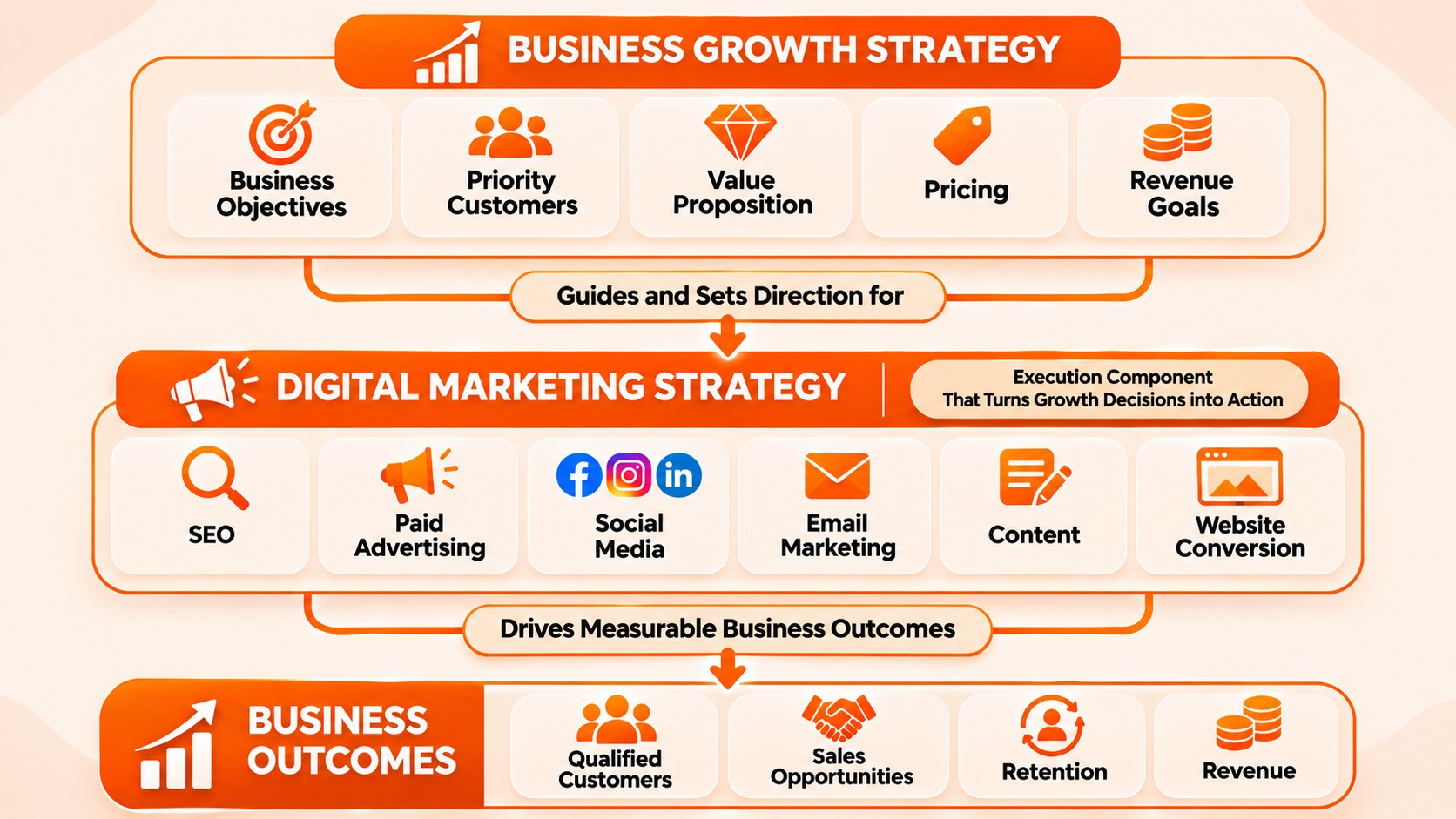
Growth strategy provides the commercial direction. Digital marketing strategy turns the relevant customer and market choices into an online acquisition and engagement plan. The relationship should be two-way: marketing data can reveal customer demand, objections and channel performance, while business priorities determine which marketing opportunities deserve investment. This is the practical relationship at the centre of growth strategy vs digital marketing strategy.
Imagine a Dubai-based B2B consultancy that wants to grow its recurring advisory revenue. Its growth strategy might prioritise mid-sized companies in two industries, package a recurring service, improve renewal rates and shorten the sales cycle. Its digital marketing strategy could then build service pages for those industries, publish useful expertise-led content, run a focused search campaign and use email to nurture qualified prospects.
The digital plan supports the growth objective, but it does not decide the firm's pricing model, delivery capacity or renewal process on its own. Those decisions require leadership and operational input.
For a practical example of how channel work can connect to a broader growth system, see BrandVexo's Growth Strategy service. The important principle is alignment: every campaign should have a reason to exist within the business plan.
5. Which Strategy Should Come First?
In most cases, establish the business growth direction before committing to a detailed digital marketing plan. This does not mean a company needs a 50-page corporate strategy before it can publish content or run an advert. It means the team should understand the customer, offer, commercial objective and constraints before choosing channels and budgets.
If the business is still deciding which segment to serve, whether the offer is viable or why customers do not return, a campaign plan may optimise activity around an unresolved business question. If those foundations are reasonably clear, digital marketing can help test demand and deliver the chosen route to market.
Use this decision sequence before building the plans:
Confirm the business objective and the commercial problem behind it.
Identify the priority customer, offer and evidence that demand exists.
Check pricing, margins, fulfilment capacity and the sales process.
Decide which part of the customer journey digital marketing can improve.
Select channels, budget, owners and measures that support that priority.
Review the evidence and adjust the business or marketing plan where necessary.
6. What Should Each Strategy Measure?
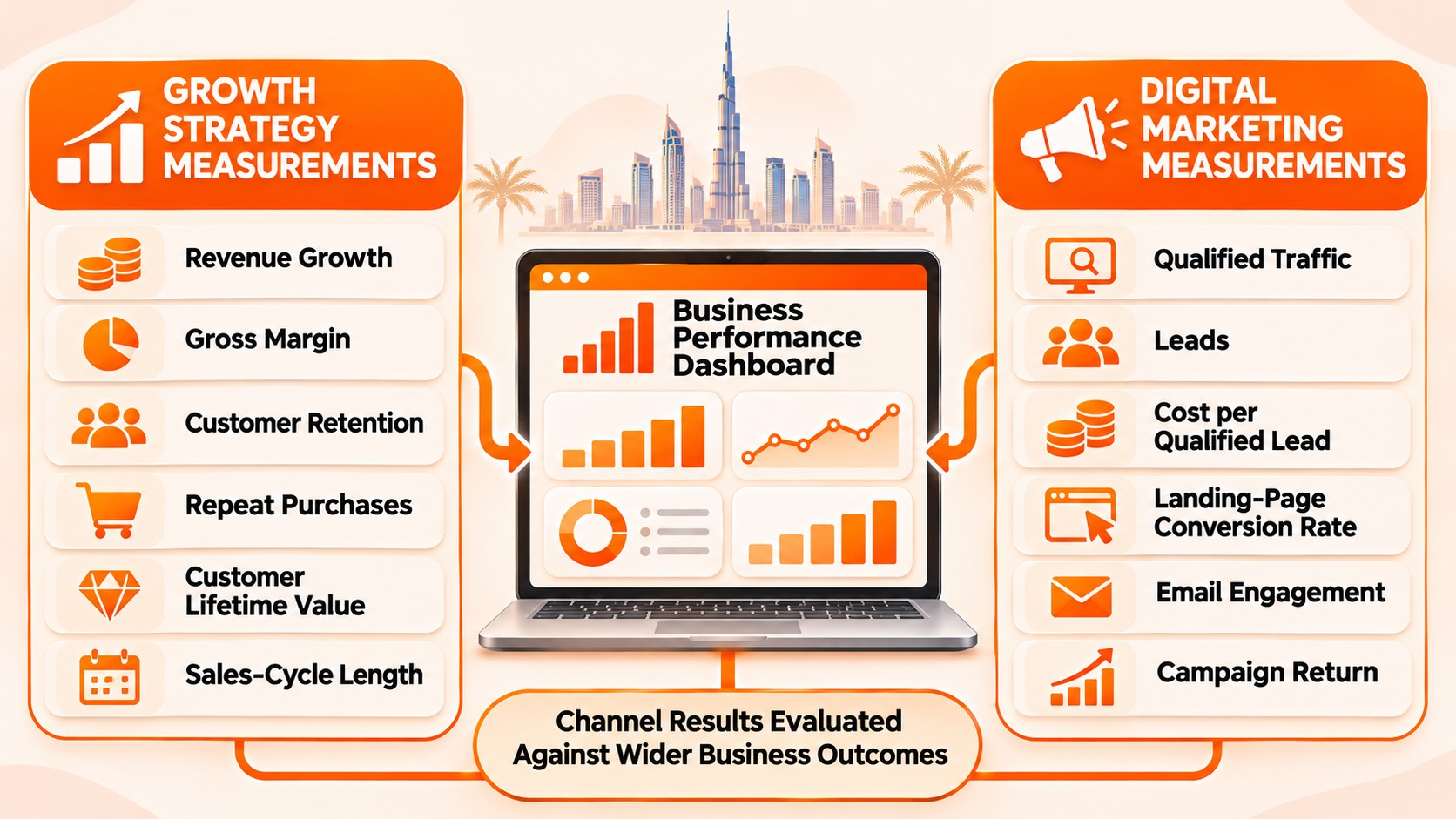
The measures should reflect the job each strategy is responsible for. This is another important distinction in growth strategy vs digital marketing strategy. A growth strategy needs to show whether the business is becoming stronger commercially, not just busier. Depending on the model, leadership may review revenue growth, gross margin, customer retention, repeat purchase, average order value, customer lifetime value, sales-cycle length and capacity utilisation.
Digital marketing measures are closer to channel performance. These may include qualified organic traffic, paid campaign conversions, cost per qualified lead, landing-page conversion rate, email engagement, branded search demand and assisted conversions. The right measures depend on the objective. Google Ads documentation distinguishes the measures that matter for traffic, awareness and return on investment. Clicks alone do not demonstrate profitable growth.
Avoid treating every metric as equally important. If the goal is qualified sales opportunities, impressions and follower counts are supporting indicators, not the final result. Connect marketing data to CRM stages and sales outcomes wherever possible. That makes it easier to understand whether campaigns are attracting the right prospects and whether the business is converting them.
7. Signs You Need a Growth Strategy
A company may need a broader growth strategy when marketing activity is happening but leadership is uncertain about the business direction. Common warning signs include:
Revenue is inconsistent, and the business cannot explain which customer groups or offers are most profitable.
New customer acquisition is increasing, but retention, repeat purchase or margins are weakening.
Teams are investing in channels without agreement on the priority market or commercial outcome.
Sales, marketing and operations have conflicting targets or unclear ownership.
The company wants to enter a new segment, launch an offer or expand, but has not assessed the resources and risks.
8. Signs You Need a Digital Marketing Strategy
A business may already know its target customers and commercial priorities but lack a coherent way to reach them online. In that case, a digital marketing strategy may be the more immediate requirement.
You may need one when:
The website, SEO, advertising, social media and email operate independently.
Campaigns have no shared objective or clear audience.
Content is published inconsistently.
Reporting focuses on clicks without showing qualified enquiries and sales contribution.
The solution is not necessarily to use more platforms. It may be to focus on fewer channels, improve the website journey, clarify messaging or establish consistent measurement. BrandVexo's SEO and digital visibility services can support the channel side when organic search and local visibility are relevant to the business objective.
9. A Practical Example: One Business, Two Connected Plans
Consider a Dubai-based company that provides commercial fit-out services. The owner wants more profitable projects, not simply a higher number of website enquiries.
Its growth strategy could prioritise a specific type of commercial client, define the minimum project size worth pursuing, improve proposal follow-up, build referral relationships with complementary professionals and protect delivery margins. It may also decide that certain low-margin jobs are not worth pursuing.
The digital marketing strategy would translate those choices into a focused website message, project case studies, search content around relevant services, a targeted paid campaign and enquiry forms that collect useful project information. The team would monitor qualified enquiries and the proportion that progress to site visits and proposals.
This distinction is useful when choosing suppliers. A business hiring an SEO or paid advertising provider should not expect that provider to solve pricing, service design, delivery capacity or retention unless those responsibilities are explicitly included in the engagement.
10. How to Align Both Strategies in One Working Plan
A useful working document does not need to be complicated. It should connect the business objective to the marketing work, make ownership clear and give the team a regular review point.
Write the business growth objective in one sentence, including the customer or revenue outcome.
Record the priority customer segment, offer and commercial assumptions.
Identify the main constraint in the customer journey or operating model.
Choose the digital marketing activities that directly address that constraint.
Assign an owner, budget, deadline and success measure to each activity.
Review channel results alongside sales quality, margin and customer feedback.
For example, if the business wants more qualified enquiries but sales response is slow, increasing paid traffic may make the problem worse. The plan may need a lead-routing process and response ownership before the campaign budget increases. BrandVexo's AI Automation service may be relevant when repetitive lead routing or follow-up is a proven bottleneck, but automation should support a well-defined process rather than disguise a broken one.
Conclusion
Growth strategy vs digital marketing strategy is not a choice between two competing plans. A growth strategy defines how the business intends to create sustainable commercial value, while a digital marketing strategy determines how online channels support the chosen customers, offers and objectives. The business plan should set the direction, and digital marketing should help execute and test the relevant parts of it. If the business model, target market or profitability is unclear, start with growth decisions. If those foundations are sound but online acquisition and conversion are inconsistent, improve the digital marketing strategy. Most growing businesses need both, connected by shared goals, clear ownership and measures that lead beyond clicks to customers and commercial results. That is the practical answer to growth strategy vs digital marketing strategy.
Need clarity on which strategy your business needs first? Request a BrandVexo audit or consultation. We can review your current growth priorities, digital channels, website journey and measurement setup, then identify the most useful next steps.
Frequently Asked Questions
1. Is a growth strategy the same as a digital marketing strategy?
No. A growth strategy covers the wider business decisions that influence sustainable growth, including customers, offers, pricing, sales, retention and resources. A digital marketing strategy focuses on using online channels to reach and convert the chosen audience.
2. Can a business have a digital marketing strategy without a growth strategy?
Yes. A company can plan and run digital campaigns without a documented growth strategy. However, without clear business priorities, campaigns may optimise traffic or leads that do not contribute enough to revenue, margin or long-term customer value.
3. Does a small business need both strategies?
Most small businesses benefit from both, but they do not need two lengthy documents. A concise growth plan can define the customer, offer and commercial goal, while a practical digital marketing plan sets the channels, messages, budget and measures that support it.
4. Who is responsible for a growth strategy?
The founder, owner, CEO or senior leadership team should own the business growth direction. Marketing, sales, finance and operations should contribute because growth decisions affect more than promotion.
5. What should a digital marketing strategy include?
It should define the target audience, positioning, objectives, selected channels, content and campaign approach, budget, responsibilities, tracking and review process. Each activity should support a clear business or marketing outcome.
6. When should a company hire a growth strategy consultant?
Consider outside support when leadership needs an independent review of its growth opportunities, customer segments, commercial model, channel performance or execution priorities. Agree on scope, deliverables, decision ownership and measures before starting an engagement.
7. Can digital marketing generate growth on its own?
Digital marketing can contribute significantly to acquisition and conversion, but it cannot independently fix every business constraint. Pricing, product quality, fulfilment, customer service, retention and profitability also influence whether new demand becomes sustainable growth.
Free growth plan
Ready to grow your business?
Reading is a start — now let's build it. Tell us where you want to grow and a senior strategist will map the fastest, most profitable way to get there. Free, no obligation.
Discussion
Join the conversation
Be the first to comment. Comments are reviewed before they appear, so yours won't show up instantly — but we read every one.
Leave a comment
Keep reading
All articles
Social Media Reporting: 10 Metrics That Matter to Business Owners
Understand social media reporting metrics that matter to business owners. Track engagement, reach, leads, conversions and ROI to improve results.
CAC vs LTV: The Metrics Every Growing Business Should Understand