
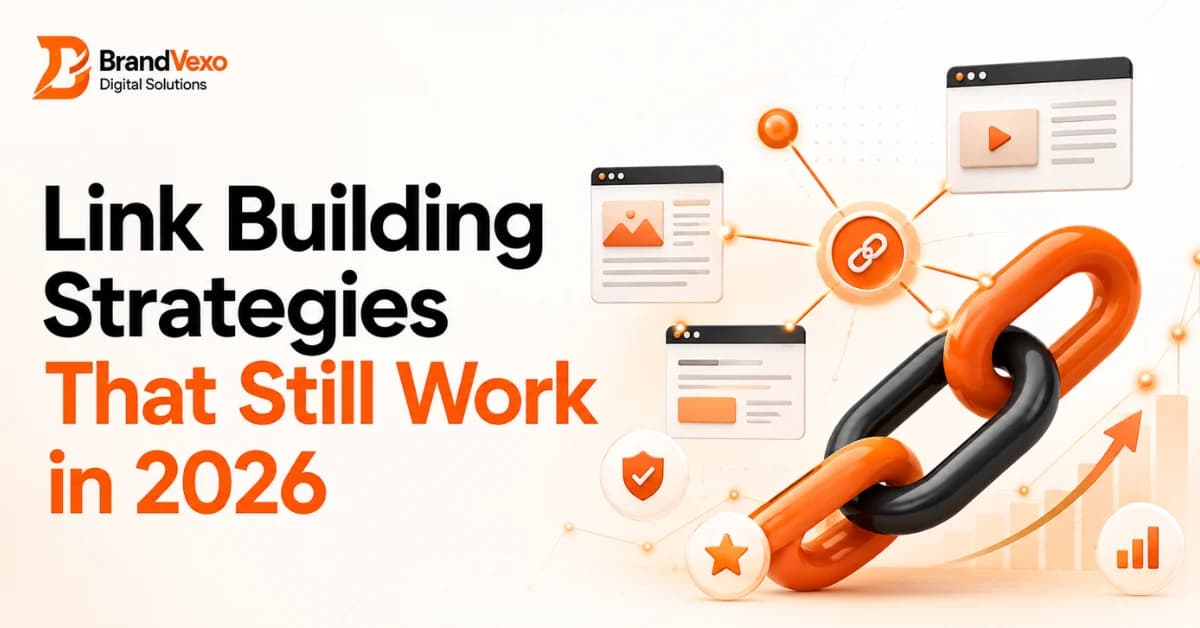
Link Building Strategies That Still Work in 2026
Link building has changed significantly over the years. In 2026, successful Link Building Strategies are less about collecting as many backlinks as possible and more about earning relevant, credible mentions from websites that people trust. Search engines increasingly reward content that provides genuine value, demonstrates expertise, and satisfies users rather than content created mainly to manipulate rankings.
For businesses, this means a strong backlink strategy should combine useful content, digital PR, expert contributions, relationship building, and thoughtful outreach. The goal is not simply to increase the number of referring domains. It is to build authority, attract relevant visitors, strengthen brand credibility, and create resources that other websites genuinely want to reference.
Does Link Building Still Work in 2026?
Yes, but the way businesses approach it matters.
Google explains that links can help its systems understand the relevance of pages and discover new pages to crawl. Google also recommends descriptive, natural anchor text that helps both users and search engines understand the linked page.
However, modern link building should not become a numbers game.
A backlink from a highly relevant industry publication can be considerably more useful than dozens of unrelated links from low-quality websites. A good link can also send referral traffic, introduce your brand to a new audience, and support your overall authority.
The better question is therefore not:
“How many backlinks can we build?”
It is:
“Which websites would naturally want to reference our content, expertise, research, or resources?”
That shift from link building to link earning is one of the most important changes businesses should make in 2026.
What Makes a Backlink Valuable in 2026?
A strong backlink usually has several characteristics:
Relevant to the subject of your website or page
Placed naturally within useful editorial content
Connected to a real audience
From a credible and established website
Supported by relevant surrounding context
Uses natural, descriptive anchor text
Has potential to generate referral traffic
Exists because the linked resource provides genuine value
There is no single metric that determines whether a backlink is valuable. Domain-level metrics from third-party SEO tools can help with prospecting, but they should not replace human evaluation.
Link Building Strategies That Still Work in 2026
The strongest strategies in 2026 focus on creating something useful enough that another publisher has a reason to mention it.
Instead of treating backlinks as the final objective, think about the assets, relationships, expertise, and publicity that naturally produce them.
1. Digital PR and Newsworthy Content
Digital PR remains one of the most effective ways to earn attention from publishers and relevant websites.
Rather than sending generic requests for backlinks, digital PR gives journalists and publishers a reason to discuss your brand or research.
Potential digital PR assets include:
Original industry research
Surveys
Expert commentary
Market reports
Trend analysis
Proprietary statistics
Data studies
Newsworthy business developments
For example, a UAE digital marketing company could conduct a survey of small businesses about AI adoption in marketing. The company could publish the findings as an original report and offer expert commentary to relevant business publications.
The strongest campaigns start with something genuinely interesting.
A press release that simply says a company has launched a new website is unlikely to attract significant editorial attention. Original research that reveals an unexpected industry trend gives publishers a much stronger reason to cover the story.
Digital PR works best when the story comes first, and the backlink comes naturally from the coverage.
2. Original Research and Data-Driven Content
Original data can become one of your website's strongest linkable assets.
When you publish information that other writers cannot easily find elsewhere, they have a reason to reference your research.
Consider creating:
Industry surveys
Annual reports
Original statistics
Market benchmarks
Consumer research
Expert surveys
First-party data studies
Trend reports
For example, instead of writing another generic article about digital marketing trends, a company could survey 300 small businesses and publish findings about their marketing budgets, AI adoption, SEO challenges, and customer acquisition channels.
Other writers covering the same subject can then reference the research.
That creates a natural link-earning opportunity.
3. Create Linkable Assets
A linkable asset is a resource that solves a specific problem so effectively that other websites have a reason to reference it.
Useful examples include:
Comprehensive guides
Industry checklists
Templates
Calculators
Original research
Interactive tools
Statistics pages
Step-by-step resources
Visual explainers
Industry glossaries
The important point is that the asset must provide value beyond what already exists.
Creating a 3,000-word article does not automatically make it link-worthy. A shorter calculator, original dataset, or useful template may attract more natural references because it solves a specific problem.
This is where authority building and content strategy work together.
4. Expert-Led Content and Thought Leadership
Expertise can create link opportunities that ordinary content cannot.
Businesses can publish:
Expert interviews
Original opinions
Industry analysis
Expert commentary
Case studies
First-hand experiences
Founder insights
Expert-led guides
This also supports Google's broader emphasis on demonstrating experience, expertise, authoritativeness, and trustworthiness. Google recommends making it clear who created content and providing information that helps readers understand the expertise behind it.
For example, an SEO professional who has worked on e-commerce campaigns can explain what actually happened during a campaign, what changed, what failed, and what produced results.
That first-hand perspective is much harder to replicate than generic SEO advice.
Strategic Guest Contributions
Guest contributions can still generate value when they focus on expertise and audience usefulness.
The outdated approach is to publish large numbers of generic articles solely to obtain backlinks.
A better approach is to identify publications where your expertise genuinely benefits the readers.
Look for:
Relevant industry publications
Established business websites
Specialist publications
Professional communities
Publications with genuine editorial standards
Websites with an audience relevant to your business
The content should stand on its own even if the backlink did not exist.
What Makes a Guest Contribution Worth Pursuing?
Prioritize opportunities with:
Strong topical relevance
A real readership
Editorial oversight
Original insights
Useful information
Genuine author expertise
Natural contextual links
Avoid producing dozens of nearly identical articles for unrelated websites.
Google specifically identifies manipulative link practices, including certain paid or exchanged links and low-quality link schemes, as link spam.
Backlink Reclamation: An Underused SEO Opportunity
Not every backlink opportunity requires creating something new.
Sometimes, your brand has already been mentioned online, but the publisher has not linked it to your website.
This creates a backlink reclamation opportunity.
Look for:
Unlinked brand mentions
Broken backlinks
Deleted pages
Changed URLs
Incorrect destination links
Old company references
Relevant image attribution opportunities
Suppose a business is mentioned in an industry article, but the brand name is not linked. A polite message can explain that the referenced resource is available and suggest the appropriate page.
This approach can be more efficient than cold outreach because the website has already demonstrated interest in the brand.
Broken Link Building: Does It Still Work?
Broken link building can still work when you approach it as a genuine user-experience improvement.
The basic process is simple:
Find a relevant broken resource.
Create or identify a useful replacement.
Contact the website owner or editor.
Explain the broken link.
Suggest your resource only when it genuinely fits.
The key is relevance.
Do not contact hundreds of websites simply because they have broken links. Find broken resources that relate closely to your expertise and provide a genuinely useful replacement.
That makes the outreach more relevant and improves the experience for the publisher and their readers.
Competitor Backlink Analysis for Link Opportunities
Competitor backlink analysis can reveal opportunities, but copying competitors blindly is not a strategy.
Start by identifying competitors that rank for the topics you want to target.
Then analyze:
Referring domains
Industry publications
Resource pages
Editorial mentions
Digital PR coverage
Guest contributions
Relevant directories
Research citations
Linkable assets
Next, classify the opportunities.
Some links may be available because the competitor created original research. Others may exist because of a partnership, industry membership, news story, or useful resource.
The objective is to understand why the competitor earned the link.
Then ask:
Can we create something more useful, more original, or more relevant?
That question produces a much stronger strategy than simply trying to reproduce a competitor's backlink profile.
Local Link Building for Businesses in 2026
Local businesses can build authority by becoming more visible within their actual communities and industries.
Useful opportunities include:
Local business publications
Industry associations
Professional organizations
Chambers of commerce
Local news websites
Community organizations
Relevant sponsorships
Local partnerships
Business events
Industry directories with genuine user value
For example, a UAE business could participate in a relevant business event, contribute expert commentary to a local publication, publish original research about UAE SMEs, or collaborate with an established industry organization.
The objective should be to become a useful part of the local business ecosystem.
Avoid submitting your business to hundreds of irrelevant directories simply because they offer a backlink.
Internal Linking vs External Link Building
External backlinks often receive the most attention, but internal links are equally important for creating a well-structured website.
Google explains that links help its systems discover pages and understand relationships between pages. Descriptive anchor text also helps users and search engines understand the destination page.
A strong internal linking system can:
Help users discover related content
Connect supporting articles to core pages
Distribute internal authority
Strengthen topical relationships
Improve website navigation
Help search engines discover important pages
For example, a website publishing an article about digital PR could naturally link to related content about content marketing, SEO strategy, media outreach, and authority building.
Use descriptive anchor text naturally. Do not force exact-match keywords into every internal link.
Link Building Tactics to Avoid in 2026
Not every tactic that produces a backlink is good SEO.
Google's current spam policies specifically identify manipulative link practices such as buying or selling links for ranking purposes, excessive link exchanges, automated link creation, low-quality directory links, and other schemes designed primarily to manipulate rankings.
Avoid:
Buying links specifically to manipulate rankings
Link farms
Manipulative private blog networks
Automated backlink software
Spammy directory submissions
Large-scale irrelevant guest posting
Excessive exact-match anchor text
Comment spam
Forum spam
Artificial link exchanges
Low-value content created mainly to attract links
A large backlink count does not automatically indicate a strong SEO strategy.
The quality, relevance, context, and purpose of the links matter.
How to Build Links Without Looking Spammy
A sustainable approach can follow five simple steps.
Step 1: Create Something Worth Linking To
Start with the audience.
Find a question, problem, dataset, tool, or topic that deserves a better resource.
Research the existing search results and identify gaps.
Step 2: Build a Better Resource
Improve the content through:
Original information
Better examples
First-hand insights
Accurate data
Clear explanations
Useful visuals
Better usability
Expert input
Google's people-first guidance emphasizes original information, comprehensive coverage, insightful analysis, and content that provides substantial value beyond existing search results.
Step 3: Find Relevant Prospects
Build a prospect list based on relevance rather than volume.
Look for websites whose readers would genuinely benefit from your resource.
Prioritize:
Industry relevance
Audience fit
Editorial quality
Existing topical authority
Genuine publishing activity
Step 4: Personalize Outreach
Avoid sending the same message to every website.
Explain:
Why you are contacting them
What resource did you create
Why it is relevant to their article
How it could help their readers
Do not demand a backlink.
Make a useful suggestion and allow the editor to decide.
Step 5: Measure Results
Track more than backlinks.
Monitor:
Relevant referring domains
Referral traffic
Brand mentions
Organic visibility
Ranking changes
Leads
Assisted conversions
Overall authority growth
A link that sends qualified visitors may be more valuable to a business than several links that never generate traffic.
How to Measure the Success of Link Building Strategies
The success of Link Building Strategies should be measured according to business and SEO outcomes. Start with the number of relevant referring domains, but do not stop there. Look at whether your campaign is generating meaningful referral traffic, increasing brand visibility, improving the discoverability of important pages, and supporting organic performance.
Also review the quality of the links you earn.
Ask:
Would this link still be useful if Google did not exist?
If the answer is yes because it introduces your business to a relevant audience, improves a resource, or provides genuine credibility, it is probably a much healthier link opportunity.
A Practical Link Building Strategy for 2026
Different businesses need different approaches.
For Small Businesses
Focus on:
Local publications
Relevant industry organizations
Local partnerships
Expert commentary
Brand mention reclamation
Useful local resources
Small businesses do not need thousands of links. A focused set of relevant relationships can be far more practical.
For Startups and SaaS Companies
Consider:
Original research
Free tools
Calculators
Benchmark reports
Digital PR
Product-led resources
Expert commentary
Industry studies
A useful free tool can sometimes create more natural attention than dozens of conventional outreach campaigns.
For Established Businesses
Larger companies can invest in:
Proprietary research
Annual industry reports
Original datasets
Thought leadership
Digital PR campaigns
Expert-led publications
Strategic partnerships
Established brands can also turn their existing customer knowledge and internal expertise into original resources.
How BrandVexo Can Help With SEO and Link Building
BrandVexo helps businesses build sustainable online visibility through SEO, digital marketing, content strategy, and AI-powered solutions. Our approach focuses on creating valuable content, strengthening website authority, improving search visibility, and identifying opportunities for ethical link earning and digital PR. Whether you are a startup or an established business, BrandVexo can help develop a practical SEO strategy aligned with your growth goals.
Contact BrandVexo:
Phone: +971 52 356 5409
Email: info@brandvexo.com
Website: www.brandvexo.com
Frequently Asked Questions
Is link building still effective in 2026?
Yes. Links remain useful for discovery and relevance, but effective link building focuses on relevant, editorially earned links rather than manipulating backlink volume. Google continues to explain that links can help its systems discover pages and understand relevance.
What are the best Link Building Strategies in 2026?
The strongest approaches include digital PR, original research, linkable assets, expert-led content, strategic guest contributions, backlink reclamation, relevant local link building, and relationship-driven outreach.
What is the difference between backlinks and link earning?
A backlink is a link from another website to your website. Link earning focuses on creating content, research, expertise, or resources that naturally give other publishers a reason to link to you.
Does digital PR help with SEO?
Digital PR can create brand exposure, editorial coverage, and links from relevant publications. Its value extends beyond links because it can also introduce your brand to new audiences and generate referral traffic.
How many backlinks does a website need?
There is no universal number. The right target depends on your industry, competitors, website strength, content quality, and business objectives. Focus on earning relevant and useful links instead of chasing a fixed backlink count.
Are guest posts still effective for link building?
They can be effective when they provide genuine editorial value and reach a relevant audience. Guest posting becomes risky when businesses use it at scale primarily to manipulate rankings.
What makes a backlink high quality?
Relevance, editorial context, credibility, audience fit, natural placement, and potential referral value are useful factors to consider. Avoid judging links solely by third-party authority scores.
Should businesses buy backlinks?
Businesses should not buy links for the purpose of manipulating Google rankings. Google's spam policies specifically classify buying or selling links for ranking purposes as link spam. Paid advertising or sponsorship links can be used when they are properly qualified, such as with rel="sponsored" or rel="nofollow" where appropriate.
Key Takeaways for Link Building in 2026
Focus on relevant backlinks instead of backlink volume.
Create resources that people genuinely want to reference.
Use digital PR to turn original ideas into media opportunities.
Invest in research, data, tools, and useful linkable assets.
Build relationships within your industry.
Reclaim existing brand mentions and broken links.
Use competitor analysis to discover opportunities, not to copy blindly.
Strengthen internal links alongside external authority building.
Personalize outreach instead of sending mass emails.
Avoid manipulative link schemes and automated backlink tactics.
Measure referral traffic, visibility, leads, and business value alongside links.
Google's current guidance consistently emphasizes helpful, reliable, people-first content, while its spam policies warn against practices designed primarily to manipulate search rankings.
Final Thoughts on Link Building Strategies in 2026
The future of Link Building Strategies is not about finding shortcuts to hundreds of backlinks. It is about becoming a source that other people and publishers have a genuine reason to reference. Businesses that invest in original research, expert knowledge, useful resources, digital PR, and meaningful industry relationships can build authority more sustainably. Backlinks become a result of providing value rather than the only objective.
For businesses competing in crowded search results, the best approach is simple: create something worth citing, make it easy to discover, build genuine relationships, and earn attention from the right audience.
Free growth plan
Ready to grow your business?
Reading is a start — now let's build it. Tell us where you want to grow and a senior strategist will map the fastest, most profitable way to get there. Free, no obligation.
Discussion
Join the conversation
Be the first to comment. Comments are reviewed before they appear, so yours won't show up instantly — but we read every one.
Leave a comment
Keep reading
All articles SEO
SEOAI Search Visibility: How to Improve Your Brand’s Reach
Improve AI Search Visibility with practical SEO, GEO, and AEO strategies that help your brand build authority, earn citations, and reach more customers.
 SEO
SEOSEO Agency Selection for Consultants: A Practical Guide
Learn SEO Agency Selection for consultants, compare SEO services, evaluate pricing, spot red flags, and choose an agency focused on qualified leads and growth.
 SEO
SEOLocal SEO for Multi-Location Businesses: A Startup Guide
Learn how startups can scale local SEO across multiple locations with Google Business Profiles, local landing pages, reviews, and practical tracking tips.