

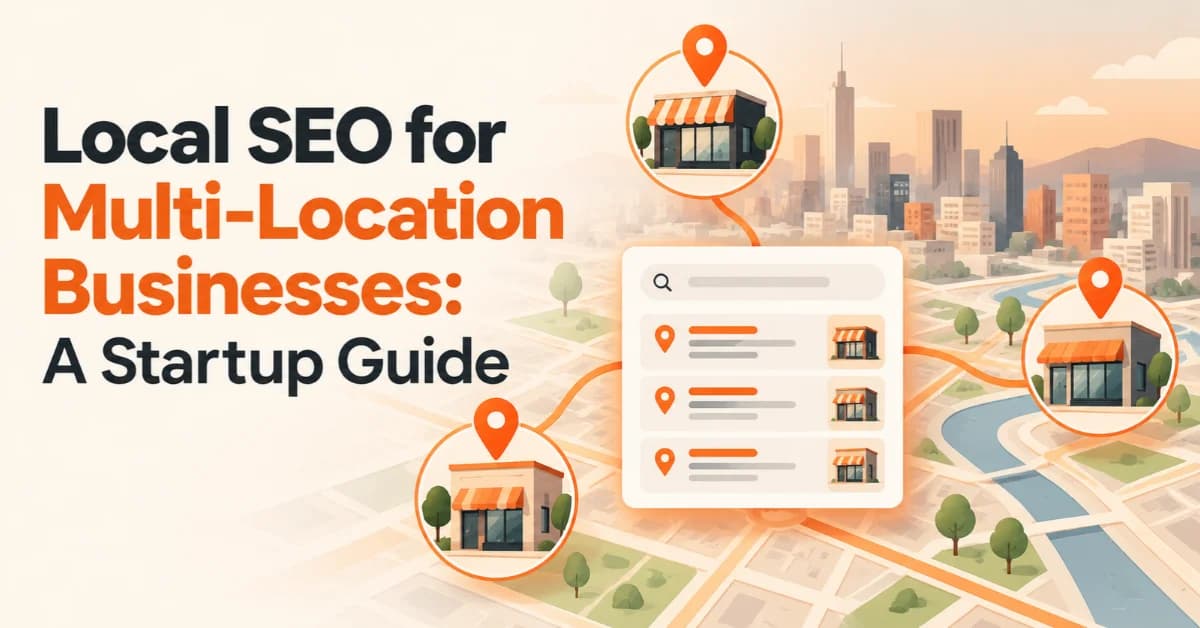
Local SEO for Multi-Location Businesses: A Startup Guide
For startups expanding into multiple cities, Local SEO for Multi-Location Businesses helps improve local search visibility, connect with nearby customers, and build a consistent digital presence across different markets. Instead of relying on one website homepage to attract every customer, businesses can create location-specific experiences that reflect the services, contact details, and needs of each area they serve.
For example, a startup operating in Dubai, Abu Dhabi, and Sharjah needs more than a general website listing all three cities. It needs accurate business information, relevant location pages, well-managed Google Business Profiles where eligible, and a clear way to measure results for each branch.
A scalable local SEO strategy helps startups build this foundation without investing in complex enterprise systems too early. The key is to maintain consistent brand standards while giving each genuine business location the information customers need to find and contact it.
What Is Local SEO for Multi-Location Businesses?
Local SEO for multi-location businesses is the process of improving a company's visibility in local search results across multiple physical branches or eligible service locations. It combines business listing management, website optimization, local content, customer reviews, and technical SEO to help people find the most relevant location.
Traditional local SEO often focuses on one business location. Multi-location SEO requires a consistent strategy across several locations while accounting for differences in services, opening hours, customer needs, and local competition.
For startups, this becomes important when a business expands beyond its original market. A company with offices in Dubai and Abu Dhabi, for example, needs accurate information for both locations and useful website pages that explain what customers can expect at each branch.
Google considers factors such as relevance, distance, and prominence when displaying local results. Businesses can improve relevance and the quality of their online information, but they cannot control a searcher's distance or guarantee a particular ranking.
Why Local SEO Matters for Startups Expanding Into New Cities
A startup may have a strong reputation in one city but little visibility in another. A structured local SEO strategy helps it establish a presence in new markets without relying entirely on paid advertising.
Key benefits include:
Better local visibility: Help potential customers find relevant branches through local search.
More qualified enquiries: Connect users with locations that offer the services they need.
Greater customer confidence: Provide accurate addresses, hours, contact details, and genuine reviews.
Scalable growth: Use a repeatable process to manage new branches as the business expands.
Clearer performance measurement: Identify which locations attract visitors, enquiries, and conversions.
For startups, the goal is not simply to rank for more keywords. It is to make every location easy to find, understand, and contact.
What Is the Best Local SEO Strategy for Multi-Location Startups?
The best local SEO strategy combines accurate business listings, useful location pages, consistent business information, authentic reviews, relevant local content, and location-level performance tracking. Startups should establish these fundamentals before investing in complex enterprise local SEO software.
Follow this practical framework:
Audit existing listings. Identify missing, outdated, or duplicate business profiles and directory entries.
Optimize eligible Google Business Profiles. Verify that each location meets Google's requirements and accurately represents the business.
Create dedicated location pages. Give each genuine branch a useful page with accurate contact details and relevant local information.
Maintain consistent business information. Keep names, addresses, telephone numbers, and operating hours accurate.
Build a review management process. Encourage honest customer feedback and respond professionally.
Track local performance. Measure organic traffic, enquiries, calls, bookings, and other meaningful conversions.
Build a Repeatable Local SEO Process
Create a standard checklist for every new location. Assign responsibility for profile management, website updates, review responses, and monthly reporting.
However, do not duplicate every page or profile automatically. First, confirm that the location is genuine, eligible, and meaningfully different from the others. A consistent process should maintain brand standards without creating unnecessary pages or misleading business information.
How Do I Set Up Google Business Profile for Multiple Locations?
Businesses with multiple eligible locations can manage their Google Business Profiles through an appropriate business account structure. Each profile should represent a real, eligible location and contain accurate information. Google permits separate profiles for qualifying locations, but businesses must follow its rules for physical premises and service-area operations.
Use this checklist when setting up or auditing profiles:
Access the business's Google Business Profile management account.
Confirm that each branch meets Google's eligibility requirements.
Enter the real business name, accurate address or service area, and appropriate contact details.
Choose the most relevant primary business category.
Add correct operating hours, website links, and genuine photos.
Verify each profile using Google's available verification process.
Give authorized team members appropriate access and establish a routine for updating information.
Common Google Business Profile Mistakes
Startups should avoid:
Adding city names or service keywords to a business name when they are not part of its real-world name.
Creating profiles for virtual offices that do not meet Google's eligibility rules.
Making multiple profiles for the same location without a valid reason.
Displaying incorrect addresses or outdated opening hours.
Creating profiles for cities where the business has no eligible location.
A service-area business that travels to customers may qualify for a different profile setup than a storefront. Check the official Google Business Profile guidelines before adding locations.
Does a Startup Need Separate Landing Pages for Each Location?
Yes, separate location landing pages are generally useful when each branch provides distinct information that helps customers make a decision. Each page should explain the location's services, contact details, availability, and other information relevant to local search intent.
A single page listing every city may be sufficient for a very small business directory, but it often provides less useful information than dedicated pages for genuine branches.
For example, a startup operating in Dubai, Abu Dhabi, and Sharjah could use this website structure:
example.com/locations/dubai/example.com/locations/abu-dhabi/example.com/locations/sharjah/
These are illustrative URL examples, not verified pages.
What to Include on a Local Landing Page
Each page should provide information that is both accurate and useful to customers.
A descriptive page title and H1 that identify the location and service.
The branch's real address, phone number, and opening hours, where applicable.
Services actually available at that location.
Genuine photographs of the premises, staff, or work.
Directions, parking information, or access details when useful.
Authentic location-specific testimonials or reviews, where appropriate.
Relevant FAQs and internal links to related services.
A clear way to call, enquire, book, or visit.
Avoid creating dozens of nearly identical pages by replacing only the city name. Instead, add genuine differences in services, customer questions, local information, and branch operations. This makes pages more useful to people and supports a stronger multi-location SEO strategy.
How to Maintain NAP Consistency and Manage Local Citations
NAP consistency means keeping your business name, address, and phone number accurate across your website, business profiles, and relevant online directories. Consistent information helps customers contact the right branch and reduces confusion when a company operates in several markets.
Start with a central record of approved business information for every location.
Local Citation Management Checklist
Standardize the business name, address, and telephone number for each branch.
Check important local directories and relevant industry listings.
Update outdated information after a move or phone number change.
Identify duplicate or misleading listings and resolve them through the appropriate platform.
Review opening hours and contact information regularly.
Keep a record of changes and the team member responsible for each update.
How to Avoid Duplicate Listings in Local SEO
Audit listings before creating new ones. If an existing profile represents the same location, investigate whether you should update or resolve it rather than create another.
Duplicate listings do not automatically mean a business has received a search penalty. However, conflicting profiles can confuse customers, split attention between listings, and create policy problems. Google specifically advises businesses not to create more than one page for each location, subject to its stated exceptions.
How Reviews, Local Content and Link Building Improve Visibility
Reviews and location-specific content help customers understand what a business offers and whether it meets their needs. Startups should create a manageable process that encourages genuine feedback and provides useful information for each market.
Create a Scalable Review Management Process
Ask customers for honest reviews after genuine transactions or completed services.
Make the review process simple and accessible.
Respond to positive and negative feedback professionally.
Monitor customer feedback for each branch separately.
Use review management software when manual monitoring becomes difficult.
Never buy reviews, fabricate customer experiences, or offer incentives in exchange for positive reviews. Focus on authentic feedback and consistent customer service.
Build Local Relevance Through Content and Links
Publish useful information that reflects each location's actual services and customer needs. A Dubai branch might answer questions about local appointment availability, while an Abu Dhabi branch could provide its own access details and service information.
You can strengthen local relevance by:
Creating helpful FAQs based on genuine customer questions.
Participating in relevant community or industry events.
Building relationships with local organizations and business partners.
Earning links from relevant publications and reputable local resources.
Sharing useful resources that other websites have a genuine reason to reference.
Avoid mass-producing city pages or purchasing links simply to manipulate rankings. Localized content should help customers, not just repeat location-based keywords.
Which Local SEO Tools Should Multi-Location Startups Use?
Startups do not need every available SEO tool. The best local SEO tools for multi-location businesses depend on the number of branches, the team's capacity, and the reporting required.
Start with these categories:
Google Business Profile: Manage eligible business listings and update location information.
Google Search Console: Monitor search queries, impressions, clicks, and organic search performance.
Google Analytics: Measure website visits, engagement, and configured conversion events.
Technical SEO tools: Identify broken links, indexing issues, duplicate page elements, and structured-data errors.
Listing management tools: Help maintain business information across relevant directories.
Review management software: Monitor customer feedback and coordinate responses across branches.
Local rank-tracking tools: Compare search visibility for relevant keywords across different locations.
Google recommends using Search Console and Google Analytics together because they provide different views of how people find and interact with a website.
For a startup with two or three branches, a spreadsheet and a simple reporting dashboard may be enough. Consider paid multi-site SEO management software when manual updates and reporting become difficult to maintain.
How to Track Local SEO Rankings Across Multiple Cities
To track local SEO rankings across multiple cities, monitor search visibility, location-page performance, customer actions, and conversions separately for each branch. Avoid relying on a single ranking position to judge whether your strategy is working.
Which Metrics Should You Monitor?
Track the following metrics monthly:
Local search visibility: Monitor relevant keywords and local results for each market.
Search impressions and clicks: Use Search Console to understand which queries and pages attract attention.
Location-page traffic: Measure visits to each branch's landing page.
Customer actions: Track calls, enquiry forms, bookings, and other available business interactions.
Conversions: Measure qualified leads or sales attributed to local search where reliable tracking is available.
Customer feedback: Review ratings, comments, and recurring service concerns.
Search Console provides data such as queries, clicks, impressions, and average search position. Analytics can help you understand what visitors do after reaching the website.
Build a Monthly Local SEO Reporting Routine
Create a simple dashboard with one row for each location. Compare results with the previous month and the same period where appropriate, then investigate significant changes.
For example, if the Dubai location receives more search impressions but fewer enquiries, review its search snippets, landing page, service information, and contact process. If the Abu Dhabi page attracts little traffic, investigate whether it targets relevant queries and provides enough useful local information.
Use ranking data as a diagnostic tool, not a promise of future leads or revenue.
Common Multi-Location SEO Mistakes Startups Should Avoid
A scalable strategy can fail when businesses focus on publishing more pages instead of maintaining accuracy and usefulness.
Avoid these common mistakes:
Creating duplicate or thin location pages with almost identical content.
Setting up Google Business Profiles for ineligible addresses.
Using inconsistent business names, phone numbers, or opening hours.
Ignoring customer reviews and unanswered questions.
Targeting cities where the company has no genuine presence or eligible service operation.
Adding incorrect local business schema markup.
Tracking rankings without measuring enquiries and conversions.
Investing in expensive tools before establishing a repeatable workflow.
Correct these issues before expanding the strategy. A smaller number of accurate, useful location pages can serve customers better than a large collection of low-value pages.
Frequently Asked Questions
1. What is multi-location local SEO?
Multi-location local SEO improves a business's visibility in local search across multiple branches or eligible service locations. It involves managing business profiles, location pages, local citations, customer reviews, and performance tracking.
2. How do I set up Google Business Profile for multiple locations?
Confirm that each location qualifies under Google's guidelines, then create or manage the appropriate profile with accurate business details. Each profile must represent a genuine eligible location, and businesses should avoid duplicate profiles for the same branch.
3. Does every city need a separate location landing page?
No. Create a separate page when it provides useful information about a genuine branch or distinct local offering. Avoid generating city pages that contain little more than a changed location name.
4. How can startups manage local citations across multiple branches?
Maintain a central record of each location's business name, address, phone number, and hours. Audit important directories regularly and correct outdated or duplicate listings.
5. Which tools are best for local SEO for startups?
Google Business Profile, Google Search Console, and Google Analytics provide a practical starting point. Add listing management, review monitoring, technical SEO, or local rank-tracking tools as your requirements grow.
6. How long does multi-location SEO take to show results?
There is no guaranteed timeline. Results depend on factors such as competition, website quality, location eligibility, existing authority, content usefulness, and how accurately the business maintains its information. Track progress over time rather than relying on a fixed deadline.
BrandVexo: Practical Digital Growth Solutions
BrandVexo helps businesses strengthen their digital presence through SEO, digital marketing, website development, AI automation, and business solutions. Our approach focuses on measurable outcomes, useful content, and strategies that connect online visibility with commercial goals. From improving search performance to developing a stronger digital foundation, we help businesses identify opportunities and build systems that support sustainable growth.
Phone: +971 52 356 5409
Email: info@brandvexo.com
Website: www.brandvexo.com
Conclusion
Local SEO for Multi-Location Businesses requires a balance between consistent brand management and useful local information. Startups should prioritize accurate business listings, dedicated location pages, consistent NAP details, genuine customer reviews, and reliable performance tracking.
Begin with the locations you already operate, fix any information gaps, and build a repeatable process before expanding into additional markets. Review the results regularly and improve pages based on customer needs and actual performance.
Disclaimer: This article provides general information about local SEO and digital marketing for educational purposes. Search rankings, visibility, and business outcomes vary depending on competition, location, implementation, and other factors. Always verify current Google Business Profile policies and technical requirements before making changes to business listings.
Free growth plan
Ready to grow your business?
Reading is a start — now let's build it. Tell us where you want to grow and a senior strategist will map the fastest, most profitable way to get there. Free, no obligation.
Discussion
Join the conversation
Be the first to comment. Comments are reviewed before they appear, so yours won't show up instantly — but we read every one.
Leave a comment
Keep reading
All articles SEO
AI Search Visibility: How to Improve Your Brand’s Reach
Improve AI Search Visibility with practical SEO, GEO, and AEO strategies that help your brand build authority, earn citations, and reach more customers.
 SEO
SEO Agency Selection for Consultants: A Practical Guide
Learn SEO Agency Selection for consultants, compare SEO services, evaluate pricing, spot red flags, and choose an agency focused on qualified leads and growth.
 SEO
SEO Audit Scope: A Practical Guide for Startups
Define your SEO Audit Scope with this practical startup guide covering technical SEO, content, keywords, competitors, performance, backlinks, and ROI.