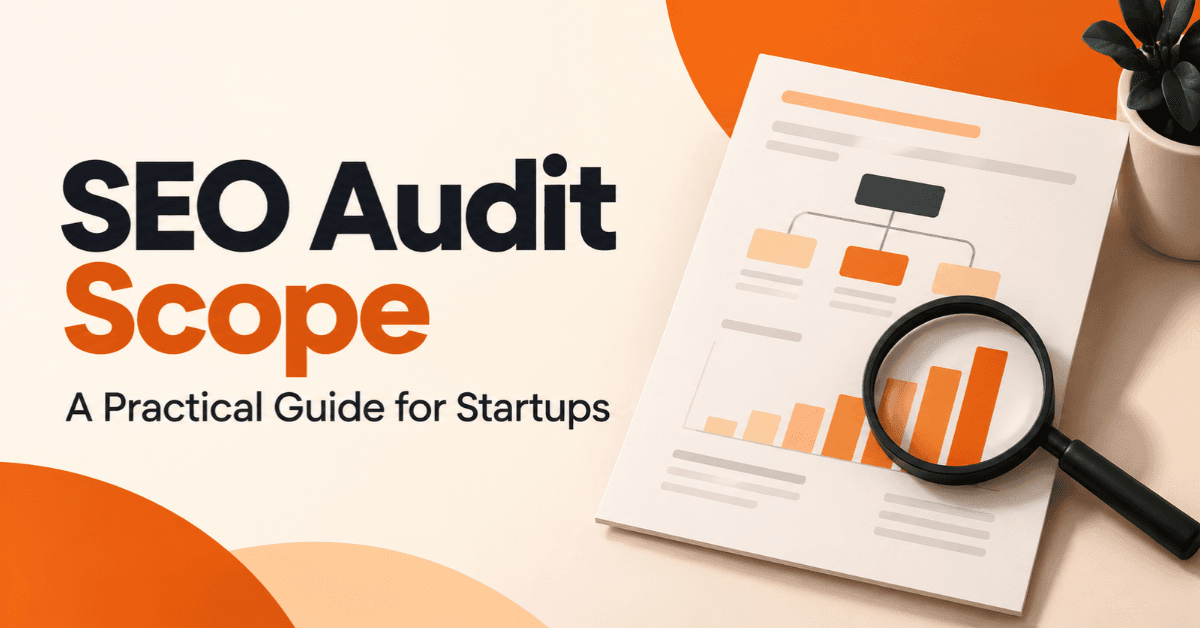
SEO Audit Scope: A Practical Guide for Startups
For a startup, an SEO audit should do more than identify technical errors. A well-defined SEO Audit Scope helps founders understand how search engines access the website, whether important pages target the right searches, where competitors have an advantage, and which improvements can contribute to business growth. Instead of trying to fix everything at once, startups can use a focused startup SEO audit checklist to identify the problems and opportunities that matter most.
A practical audit can cover technical SEO, site architecture, content, on-page optimization, performance, backlinks, competitors, analytics, and conversions. The goal is not to create a long list of SEO issues. The goal is to turn those findings into a prioritized action plan that supports a minimum viable SEO strategy and long-term organic growth.
What Is an SEO Audit Scope?
An SEO Audit Scope defines the specific areas of a website and search presence that an SEO audit will examine. It establishes what the audit covers, what it does not cover, and which business objectives should guide the analysis.
For startups, the scope should reflect the website's size, industry, target audience, business model, competition, and available resources. A small SaaS company, for example, does not necessarily need the same audit depth as a large ecommerce website with thousands of product pages.
A useful website audit scope framework normally examines:
Technical SEO and crawlability
Website architecture
On-page SEO
Content and keyword targeting
Website performance
Backlinks and authority
Competitor search visibility
Google Search Console and analytics
Conversion and business performance
Defining the scope first prevents teams from spending hours fixing minor issues while more important indexing, content, or conversion problems remain unresolved.
Why Startups Need a Defined SEO Audit Scope
Startups often work with limited budgets, small teams, changing products, and rapidly evolving websites. These conditions can create SEO problems that remain unnoticed while the company focuses on product development or customer acquisition.
A defined scope helps identify:
Technical debt that could restrict organic visibility
Important pages that search engines cannot properly access
Content gaps against competitors
Poor keyword targeting
Weak internal linking
Slow or difficult-to-use pages
Missed commercial search opportunities
The result is a more focused startup website health check rather than a generic list of SEO recommendations.
What Should Be Included in a Startup SEO Audit?
A comprehensive startup SEO audit should examine six core areas. The exact depth depends on the website and business goals, but these areas provide a practical foundation.
1. Technical SEO Audit
Technical SEO determines whether search engines can efficiently crawl, understand, and index the website.
The audit should examine:
Crawlability and indexability
HTTPS and security
Canonical URLs
Redirects
Duplicate pages
HTTP status codes
JavaScript rendering
Mobile usability
XML sitemap
robots.txt
Broken links and 404 errors
Startups should pay particular attention to pages that generate leads or revenue. If an important service or product page accidentally carries a noindex directive, for example, improving its content will not solve the visibility problem.
A technical SEO audit should therefore prioritize issues that prevent search engines from accessing or understanding important content.
2. On-Page SEO Audit
An on-page SEO audit for SaaS or another startup business should evaluate whether each important page satisfies a specific search intent.
Review:
Page titles
Meta descriptions
H1 and H2 headings
Primary and secondary keywords
Search intent
Internal links
Image optimization
Content depth
Duplicate or thin content
Avoid treating keywords as isolated phrases. A strong page should clearly answer the searcher's underlying need.
For example, a SaaS startup targeting project-management software should not create several pages that all target nearly identical queries. Instead, it can map different search intents to appropriate pages, such as product, pricing, integrations, comparison, and educational content.
3. Content and Keyword Audit
Content should connect search demand with the problems the startup actually solves.
A content audit should identify:
Primary keywords
Secondary keywords
Long-tail searches
Search intent
Content gaps
Thin content
Outdated information
Keyword cannibalization
Missing topic clusters
A keyword cannibalization check is particularly useful when startups publish content quickly. Multiple pages may unintentionally compete for the same query, making it harder to establish a clear primary page.
The audit should also ask whether the content demonstrates genuine expertise. Google recommends creating helpful, reliable, people-first content that adds value rather than producing pages primarily to attract search traffic.
4. Website Performance and Core Web Vitals
Website performance affects both user experience and the overall quality of the website experience.
Review:
Core Web Vitals
Mobile usability
Page loading performance
Large images
Unnecessary JavaScript
Third-party scripts
Caching
Server response performance
Core Web Vitals optimization should not become a numbers-only exercise. A startup should prioritize performance problems that create a poor experience for real visitors.
Tools such as PageSpeed Insights can help identify technical performance issues. Google also recommends looking at page experience more broadly, including mobile usability, secure delivery, and avoiding intrusive elements.
5. Backlinks and Off-Page SEO
Backlinks remain an important part of understanding a site's authority and competitive position, but startups should focus on relevance and quality rather than collecting links indiscriminately.
Review:
Referring domains
Link relevance
Competitor backlink profiles
Lost backlinks
Anchor text patterns
Industry publications
Partnership opportunities
Digital PR opportunities
A competitor backlink profile can reveal websites, publications, communities, and resources that already recognize businesses in the same industry.
However, startups should not copy competitors blindly. The better approach is to identify legitimate opportunities where the startup can contribute something useful.
6. Local and Business-Specific SEO
Not every startup needs local SEO, but it becomes important when customers search based on location. For example, a Dubai-based technology consultancy may need pages that clearly communicate its services, target market, and geographic relevance. A startup serving customers internationally may instead prioritize industry and service intent over local landing pages.
The audit should determine whether the website's geographic targeting matches its actual business model.
Google Search Console and Analytics Checks
A strong audit should combine technical analysis with first-party performance data.
Google Search Console Setup
A Google Search Console setup allows startups to examine how Google sees their websites and how pages perform in Search.
Review:
Search queries
Clicks
Impressions
Click-through rate
Average position
Page indexing
Sitemaps
Core Web Vitals
Search performance by page
Search Console can also help identify pages that receive impressions but few clicks. Those pages may represent opportunities for improved titles, content alignment, or stronger search intent.
Google provides Search Console specifically to help website owners monitor Search performance and understand whether Google can index their pages.
Analytics and Conversion Data
SEO should connect with business outcomes.
Where appropriate, review:
Organic sessions
Landing pages
Leads
Sign-ups
Purchases
Conversion rates
Revenue
Customer acquisition patterns
A page that generates fewer visits but produces qualified leads may deserve more attention than a high-traffic article that produces no meaningful business result.
Startup Website Architecture and Crawlability
A logical website structure helps both visitors and search engines understand the relationship between pages.
A site architecture and crawlability review should examine:
Navigation
URL structure
Categories
Internal linking
Orphan pages
Crawl depth
Duplicate paths
Important page accessibility
Important commercial pages should not sit several unnecessary clicks away from the homepage.
Startups should also avoid creating dozens of pages simply because keyword tools suggest variations. Each page should have a clear purpose and provide meaningful value.
How to Identify Architecture Problems
Common warning signs include:
Important pages have few or no internal links
Multiple URLs serve nearly identical purposes
Navigation does not reflect customer journeys
Service pages are difficult to find
Blog posts do not link to relevant commercial pages
Redirect chains create unnecessary complexity
A clean structure makes future growth easier because new content has an obvious place within the website.
Competitor SEO Analysis for Startups
Competitor analysis can reveal opportunities that a technical audit alone will miss.
Start by comparing:
Ranking keywords
Top-performing pages
Content topics
Search intent
Backlinks
Page structure
Commercial landing pages
Featured search opportunities
The objective is not to reproduce competitor websites. Instead, look for areas where competitors provide incomplete, outdated, or generic information.
Finding SEO Gaps Your Competitors Miss
Potential opportunities include:
Questions competitors do not answer
Weak comparison pages
Missing industry-specific guides
Poorly optimized service pages
Missing location-specific content
Unclear product explanations
Long-tail searches with weak results
This approach turns a competitor analysis into a practical content-gap strategy.
How to Prioritize SEO Audit Findings
One of the biggest mistakes startups make is treating every SEO issue as equally important.
Instead, classify findings by impact.
Critical issues may include:
Important pages blocked from indexing
Major crawlability problems
Broken high-value URLs
Serious technical accessibility issues
High-priority issues may include:
Poor targeting of core landing pages
Major content gaps
Weak website architecture
Significant technical errors
Medium-priority issues may include:
Internal linking improvements
Metadata refinement
Image optimization
Lower-priority issues may include:
Minor formatting improvements
Small metadata adjustments
Non-critical technical warnings
This prioritization helps startups direct limited resources toward changes that can realistically influence visibility and business performance.
Low-Cost SEO Audit Tools for Startups
Startups do not always need expensive enterprise platforms to conduct a useful first audit.
Useful low-cost SEO audit tools include:
Google Search Console for search and indexing data
Google Analytics for traffic and conversions
PageSpeed Insights for performance
Screaming Frog for crawling and technical checks
Google Trends for search-interest research
Bing Webmaster Tools for additional search data
The important point is that tools identify potential issues. Human analysis determines which issues matter to the business.
Minimum Viable SEO Strategy After an Audit
A startup with limited resources can build a minimum viable SEO strategy around a small number of fundamentals.
Prioritize:
Make important pages crawlable and indexable.
Fix critical technical problems.
Establish a clear website structure.
Map keywords to relevant pages.
Improve core product and service pages.
Create content around real customer questions.
Build relevant authority over time.
Track organic traffic, leads, and conversions.
This approach prevents startups from becoming overwhelmed by hundreds of recommendations.
How Often Should a Startup Audit Its Website?
A startup should perform a comprehensive SEO audit periodically and monitor important technical and performance signals continuously. A broader audit may make sense once or twice a year, while smaller checks can happen monthly or quarterly depending on website activity.
Run an additional audit after:
A website redesign
A domain migration
A major CMS change
Large URL changes
Significant traffic losses
Expansion into a new market
A major content restructuring
The frequency should reflect how quickly the website changes and how important organic search is to customer acquisition.
SEO Audit Scope Example for a SaaS Startup
Consider a UAE SaaS startup with around 50 pages, several product features, a blog, and limited organic traffic.
Instead of auditing every possible SEO factor with equal priority, the company could use this sequence:
Phase 1: Technical foundation
Check indexing, sitemap, robots.txt, canonical tags, broken links, and crawlability.
Phase 2: Commercial pages
Review product, pricing, feature, and solution pages against customer search intent.
Phase 3: Content opportunities
Identify keyword gaps, customer questions, comparison searches, and supporting topics.
Phase 4: Internal linking
Connect educational content with relevant product and conversion pages.
Phase 5: Authority
Analyze the competitor backlink profile and identify relevant industry opportunities.
Phase 6: Measurement
Connect Search Console and analytics data with sign-ups, leads, or other meaningful business goals.
This creates a manageable roadmap rather than an overwhelming technical report.
How to Measure the ROI of an SEO Audit
An audit itself does not guarantee an immediate return. Its value comes from identifying improvements that can be implemented and measured.
Track:
Organic clicks
Qualified organic traffic
Strategic keyword visibility
Leads
Sign-ups
Conversion rate
Revenue
Customer acquisition cost
For example, if an audit identifies a high-value service page that receives impressions but generates very few clicks or conversions, improving that page may create more commercial value than publishing ten additional blog posts.
The best SEO measurement connects search performance with actual business outcomes.
SEO Audit Checklist for Startups
Use this quick startup SEO audit checklist as a practical starting point.
Technical SEO
Important pages are crawlable
Important pages are indexable
XML sitemap is available
robots.txt is correctly configured
HTTPS works properly
Broken links are reviewed
404 errors are checked
Canonical tags are appropriate
Mobile experience works well
On-Page SEO
Search intent matches each important page
Titles are descriptive and relevant
Meta descriptions support clicks
Headings have a logical hierarchy
Internal links support important pages
Images use useful alternative text
Content
Keywords are mapped to appropriate pages
Content gaps are identified
Thin content is reviewed
A keyword cannibalization check is completed
Content demonstrates genuine expertise
Authority
Backlinks are reviewed
Competitor backlink profiles are analyzed
Relevant authority opportunities are identified
Measurement
Google Search Console is configured
Analytics is configured
Conversions are tracked
Organic KPIs are defined
FAQs
How Do You Define the Scope of an SEO Audit?
You define the scope by considering the website's size, business goals, target market, technical setup, competition, and current SEO maturity. A startup should prioritize the pages, search queries, and technical areas that can have the greatest business impact.
What Should Be Included in a Startup SEO Audit?
A startup SEO audit should generally include technical SEO, crawlability, website architecture, on-page SEO, content, keyword targeting, performance, backlinks, competitor analysis, Search Console data, analytics, and conversion tracking. The depth of each area should depend on the startup's website and objectives.
How Often Should a Startup Audit Its Website?
Most startups can benefit from a broader SEO audit periodically, supported by smaller technical and performance checks throughout the year. An additional audit is especially useful after a redesign, migration, major URL change, traffic decline, or expansion into a new market.
What Is the ROI of an SEO Audit for New Businesses?
The ROI depends on how effectively the startup implements and measures the recommendations. An SEO audit can identify opportunities to improve qualified organic traffic, rankings, leads, sign-ups, conversions, and revenue, but the audit itself does not guarantee a financial return.
Your Digital Growth Partner: BrandVexo
BrandVexo helps businesses build practical digital growth systems across digital marketing, SEO, web development, AI automation, and business solutions. Our approach focuses on measurable business outcomes rather than vanity metrics.
We help businesses identify growth opportunities, improve search visibility, strengthen their digital presence, and connect marketing activity with practical commercial goals. Our services also include social media management and optimization, content strategy, and personal and business branding.
Phone: +971 52 356 5409
Email: info@brandvexo.com
Website: www.brandvexo.com
Final Takeaway
A strong SEO Audit Scope is not simply a long list of technical errors. It is a framework for understanding how effectively a startup's website can be discovered, understood, trusted, and used by its target customers. Start with technical accessibility, then evaluate website architecture, search intent, content, performance, competitors, authority, and business results. Most importantly, prioritize findings according to impact instead of trying to fix everything simultaneously.
Disclaimer: SEO results vary based on competition, website condition, industry, content quality, authority, and implementation. An SEO audit provides recommendations and priorities but cannot guarantee specific rankings, traffic, or revenue outcomes.
Free growth plan
Ready to grow your business?
Reading is a start — now let's build it. Tell us where you want to grow and a senior strategist will map the fastest, most profitable way to get there. Free, no obligation.
Discussion
Join the conversation
Be the first to comment. Comments are reviewed before they appear, so yours won't show up instantly — but we read every one.
Leave a comment
Keep reading
All articles SEO
AI Search Visibility: How to Improve Your Brand’s Reach
Improve AI Search Visibility with practical SEO, GEO, and AEO strategies that help your brand build authority, earn citations, and reach more customers.
 SEO
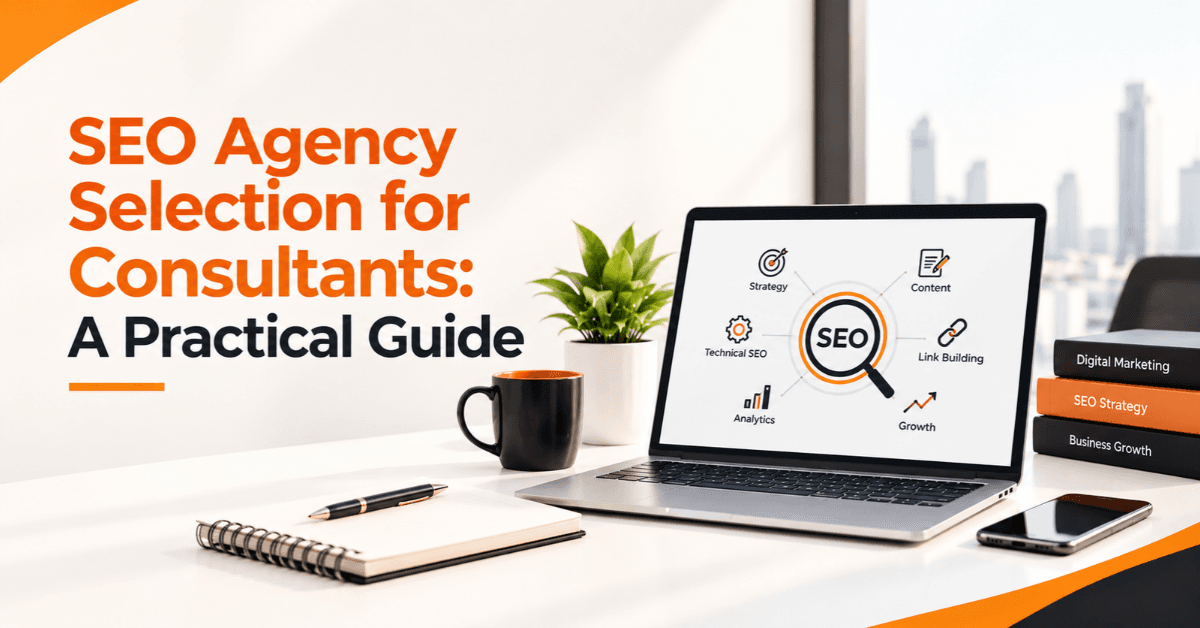
SEO Agency Selection for Consultants: A Practical Guide
Learn SEO Agency Selection for consultants, compare SEO services, evaluate pricing, spot red flags, and choose an agency focused on qualified leads and growth.
 SEO
Local SEO for Multi-Location Businesses: A Startup Guide
Learn how startups can scale local SEO across multiple locations with Google Business Profiles, local landing pages, reviews, and practical tracking tips.