

LinkedIn Lead Generation: How to Turn Content Into Enquiries
Learn how to use LinkedIn content, optimize your profile and build relationships that turn engagement into qualified business enquiries.
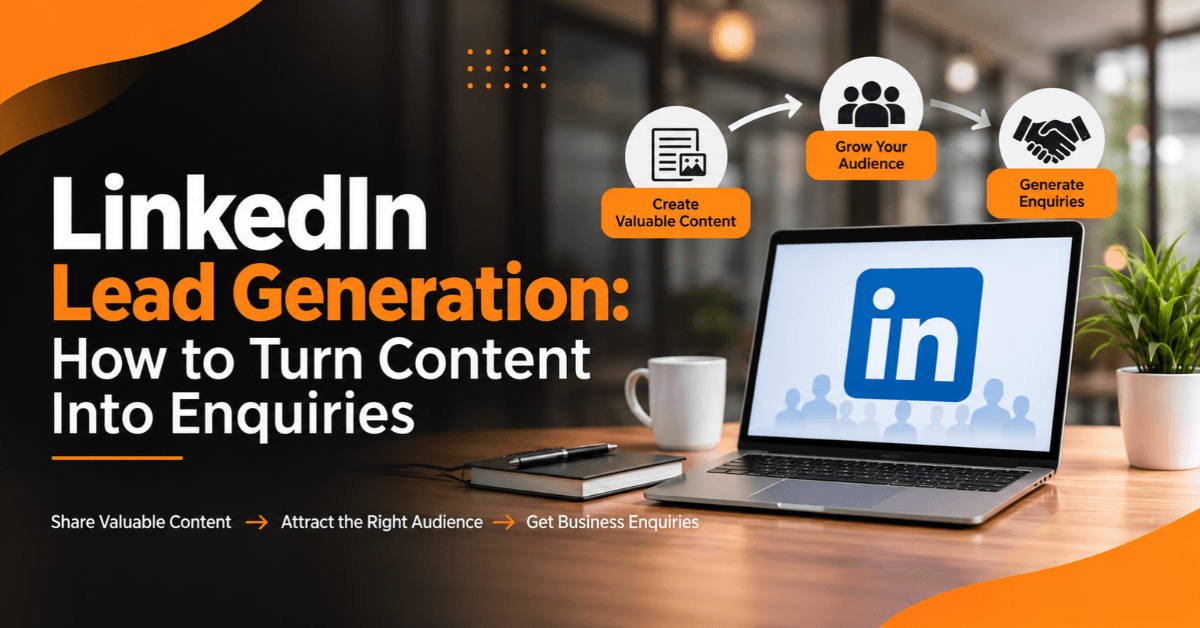
Many businesses use LinkedIn to share updates, promote services and connect with professionals. However, getting likes, comments and new followers does not always translate into business enquiries. The real challenge is turning audience attention into meaningful conversations with potential customers. LinkedIn Lead Generation provides businesses with an opportunity to attract relevant prospects, demonstrate expertise and build relationships through valuable content. With the right strategy, businesses can use LinkedIn to reach decision-makers, address customer problems and generate qualified enquiries without relying entirely on paid advertising.
The key is to create content that helps people make informed decisions and gives them a clear reason to take the next step.
What Is LinkedIn Lead Generation and Why Does It Matter?
LinkedIn lead generation is the process of attracting potential customers, building professional relationships and converting interested users into business leads through LinkedIn.
Unlike traditional social media promotion, LinkedIn focuses on professional connections, industry knowledge and business discussions. This makes it particularly useful for companies that sell services or solutions to other businesses.
For example, a UAE-based digital marketing agency can publish practical advice about website performance, search visibility and social media marketing. Business owners who find this information useful may visit the agency's profile, explore its services and eventually request a consultation.
A successful LinkedIn lead generation strategy helps businesses:
Reach relevant professionals and decision-makers.
Build trust through educational content.
Demonstrate industry knowledge and experience.
Generate qualified business enquiries.
Develop relationships with potential customers.
Support long-term business growth.
The objective is not simply to increase visibility. It is to attract people who have a genuine interest in the products or services a business offers.
How to Build a LinkedIn Lead Generation Strategy
An effective LinkedIn marketing strategy starts with understanding your audience. Publishing content without knowing whom you want to reach can attract attention from people who are unlikely to become customers.
Here are the essential steps to create a focused strategy.
1. Define Your Ideal Customer Profile (ICP)
An ideal customer profile describes the type of business or individual most likely to benefit from your services.
Before creating content, identify:
Industry: Which industries need your products or services?
Job titles: Are you targeting business owners, marketing managers or company directors?
Company size: Do you serve startups, small businesses or established companies?
Location: Are your potential customers based in the UAE, the UK or other markets?
Business challenges: What problems are they trying to solve?
For example, a web development company may target startup founders and business owners who need professional websites to generate enquiries.
A clear customer profile helps you create relevant content instead of publishing general information for everyone.
2. Understand Your Audience's Pain Points
Potential customers usually engage with content that addresses problems they already face.
Research common questions, customer feedback, industry discussions and frequently reported business challenges.
For example, a business owner may struggle with low website traffic, inconsistent social media activity or poor lead conversion.
Create content that explains these problems and offers practical solutions. This approach positions your business as a helpful resource rather than another company trying to sell services.
3. Set Clear Lead Generation Goals
Decide what you want your LinkedIn activity to achieve.
Your goals may include:
Generating qualified business enquiries.
Booking consultation calls.
Increasing visits to important service pages.
Building relationships with decision-makers.
Promoting downloadable guides or resources.
Generating registrations for webinars.
Set measurable targets and review performance regularly. Clear objectives make it easier to identify which content and activities contribute to business growth.
How to Turn LinkedIn Content Into Qualified Business Enquiries
Content plays an important role in LinkedIn lead generation. However, publishing regularly is not enough. Your posts should help potential customers understand their problems, evaluate possible solutions and take meaningful action.
1. Create Content That Solves Real Business Problems
Educational content attracts people who are looking for answers.
Instead of repeatedly promoting your services, explain topics that matter to your target audience.
For example, a digital marketing agency can publish posts about:
Common SEO mistakes affecting website visibility.
Ways to improve website conversion rates.
Social media strategies for small businesses.
How to create a consistent brand identity.
Benefits of marketing automation.
Each post should provide useful information that readers can apply to their businesses.
When people consistently find your content helpful, they have a stronger reason to trust your brand.
2. Use Case Studies to Build Trust
Case studies show how a business approaches real customer challenges.
A useful case study should explain the initial problem, the actions taken and the results achieved.
For example, a website development company could explain how it improved a client's website navigation, mobile experience and enquiry process.
Include genuine project details, screenshots or measurable results where permission allows. Avoid exaggerated claims or results that you cannot verify.
Case studies help potential customers understand what working with your business may involve.
3. Share Industry Insights and Expert Opinions
Thought leadership allows businesses to demonstrate their understanding of industry developments and customer needs.
Share original opinions, practical lessons and observations from your professional experience.
For example, a marketing agency could discuss why businesses should measure qualified enquiries instead of focusing entirely on social media engagement.
You can also comment on relevant industry developments, explain changes in customer behaviour and share lessons from completed projects.
Useful insights encourage meaningful discussions and help establish professional credibility.
4. Include Clear Calls to Action (CTAs)
A call to action tells readers what they can do after consuming your content.
Without a clear next step, interested readers may simply move to another post.
Use relevant CTAs based on the purpose of your content.
Examples include:
For educational posts: Save this guide for your next marketing campaign.
For service-related posts: Visit our website to explore our services.
For consultation offers: Contact us to discuss your business requirements.
For downloadable resources: Request our practical business checklist.
For discussion posts: Share your experience in the comments.
Keep each CTA relevant to the content. A useful invitation often works better than an aggressive sales message.
Best Types of LinkedIn Content for Lead Generation
Different content formats help businesses connect with audiences in different ways. A balanced LinkedIn content strategy should include educational, informative and conversion-focused posts.
1. Educational LinkedIn Posts
Educational posts explain industry concepts, answer common questions and provide actionable advice.
For example, an SEO agency could share five ways to improve local search visibility. This type of content attracts business owners who want to improve their online presence.
2. LinkedIn Carousel Posts
Carousels present information through multiple slides.
They work well for:
Step-by-step guides.
Marketing checklists.
Industry comparisons.
Common mistakes and solutions.
Practical business tips.
Keep each slide focused on one idea and make the information easy to understand.
3. Case Studies and Client Success Stories
Share genuine examples of how your business helped customers address specific challenges. Explain the problem, your approach and the outcome. This provides potential customers with a clearer understanding of your expertise.
4. LinkedIn Articles and Newsletters
Long-form content allows businesses to explore industry topics in greater detail. Use articles and newsletters to share professional insights, explain complex subjects and answer questions that require more information than a standard post can provide.
5. Short Videos and Expert Opinions
Short videos allow professionals to communicate ideas in a direct and personal way.
You can use them to explain services, answer frequently asked questions, discuss industry developments or share practical recommendations.
Choose formats based on your audience's preferences and the information you want to communicate.
Optimize Your LinkedIn Profile to Convert Visitors Into Leads
Your LinkedIn profile often provides the first impression after someone engages with your content. If visitors cannot understand what you offer, they may leave without contacting you.
Profile optimization for lead generation helps turn profile visits into potential business opportunities.
1. Write a Benefit-Focused Headline
Avoid using only a job title.
Explain whom you help and the value you provide.
For example:
Instead of: Digital Marketing Expert
Use: Helping Businesses Improve Online Visibility Through SEO and Digital Marketing.
A clear headline gives visitors a reason to explore your profile.
2. Create a Strong About Section
Your About section should explain:
Who you help.
What services you provide.
Which problems you solve.
What makes your approach useful.
How potential customers can contact you.
Use simple language and avoid filling this section with unnecessary industry terms.
3. Add Relevant Work and Proof
Include relevant experience, completed projects, professional achievements and recommendations. Where appropriate, add links to case studies, service pages and other useful resources.
This information helps potential customers evaluate your expertise before starting a conversation.
4. Make Contact Information Accessible
Ensure your website, business email and other relevant contact details are easy to find. If visitors need to search through several sections to contact you, you may lose potential enquiries.
How to Convert LinkedIn Engagement Into Actual Enquiries
Engagement creates opportunities, but businesses need a clear process to turn those opportunities into conversations.
Here are practical ways to convert LinkedIn engagement into enquiries.
1. Respond to Relevant Comments
When someone asks a question or shares a relevant experience, respond with useful information. Avoid replying with generic promotional messages. Instead, continue the discussion and understand what the person needs.
2. Use Personalized Direct Messages
A personalized message should relate to the person's actual interests or previous interaction.
For example:
"Thanks for engaging with our post about website performance. You mentioned that improving mobile usability is a priority. We have a few practical recommendations that may help."
This approach starts a conversation without immediately pushing a sales offer.
3. Share Relevant Resources
When someone shows interest in a particular topic, share a resource that addresses their needs.
This could include:
A relevant blog article.
A service explanation.
A practical checklist.
A case study.
A consultation booking page.
Make sure the resource genuinely supports the conversation.
4. Follow Up at the Right Time
Not every interested prospect is ready to purchase immediately. Some people need additional information, internal approval or time to compare service providers.
Follow up politely when appropriate, refer to the previous conversation and offer relevant assistance. Respect people's preferences and avoid sending repeated unsolicited messages.
Organic vs Paid LinkedIn Lead Generation: Which Works Better?
Businesses can generate LinkedIn leads through both organic marketing and paid advertising. The right approach depends on available resources, campaign goals and target audience.
Organic LinkedIn Lead Generation
Organic lead generation uses unpaid activities to attract and engage potential customers.
Common methods include:
Publishing educational content.
Building professional connections.
Sharing industry insights.
Participating in relevant discussions.
Optimizing personal and company profiles.
Organic activity can support long-term brand visibility and professional relationships. However, it requires consistency and time.
Paid LinkedIn Lead Generation
Paid campaigns allow businesses to reach selected professional audiences through LinkedIn advertising.
Common options include:
Sponsored Content.
LinkedIn Lead Gen Forms.
Sponsored Messaging formats where available.
Audience targeting based on professional attributes.
Retargeting eligible audiences.
LinkedIn Lead Gen Forms allow advertisers to collect information through forms that can use members' profile details to prefill fields.
According to LinkedIn's form guidance, keeping forms focused and limiting unnecessary fields can help reduce friction. The platform recommends considering three to four fields for many lead generation forms.
You can read the official LinkedIn Lead Gen Form best practices before launching a campaign.
Which approach should you choose?
Organic marketing is useful for building relationships and establishing expertise over time. Paid advertising can help businesses reach specific audiences and promote targeted offers.
Many businesses combine both approaches to support different stages of the customer journey.
Common LinkedIn Lead Generation Mistakes to Avoid
Even businesses that publish regularly can struggle to generate enquiries when their content lacks direction.
Avoid these common mistakes:
Posting without a target audience: General content may attract attention but fail to reach potential buyers.
Focusing only on likes: Engagement does not automatically represent business interest.
Publishing overly promotional content: Constant sales messages can reduce audience interest.
Using weak CTAs: Readers may not know what action to take.
Ignoring comments and messages: Delayed responses can affect potential business relationships.
Sending generic sales messages: Irrelevant outreach can damage brand credibility.
Failing to measure lead quality: A large number of enquiries does not always mean better business opportunities.
Inconsistent publishing: Long gaps between posts can make it harder to maintain audience interest.
Focus on relevance, consistency and genuine conversations rather than trying to maximize every engagement metric.
How to Measure the Success of Your LinkedIn Lead Generation Strategy
Tracking performance helps businesses understand whether their LinkedIn marketing activities generate meaningful results.
Do not rely entirely on impressions, reactions or follower growth. Measure the actions that contribute to your business objectives.
Important LinkedIn lead generation metrics include:
Profile visits: Are relevant professionals exploring your profile?
Website clicks: Are people visiting your website after engaging with your content?
Meaningful engagement: Are potential customers asking questions or sharing useful feedback?
Qualified enquiries: How many enquiries come from people who match your target audience?
Consultation bookings: Are interested prospects taking the next step?
Conversion rate: How many enquiries eventually become customers?
Use website analytics, campaign tracking links and your CRM to connect LinkedIn activity with enquiries and sales opportunities.
For paid campaigns, review cost per lead alongside lead quality and conversion performance. A cheaper lead is not necessarily a more valuable lead.
A Simple 30-Day LinkedIn Lead Generation Plan
Businesses that are new to LinkedIn lead generation can begin with a simple monthly plan.
The following schedule provides a practical starting point.
Week 1: Build Your Foundation
Optimize your personal and company profiles.
Define your ideal customer profile.
Research your audience's common challenges.
Identify clear lead generation goals.
Week 2: Publish Valuable Content
Share educational LinkedIn posts.
Publish practical industry advice.
Create a carousel addressing a common customer problem.
Engage with relevant industry discussions.
Week 3: Build Relationships
Share a genuine case study.
Respond to comments and questions.
Connect with relevant professionals.
Start personalized conversations where appropriate.
Week 4: Review and Improve
Review post performance.
Identify content that attracted relevant prospects.
Follow up with interested contacts.
Evaluate enquiries and consultation bookings.
Improve the next month's content plan.
Remember that this is a starting framework, not a guaranteed lead generation formula. Adjust your publishing frequency and content formats according to audience response and available resources.
Turn Your LinkedIn Content Into Meaningful Business Opportunities
Successful LinkedIn Lead Generation requires more than publishing regular updates. Businesses need to understand their audience, share valuable information, maintain an optimized profile and build relationships with potential customers. A clear content strategy helps attract relevant professionals, while meaningful conversations and consistent follow-ups create opportunities to generate qualified enquiries.
Focus on providing value before promoting your services. Track the enquiries that matter, improve your approach and make every piece of content serve a clear purpose.
If your business wants to build a stronger online presence and attract more relevant customers, a structured digital marketing strategy can help connect content, visibility and lead generation.
Frequently Asked Questions
1. How does LinkedIn lead generation work?
LinkedIn lead generation works by attracting potential customers through professional content, networking and advertising. Businesses build trust, engage with relevant prospects and encourage interested people to request information, book consultations or discuss their requirements.
2. How can I generate leads on LinkedIn without paid advertising?
You can generate organic leads by publishing educational content, optimizing your profile, connecting with relevant professionals and participating in industry discussions. Responding to genuine questions and sharing useful resources can also encourage business enquiries.
3. What type of LinkedIn content generates the most leads?
Educational posts, case studies, expert insights, carousel guides and service-related content can support lead generation. The most effective format depends on your target audience, business goals and the problems your content addresses.
4. How often should a business post on LinkedIn?
Choose a publishing schedule that you can maintain consistently. For many businesses, starting with three to five quality posts per week can provide a manageable testing schedule. Review audience engagement and enquiry quality before increasing frequency.
5. Is LinkedIn effective for B2B lead generation?
Yes. LinkedIn provides professional networking, business-focused content distribution and advertising options that can help B2B companies reach relevant decision-makers. Results depend on audience targeting, content quality and follow-up.
6. How do I turn LinkedIn followers into paying customers?
Share useful content, build trust, understand followers' business needs and start relevant conversations. When someone shows genuine interest, provide suitable resources or invite them to discuss their requirements. Follow up professionally and focus on solving their problems.
7. Can small businesses use LinkedIn for lead generation?
Yes. Small businesses can use organic LinkedIn marketing to build professional relationships without starting with a large advertising budget. A clear profile, consistent content and targeted networking can help them attract relevant business opportunities.
How BrandVexo Can Help!
BrandVexo helps businesses build practical digital growth systems through digital marketing, SEO, website development, social media and AI automation. We focus on improving online visibility, strengthening brand presence and connecting marketing activities with meaningful business goals.
Our approach combines useful content, strategic planning and performance-focused digital solutions to help businesses attract relevant audiences and create sustainable growth opportunities.
Contact BrandVexo
Phone: +971 52 356 5409
Email: info@brandvexo.com
Website: https://www.brandvexo.com
Disclaimer: The information in this article is intended for general educational and informational purposes only. LinkedIn features, policies, and marketing practices may change over time, so results can vary depending on your industry, audience, and strategy. For tailored guidance on LinkedIn marketing and lead generation, contact BrandVexo Digital Solutions.
Free growth plan
Ready to grow your business?
Reading is a start — now let's build it. Tell us where you want to grow and a senior strategist will map the fastest, most profitable way to get there. Free, no obligation.
Discussion
Join the conversation
Be the first to comment. Comments are reviewed before they appear, so yours won't show up instantly — but we read every one.
Leave a comment
Keep reading
All articles
How UAE Businesses Can Reduce Customer Acquisition Costs
AI Search Visibility for Clinics: A Practical Guide
Improve AI Search Visibility for clinics with practical SEO, GEO, AEO, local search, and content strategies to reach more patients online.

IT Services for Small Businesses: A Complete Guide for Medical Clinics
Explore IT services for small businesses and how managed IT support helps medical clinics improve cybersecurity, protect patient data and reduce downtime.