

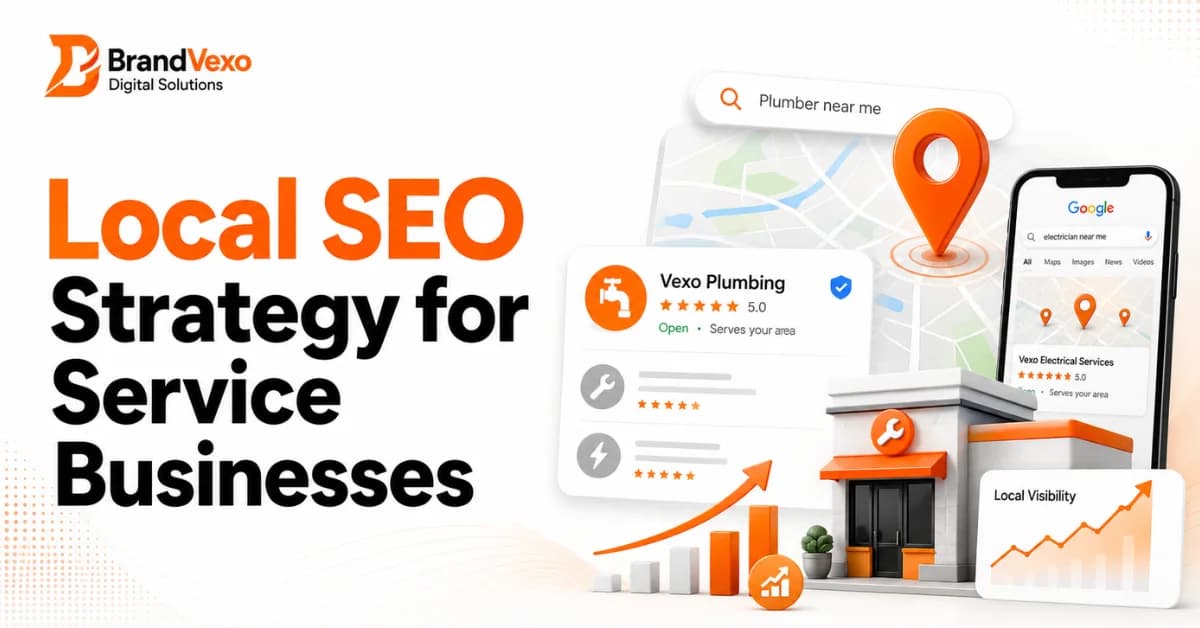
Local SEO Strategy for Service Businesses
For a service business, being visible when a potential customer searches for your service nearby can directly influence calls, inquiries, bookings, and sales. A strong Local SEO Strategy helps your business appear in relevant Google Search results, Google Maps, and the local map pack while making it easier for customers to trust and contact you.
Local SEO is more than adding a city name to your website. It combines an accurate Google Business Profile, useful service pages, genuine customer reviews, relevant local citations, locally useful content, and a technically sound website. Google says local results are primarily influenced by relevance, distance, and prominence.
For service businesses competing in crowded markets, the goal should not be to rank for every possible keyword. The goal is to become a strong, relevant answer for the customers you actually serve.
What Is a Local SEO Strategy and Why Does It Matter?
A Local SEO Strategy is a planned approach to improving a business's visibility for searches connected to a specific location and service.
For example, a customer might search for:
“accountant near me”
“digital marketing agency in Dubai”
“plumber near me”
“tax consultant in Lahore”
“AC repair service in my area”
These searches often show strong commercial intent because the person is actively looking for a service provider.
Local SEO helps businesses connect their services with these location-based searches. It can improve visibility across Google Search and Google Maps and help customers discover important business information before they visit a website. Google explains that Business Profile information can appear across Search and Maps and may be combined with information from other sources.
How Local Search Works for Service Businesses
Local search generally combines three important elements:
The service the customer wants
The customer's location or requested location
Information Google has about relevant businesses
A service business therefore needs to make it clear what it does, where it operates, and how customers can contact it.
For example, an accounting firm should clearly communicate its accounting, bookkeeping, tax, or related services rather than relying on a homepage with vague wording such as “We help businesses grow.”
Local SEO vs Traditional SEO
Traditional SEO can target broad informational or commercial searches across large geographic areas.
Local SEO adds geographic relevance to the strategy.
A national SEO campaign might target “accounting services,” while a local campaign could target “accounting services in Dubai.”
The two approaches can work together. A strong local website can rank organically while its Business Profile also competes for relevant local searches.
How Google Determines Local Rankings
Understanding the main local ranking factors helps businesses avoid outdated SEO tactics. Google states that local results are mainly based on relevance, distance, and prominence.
Relevance
Relevance describes how closely a business matches what someone searches for. If someone searches for “corporate tax consultant,” Google needs enough accurate information to understand which businesses actually provide that service.
Businesses can support relevance by maintaining detailed and accurate Business Profile information and creating useful website content around their genuine services.
Distance
Distance considers how close a business is to the searcher or the location used in the search. This means a business cannot simply create a page claiming to operate everywhere and expect to rank equally in every location.
For service-area businesses, accurate service-area information matters. Google requires businesses to represent their location and service area accurately.
Prominence
Prominence relates to how well-known a business is. Google notes that prominence can be influenced by information such as links from other websites and reviews. More reviews and positive ratings can help a business's local ranking, although there is no guaranteed formula for achieving a particular position.
This is why local SEO should include reputation, website authority, citations, reviews, and useful content rather than focusing only on keywords.
Optimize Your Google Business Profile for Better Local Visibility
Your Google Business Profile is one of the most important assets in a local search campaign. Google allows verified business owners to manage information such as their address, contact details, business type, and photos.
Complete Every Important Business Detail
Make sure your profile contains accurate information, including:
Correct business name
Appropriate primary category
Relevant additional categories
Address or service area
Phone number
Website
Opening hours
Services
Business description
Relevant attributes
High-quality photos
Google specifically recommends keeping business information complete and accurate because incomplete or incorrect information can affect visibility for relevant local searches.
Choose the Right Primary Business Category
Your primary category should accurately describe what your business actually does. Do not select an unrelated category because you believe it has more searches. Local SEO works best when your profile accurately represents your real-world business.
Add Services and Keep Your Profile Updated
List genuine services that customers can actually purchase.
For example, an accounting firm might list:
Bookkeeping
VAT services
Corporate tax services
Financial reporting
Accounting consultancy
Keep hours, services, photos, and other information current. This improves the customer experience and gives Google more accurate business information.
How to Improve Your Chances of Appearing in the Map Pack
The map pack is the local results area that can appear prominently in Google Search for location-related queries. For service businesses, map pack visibility can be valuable because customers can often see business names, locations, reviews, and contact options before visiting a website.
Build Strong Local Relevance
Align your key business information across:
Google Business Profile
Website
Service pages
Business directories
Local citations
Customer reviews
Relevant external mentions
Google also uses information from sources beyond the business owner, including publicly available web content, third-party data, and user contributions.
Keep Your Business Information Consistent
Check that your core business details are accurate wherever your business appears online.
Pay particular attention to:
Business name
Address
Phone number
Website
Business category
Google's guidelines state that businesses should represent themselves consistently as they are recognized in the real world.
Don't Confuse Map Pack Rankings With Organic Rankings
Map pack visibility and organic website rankings are related but not identical.
A business may have:
Strong organic rankings but weak map visibility
Strong map visibility but weak organic rankings
Good performance in both
Weak performance in both
A complete local strategy should therefore optimize both the Business Profile and the website.
Build a Service-Based Website That Supports Local SEO
Your website gives Google and potential customers additional information about your business. A strong website should clearly explain what you offer, who you serve, where you operate, and how customers can contact you.
Create Dedicated Service Pages
If your business provides several important services, create useful pages for those services.
For example, a digital agency might have:
SEO Services
Local SEO Services
Web Development
Social Media Management
AI Automation
Each page should explain the service in detail rather than simply repeating a keyword.
This also creates opportunities to target specific commercial searches naturally.
Create Location Pages Only When They Add Real Value
Location pages can help when a business genuinely serves multiple locations. However, avoid creating dozens of almost identical pages by changing only the city name.
A useful location page should contain genuinely relevant information, such as:
Services available in that area
Service coverage
Local customer questions
Relevant case studies
Local contact information
Useful area-specific information
The objective is to help the customer, not create pages solely for search engines.
Optimize On-Page Local Signals
Use location information naturally in:
Page titles
H1 headings
Relevant H2 headings
Service descriptions
Meta descriptions
Internal links
Contact information
Helpful FAQs
Avoid repeating the same city and keyword combination throughout the page.
Build and Manage Local Citations
Local citations are online mentions of important business information, often including the business name, address, phone number, website, and category. Citations can help establish consistency and make it easier for search engines and customers to understand a business's identity.
What Information Should Local Citations Include?
Where appropriate, maintain consistent:
Business name
Address
Phone number
Website
Business category
Focus on Relevant and Trustworthy Directories
Do not measure your citation strategy by the number of directories alone. A smaller number of relevant, trustworthy listings can be more useful than hundreds of low-quality listings.
Prioritize platforms that are:
Relevant to your industry
Relevant to your location
Trusted by customers
Actually useful for discovering businesses
Keep Business Information Consistent
Audit your online listings regularly.
Look for:
Old phone numbers
Previous addresses
Duplicate profiles
Incorrect business names
Broken website links
Outdated opening hours
Cleaning up these inconsistencies can improve the overall accuracy of your online business presence.
Get More Genuine Reviews and Manage Your Reputation
Reviews influence how potential customers perceive a service business. Google recommends responding to reviews, and notes that positive reviews and helpful replies can help a business stand out.
Ask Customers for Honest Reviews
After successfully completing a project or service, make it easy for satisfied customers to leave an honest review.
Do not pressure customers to provide a specific rating.
Respond to Positive and Negative Reviews
A professional response can demonstrate that the business pays attention to customers.
For positive reviews, thank the customer.
For negative reviews:
Stay professional
Acknowledge the concern
Avoid arguments
Offer an appropriate way to resolve the issue
Never Buy or Manufacture Reviews
Fake reviews can damage trust and create policy risks. Your reputation strategy should focus on genuine customer experiences rather than artificially increasing review numbers.
Create Local Content That Answers Customer Questions
Local content creates an opportunity to outperform generic competitor articles. Instead of publishing dozens of shallow posts containing city names, answer questions that potential customers actually ask.
Create Service + Location Content
Examples include:
How Much Does Accounting Cost in Dubai?
How to Choose a Plumber in Lahore
What Should You Ask Before Hiring an SEO Agency?
What Does a Tax Consultant Do for a Small Business?
The best topics connect a real customer problem with a relevant service.
Answer Local Customer FAQs
Useful topics can include:
Pricing
Service areas
Response times
Availability
Regulations
Process
Documents required
Common customer problems
Use Real Local Experience
Original experience can make content more useful and credible.
Where appropriate, include:
Real examples
Case studies
Expert observations
Original photographs
First-hand processes
Data or research
Author credentials
This supports the people-first approach because the content offers information that goes beyond generic summaries.
Strengthen Local SEO With Internal Links and Local Authority
Internal linking helps users discover related information and gives search engines additional context about your website structure.
Build a Logical Internal Linking Structure
A simple structure could look like:
Homepage → Service Page → Location Page → Related Guide
For example:
SEO Services → Local SEO Services → Dubai Local SEO → Local SEO Guide
Use descriptive anchor text naturally rather than repeating the same exact keyword everywhere.
Earn Relevant Local Links and Mentions
Relevant local links can support your website's authority.
Potential opportunities include:
Local business organizations
Industry associations
Local publications
Community organizations
Professional networks
Relevant partnerships
Focus on earning legitimate mentions rather than buying large quantities of low-quality links.
Local SEO Technical Checklist for Service Businesses
Use this checklist when auditing a local service website:
Mobile-friendly design
Secure HTTPS website
Fast and usable important pages
Clear page titles
Unique meta descriptions
One clear H1 per page
Logical H2 and H3 structure
Helpful internal links
Accurate contact information
Consistent business information
Relevant service pages
Useful location information
No unnecessary duplicate location pages
Appropriate structured data
Clear conversion options such as calls, forms, or bookings
Where applicable, structured data can help search engines understand business information. Google recommends establishing official business details and provides documentation for structured data and business information.
Local SEO Strategy for Service Businesses: Common Mistakes to Avoid
Keyword Stuffing
Repeating “best SEO company in Dubai” or another phrase unnaturally does not create better content.
Write for customers first and use relevant terms where they genuinely fit.
Creating Fake Location Pages
Do not create pages for locations where you do not genuinely provide services.
Ignoring Reviews
A complete Business Profile with weak reputation management can still lose potential customers to more trusted competitors.
Building Hundreds of Low-Quality Citations
Citation quantity should not become the main goal. Relevance, accuracy, and trust matter more.
Using an Inaccurate Google Business Profile
Incorrect business information can confuse customers and reduce the usefulness of your profile. Google's guidelines emphasize accurate representation of the real-world business.
Treating Local SEO as a One-Time Project
Local search changes as businesses update their services, competitors improve their visibility, customers leave reviews, and business information changes.
A sustainable strategy requires ongoing monitoring and improvement.
How to Measure Your Local SEO Performance
Ranking position alone does not tell you whether your strategy is generating business.
Track Local Rankings
Monitor important searches such as:
Primary service keywords
Service + city searches
Location-based commercial searches
Relevant map pack visibility
Remember that local results can vary based on the searcher's location and other factors.
Monitor Google Business Profile Performance
Review available Business Profile performance information and monitor meaningful customer interactions.
Look for trends in actions such as:
Website visits
Calls
Direction requests where relevant
Customer interactions
Track Leads and Conversions
The most useful question is:
Is local search generating qualified customers?
Track:
Phone inquiries
Contact forms
WhatsApp inquiries
Quote requests
Bookings
New customers
Revenue from local leads
A business that ranks first for an irrelevant keyword may generate less value than a business ranking lower for a high-intent service search.
A 90-Day Local SEO Strategy for Service Businesses
A practical implementation plan can make local SEO easier to manage.
Days 1–30: Build the Foundation
Start with:
Google Business Profile audit
Business information audit
Category review
Website SEO audit
Service-page review
Citation audit
Local keyword research
Conversion tracking setup
Days 31–60: Build Authority
Next:
Improve service pages
Publish useful local content
Fix citation inconsistencies
Encourage genuine reviews
Improve internal linking
Build relevant local relationships
Strengthen important location pages
Days 61–90: Measure and Improve
Finally:
Monitor local rankings
Review Business Profile performance
Analyze leads
Compare conversion rates
Improve underperforming pages
Update older content
Fix new business-information inconsistencies
This creates a repeatable process instead of treating SEO as a one-time campaign.
Local SEO Example for a Service Business
Consider a Dubai accounting firm that wants more qualified enquiries.
Instead of trying to rank for every accounting-related search, it could focus on relevant services such as:
Accounting services in Dubai
Bookkeeping services Dubai
Corporate tax consultant Dubai
VAT consultant near me
The business could then align its Google Business Profile with its actual services, create detailed service pages, maintain accurate local citations, collect genuine customer reviews, publish useful tax and accounting guides, and connect relevant pages through internal links.
The goal is not simply to appear for more searches.
The goal is to become a credible and useful option when someone is ready to hire an accounting provider.
BrandVexo – Your Digital Growth Partner
BrandVexo is a digital solutions agency helping businesses improve their online presence, attract the right audience, and achieve sustainable growth. We provide practical, results-focused solutions across SEO, Digital Marketing, Web Development, AI Automation, and Business Solutions.
Our approach combines strategy, creativity, technology, and data to help businesses build stronger brands and create meaningful digital experiences. From improving search visibility to developing effective digital solutions, BrandVexo works with businesses to turn their digital goals into measurable opportunities.
Our Digital Solutions
SEO & Local SEO
Digital Marketing
Web Development
AI Automation
Social Media Management
Content Strategy
Business Solutions
Contact BrandVexo
Phone: +971 52 356 5409
Email: info@brandvexo.com
Website: www.brandvexo.com
FAQs
What is a Local SEO Strategy?
A Local SEO Strategy is a plan for improving a business's visibility in location-based searches. It can include Google Business Profile optimization, website SEO, local citations, reviews, local content, relevant links, and performance tracking.
How long does local SEO take to work?
There is no universal timeline. Results depend on factors such as competition, business history, location, website quality, authority, and the current state of the Business Profile. Avoid agencies that guarantee a specific ranking position or exact timeframe.
How does Google Business Profile help local SEO?
A verified Business Profile allows a business to manage important information that can appear on Google Search and Maps. Complete and accurate information can help Google understand the business and match it with relevant searches.
What are local citations?
Local citations are online mentions of a business's key information, such as its name, address, phone number, website, or category. Accurate citations can help maintain a consistent online business presence.
How can a service business improve local rankings?
Focus on accurate business information, strong service relevance, a useful website, genuine reviews, relevant local authority, consistent citations, and a good customer experience. Google identifies relevance, distance, and prominence as the main factors behind local results.
How do I get into the Google map pack?
No guaranteed shortcut or payment secures a local ranking. Google recommends maintaining complete and accurate business information and improving factors connected with relevance, distance, and prominence.
Is local SEO worth it for small service businesses?
Yes, particularly when customers search for services by location. Local SEO can help smaller businesses compete for relevant searches and generate inquiries without relying entirely on broad, highly competitive national keywords.
Final Takeaway
A successful Local SEO Strategy is not built around one keyword, one directory, or one Google Business Profile update. It connects your business information, website, services, reviews, local citations, content, and reputation into one consistent customer experience. Start with accurate information and a strong Google Business Profile. Then improve your service pages, build useful local content, earn genuine reviews, maintain citations, and measure the enquiries that actually matter.
The strongest local presence is not simply the one that ranks. It is the one that gives nearby customers enough relevance, trust, and useful information to choose your business.
Disclaimer: This article is for general informational purposes only. SEO results and Google rankings can vary based on competition, location, industry, and algorithm updates. BrandVexo does not guarantee specific rankings, traffic, leads, or business results.
Free growth plan
Ready to grow your business?
Reading is a start — now let's build it. Tell us where you want to grow and a senior strategist will map the fastest, most profitable way to get there. Free, no obligation.
Discussion
Join the conversation
Be the first to comment. Comments are reviewed before they appear, so yours won't show up instantly — but we read every one.
Leave a comment
Keep reading
All articles SEO
SEOAI Search Visibility: How to Improve Your Brand’s Reach
Improve AI Search Visibility with practical SEO, GEO, and AEO strategies that help your brand build authority, earn citations, and reach more customers.
 SEO
SEOSEO Agency Selection for Consultants: A Practical Guide
Learn SEO Agency Selection for consultants, compare SEO services, evaluate pricing, spot red flags, and choose an agency focused on qualified leads and growth.
 SEO
SEOLocal SEO for Multi-Location Businesses: A Startup Guide
Learn how startups can scale local SEO across multiple locations with Google Business Profiles, local landing pages, reviews, and practical tracking tips.