
Google Ads vs Meta Ads: Which Is Better for Your Goal?
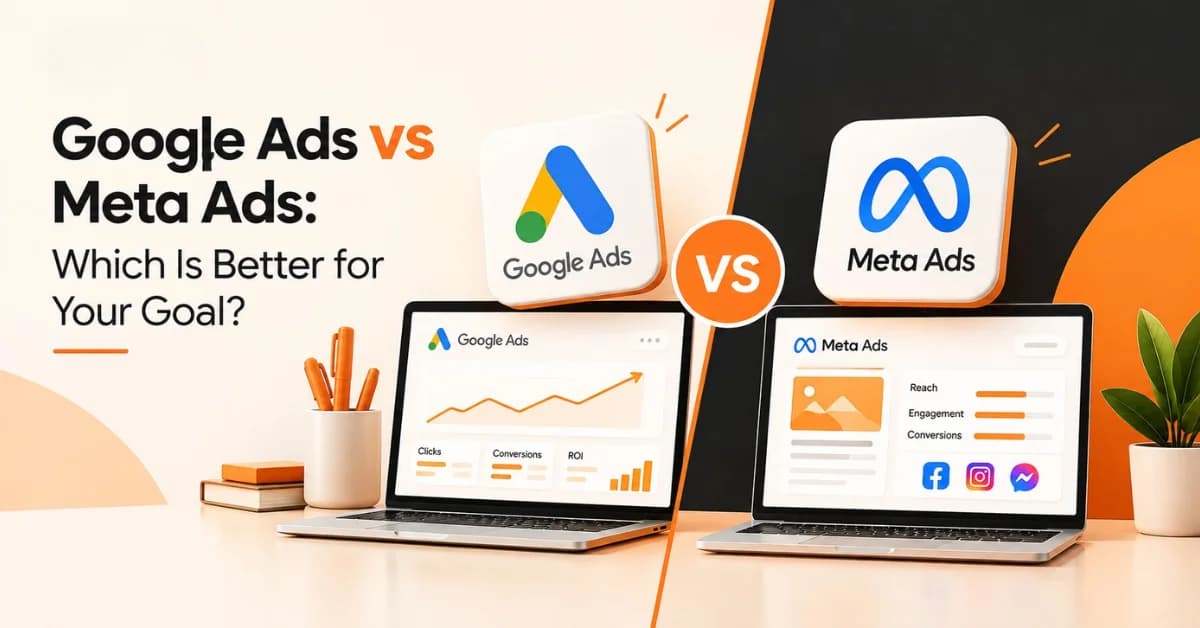
Choosing between Google Ads and Meta Ads can feel difficult when both platforms promise more traffic, leads, sales, and brand growth. But the real question is not simply which platform is better. It is which advertising channel is better for your specific goal, audience, product, and customer journey. Google Ads is particularly useful for capturing existing demand. Someone searches for a product, service, or solution, and a relevant ad can appear at that moment. Google explains that Search campaigns can connect businesses with people actively searching for their products or services. Meta Ads, including Facebook and Instagram advertising, takes a different approach. Instead of relying primarily on active searches, businesses can introduce products and services to audiences through social content, visual creative, audience targeting, and remarketing. So, in the Google Ads vs Meta Ads debate, there is no universal winner. The right choice depends on what you want your campaign to accomplish.
Google Ads vs Meta Ads: What’s the Difference?
At a basic level, Google Ads is largely built around search intent and demand capture, while Meta Ads is commonly used for audience discovery, awareness, engagement, and demand generation.
Understanding this difference is more useful than comparing platforms only by CPC or the number of available targeting options.
How Google Ads Works
Google Ads allows businesses to show advertising across Google's advertising ecosystem. Search campaigns can reach people who are actively searching for relevant products or services. Keywords play an important role in Search campaigns. Google describes keywords as words or phrases used to match ads with terms people search for. The platform's systems can also consider the meaning and context of searches rather than relying only on exact wording.
For example, imagine a business setup company in Dubai targeting searches such as:
Business setup consultant Dubai
Company formation Dubai
UAE business setup services
Start a company in Dubai
These searches can indicate that the person already has a business need.
That makes Google Ads particularly useful for high-intent searches.
Google Ads also considers factors such as bids, ad relevance, landing-page quality, competition, search context, and ad assets when determining ad eligibility and position.
How Meta Ads Works
Meta Ads covers advertising across Meta's social platforms, including Facebook and Instagram.
Instead of waiting for someone to search for a solution, advertisers can introduce a product, service, offer, or brand to a defined audience.
This makes Meta particularly useful for:
Brand awareness
Product discovery
Visual storytelling
Social engagement
Lead generation
Retargeting
E-commerce promotion
Audience building
For example, a Dubai-based fitness studio could use Instagram Reels and Facebook ads to introduce a new membership offer to people who may not currently be searching for a gym.
Google Ads vs Meta Ads at a Glance
Google Ads: Primarily captures existing search demand.
Meta Ads: Primarily helps businesses reach and influence audiences through social environments.
Google Ads: Strong for keyword and search-intent targeting.
Meta Ads: Strong for audience and creative-led campaigns.
Google Ads: Often valuable when customers actively need a solution.
Meta Ads: Often valuable when discovery and awareness influence the purchase.
Both: Can support lead generation, remarketing, conversions, and full-funnel marketing.
PPC Comparison: Google Ads vs Meta Ads
A useful PPC comparison should look beyond the price of a click.
The more important question is what happens after the click.
Search Intent vs Audience Intent
Google Ads can reach someone at the point where they express a need through a search.
For example:
"VAT consultant Dubai"
This search suggests a specific business requirement.
A Meta user, however, might see an advertisement for VAT consulting while scrolling through Instagram. They may not have been actively searching for the service.
Neither situation is automatically better.
Google can be stronger when demand already exists. Meta can be valuable when a business needs to create awareness or introduce an offer before someone actively searches.
Cost Per Click and Cost Per Lead
CPC is an important advertising metric, but it should never be the only metric used to evaluate a campaign.
A campaign with a low CPC can still perform poorly if the traffic does not convert.
Consider this simplified example:
Campaign A
1,000 clicks
Low CPC
20 leads
2 customers
Campaign B
500 clicks
Higher CPC
40 leads
8 customers
Campaign B may cost more per click but produce considerably more business.
That is why advertisers should look at the complete path:
Ad spend → Clicks → Leads → Qualified leads → Customers → Revenue
Conversion Rate and Lead Quality
A successful campaign does not simply generate leads. It generates leads that have a realistic chance of becoming customers.
Lead quality can depend on:
Search intent
Audience targeting
Offer
Ad messaging
Landing-page relevance
Sales follow-up
Pricing
Product-market fit
A campaign that generates 100 irrelevant leads may be less valuable than one that generates 20 highly qualified prospects.
Return on Ad Spend
For businesses that can accurately attribute revenue to advertising, ROAS can provide a useful performance indicator.
The basic formula is:
ROAS = Revenue Attributed to Ads ÷ Advertising Spend
For example, if a business spends AED 5,000 and attributes AED 20,000 in revenue to the campaign:
AED 20,000 ÷ AED 5,000 = 4x ROAS
However, lead-generation businesses should not rely on ROAS alone. They may also need to monitor qualified leads, customer acquisition cost, sales conversion rate, and closed revenue.
Facebook Ads vs Google Ads: Which Is Better for Different Goals?
The best platform can change depending on what you want your advertising campaign to achieve.
Best for Lead Generation
Google Ads can be particularly useful when potential customers are already searching for the service.
For example:
"Accountant for small business Dubai"
The search demonstrates an existing need.
Meta Ads can also generate leads, particularly when a compelling offer, creative, audience strategy, and follow-up process work together.
A useful approach is to ask:
Are my customers already searching for this solution, or do I need to introduce the solution to them?
If they are already searching, Google deserves serious consideration.
If discovery is important, Meta may deserve more attention.
Best for Brand Awareness
Meta Ads can be especially useful for building brand awareness through visual content.
Businesses can use:
Short-form videos
Reels
Images
Customer stories
Educational content
Product demonstrations
Promotional creative
This can help audiences become familiar with a business before they are ready to purchase.
Google can also support awareness through formats beyond traditional Search, so the choice should depend on the campaign objective rather than a rigid platform rule.
Best for E-Commerce Sales
E-commerce businesses often benefit from testing both platforms. Google can capture shoppers who are already searching for products. Meta can help businesses showcase products through visual creative and reach potential buyers during discovery.
For example, an online fashion store could use:
Google Ads: Capture searches from people actively looking for a specific product.
Meta Ads: Show visually engaging product content to relevant audiences and re-engage previous website visitors.
The strongest strategy may involve both rather than treating them as competing channels.
Best for B2B Marketing
B2B advertising requires more consideration because the buying process can take longer.
Google Ads can capture high-intent searches such as:
SEO agency Dubai
Accounting services UAE
Web development company Dubai
Business consultancy UAE
Meta can support the same funnel by building awareness, promoting educational content, and reconnecting with previous website visitors.
For B2B businesses, the advertising strategy should connect closely with the sales process and CRM rather than measuring success only by clicks.
Best for Local Businesses
Local businesses should consider search behavior, location, service urgency, and customer intent.
For example, a Dubai accounting firm might use Google Ads to target searches related to:
"VAT consultant Dubai"
At the same time, it could use Meta Ads to introduce its accounting services to business owners and retarget people who previously interacted with the website or social content.
This creates a more complete paid media strategy.
Google Ads vs Meta Ads: Which Platform Costs Less?
There is no universal answer to whether Google Ads or Meta Ads is cheaper.
Advertising costs can change based on:
Industry
Competition
Geographic targeting
Audience
Campaign objective
Keyword demand
Ad quality
Creative quality
Landing-page experience
Conversion rate
Seasonality
Budget
Bidding strategy
Google explains that factors such as competition, bids, search context, ad quality, and landing-page relevance can affect how ads perform in its auction.
Why the Cheapest Click Is Not Always the Best Click
Suppose one platform produces clicks for AED 2 and another produces clicks for AED 5.
It may seem obvious that the AED 2 click is better.
But what if:
AED 2 clicks generate 1 customer from 100 clicks.
AED 5 clicks generate 5 customers from 100 clicks.
The second campaign could create significantly more business despite the higher CPC.
This is why businesses should optimize for business outcomes, not simply cheap traffic.
When Should You Choose Google Ads?
Google Ads may be a strong choice when:
Customers actively search for your product or service.
Your offer solves an immediate problem.
Commercial search demand exists.
You have relevant landing pages.
You can track conversions.
Your sales process can respond to leads quickly.
Search intent strongly influences the buying decision.
For example, someone searching for "emergency AC repair Dubai" has a very different level of intent from someone casually seeing an AC company advertisement on social media.
Google Search can be valuable because it can put an offer in front of someone when they are actively looking for a solution.
When Should You Choose Meta Ads?
Meta Ads may be a strong choice when:
Visual content influences buying decisions.
Brand awareness is important.
Customers discover products through social media.
You have strong creative assets.
Audience targeting is central to the campaign.
You want to promote content or offers.
Retargeting forms part of your strategy.
Meta can be especially useful for categories where customers respond to visual inspiration, storytelling, demonstrations, testimonials, or lifestyle content.
Examples include:
Fashion
Beauty
Restaurants
Fitness
Hospitality
Home décor
Consumer products
Lifestyle brands
Can You Use Google Ads and Meta Ads Together?
Yes. In many cases, using both can create a stronger full-funnel advertising strategy.
Instead of asking Google Ads vs Meta Ads, businesses can ask:
How can Google and Meta support different stages of my customer journey?
A Full-Funnel Paid Media Strategy
A simple funnel could look like this:
Awareness → Consideration → Intent → Conversion → Retargeting → Repeat Purchase
Meta can help introduce the brand and generate interest.
A website can educate visitors and build trust.
Google Ads can capture people who later search for the business or solution.
Remarketing can reconnect with people who previously visited the website or interacted with advertising.
The sales or e-commerce system then turns qualified traffic into customers.
Example of a Combined Campaign
Imagine a Dubai digital marketing agency launching a new SEO service.
Stage 1 — Meta Ads
Promote educational videos about common SEO mistakes.
Stage 2 — Website
Send interested users to an SEO guide or service page.
Stage 3 — Google Ads
Target high-intent searches related to SEO services.
Stage 4 — Remarketing
Show relevant messaging to previous website visitors.
Stage 5 — Conversion
Use a consultation request, contact form, or sales call to convert qualified prospects. This approach treats Google Ads and Meta Ads as complementary paid media channels, rather than forcing one platform to do everything.
How to Choose Between Google Ads and Meta Ads
Use this simple framework before spending your advertising budget.
Choose Google Ads If:
Your customers actively search for your solution.
Your service has strong commercial keywords.
You want to capture existing demand.
Your landing pages match search intent.
You can track meaningful conversions.
Choose Meta Ads If:
Your product is visually appealing.
You need to build awareness.
Your audience spends significant time on social platforms.
You have strong creative assets.
Your strategy depends on discovery or retargeting.
Test Both If:
Your customer journey includes discovery and search.
You have enough budget for controlled testing.
You can track conversions accurately.
Your business benefits from both awareness and high-intent traffic.
You want to diversify your paid media strategy.
What Should You Measure?
The right platform can still fail if you measure the wrong things.
Key Google Ads Metrics
Monitor:
Impressions
Click-through rate
Cost per click
Conversion rate
Cost per conversion
Qualified leads
Search impression share
Revenue
ROAS
Google also recommends aligning bidding and campaign measurement with the business objective, such as conversions, conversion value, or website traffic.
Key Meta Ads Metrics
Depending on the campaign objective, businesses may monitor:
Reach
Frequency
Impressions
CPM
CTR
CPC
Cost per result
Leads
Conversion rate
Customer acquisition cost
ROAS
The Metrics That Matter Most
Do not stop at impressions or clicks.
A stronger measurement framework is:
Ad spend → Traffic → Conversion → Qualified lead → Customer → Revenue
This gives business owners a much clearer picture of whether their advertising actually contributes to growth.
Common Mistakes Businesses Make With Google Ads and Meta Ads
Choosing a Platform Based Only on CPC
A low CPC does not automatically mean a high return. Always connect CPC with conversion rate, lead quality, customer acquisition cost, and revenue.
Running Ads Without Conversion Tracking
Without reliable tracking, you may not know which campaigns, ads, keywords, or audiences are actually producing business results.
Sending Every Ad to the Homepage
A dedicated landing page can provide a more relevant experience than sending every visitor to a generic homepage. The landing page should match the promise made in the advertisement.
Ignoring Creative and Copy Testing
Advertising performance can change significantly based on the message and creative.
Test:
Headlines
Ad copy
Images
Videos
Offers
Calls to action
Landing pages
Audiences
Stopping Campaigns Too Quickly
Advertising requires structured testing.
Instead of making decisions based on a small amount of data, establish clear success metrics and evaluate performance consistently.
Google Ads vs Meta Ads: Frequently Asked Questions
Is Google Ads better than Meta Ads?
Neither platform is universally better. Google Ads can be particularly effective for capturing existing search demand, while Meta Ads can be useful for discovery, awareness, visual storytelling, and audience-based campaigns.
Is Meta Ads cheaper than Google Ads?
Not necessarily. Costs vary by industry, audience, location, competition, campaign objective, creative, and conversion performance. Compare customer acquisition and business results rather than CPC alone.
Which is better for lead generation, Google Ads or Meta Ads?
Google Ads can be strong when people actively search for a service. Meta Ads can be effective when businesses need to generate awareness and interest before the customer searches. The best option depends on the customer journey.
Which is better for e-commerce?
Both can work well. Google can capture product-related search demand, while Meta can support product discovery, visual promotion, and retargeting. Testing both can reveal which channel produces more profitable customers.
Should a small business use Google Ads or Meta Ads?
Start with customer behavior. If customers already search for the service, Google may be a logical starting point. If discovery and awareness are more important, Meta may be worth testing.
Can I run Google Ads and Meta Ads at the same time?
Yes. Running both can make sense when each platform has a defined role in the customer journey and the business has adequate tracking and budget.
How much should I spend on Google Ads or Meta Ads?
There is no universal budget that works for every business. Start with a controlled test based on customer value, expected conversion rates, competition, sales capacity, and available demand.
How BrandVexo Can Help With Paid Advertising
Choosing between Google Ads and Meta Ads is only one part of a successful digital advertising strategy. The bigger challenge is connecting the right platform with the right audience, message, landing page, conversion process, and business goal. BrandVexo Digital Solutions helps businesses build practical digital growth strategies across Digital Marketing, SEO, Web Development, AI Automation, and Business Solutions.
Depending on your objectives, the strategy may include:
Google Ads campaign planning
Meta Ads campaign strategy
PPC strategy
Audience research
Keyword research
Ad copy development
Creative strategy
Landing-page optimization
Conversion tracking
Performance analysis
SEO and paid media integration
AI-powered marketing solutions
The goal should not be to spend more on advertising. It should be to make every advertising decision more measurable and connected to business growth.
BrandVexo Digital Solutions
Phone: +971 52 356 5409
Email: info@brandvexo.com
Website: www.brandvexo.com
If you're unsure whether Google Ads, Meta Ads, or a combination of paid media channels fits your business, reviewing your audience, customer journey, offer, and conversion goals first can help you make a more informed decision.
Disclaimer: This article is provided for general informational and educational purposes. Advertising costs, platform features, targeting options, campaign performance, and available advertising products can change over time. Actual results depend on factors such as industry, audience, location, budget, creative quality, landing-page experience, conversion tracking, competition, and business model. Businesses should evaluate their own data and objectives before making advertising decisions.
Free growth plan
Ready to grow your business?
Reading is a start — now let's build it. Tell us where you want to grow and a senior strategist will map the fastest, most profitable way to get there. Free, no obligation.
Discussion
Join the conversation
Be the first to comment. Comments are reviewed before they appear, so yours won't show up instantly — but we read every one.
Leave a comment
Keep reading
All articles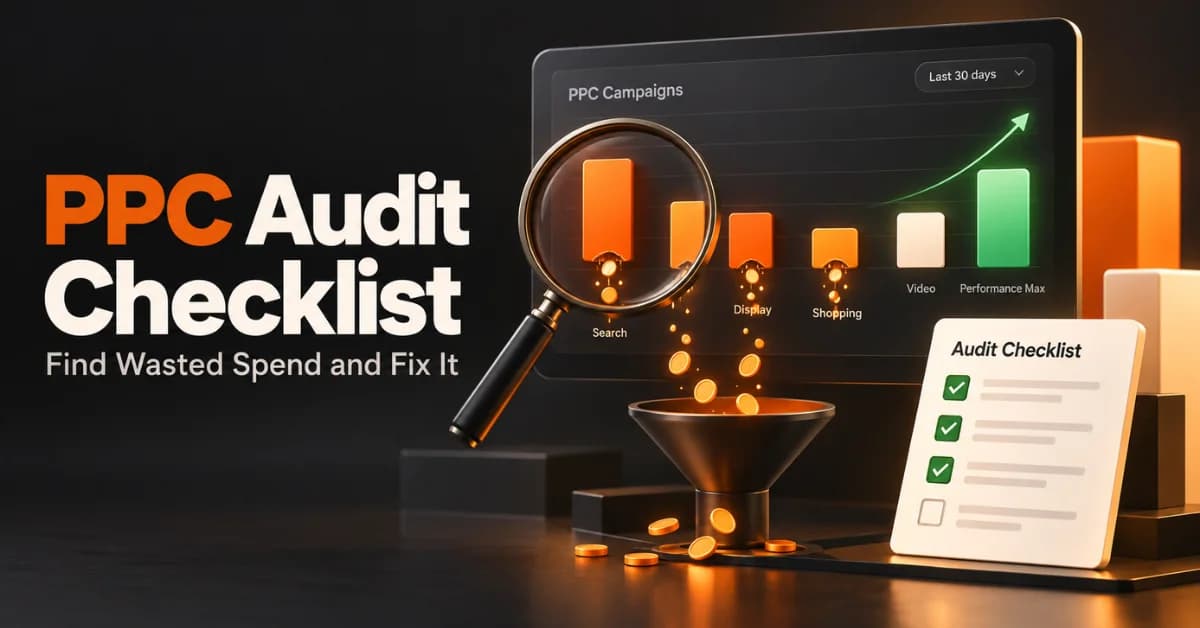 Paid Ads
PPC Audit Checklist: Find Wasted Spend and Fix It
Use this PPC Audit Checklist to find wasted ad spend, review Google Ads performance, fix targeting issues, and improve PPC optimization.
 Paid Ads
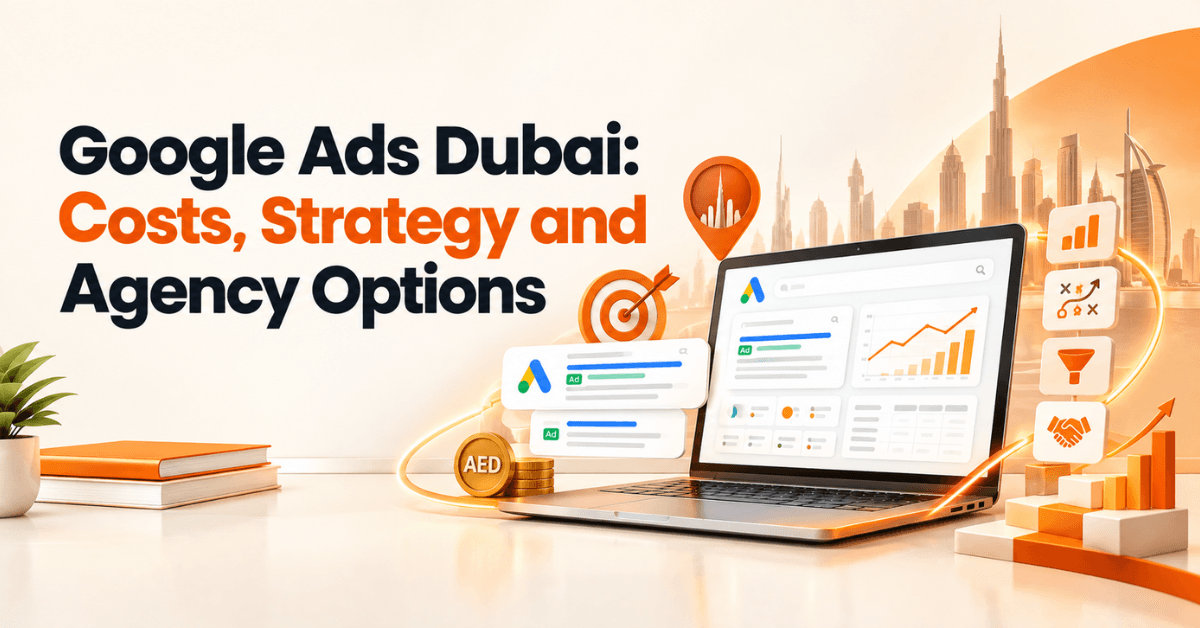
Google Ads Dubai: Costs, Strategy and Agency Options
Explore Google Ads Dubai costs, PPC strategy, budgeting, tracking, and agency options to build campaigns that attract qualified leads and sales.
 Paid Ads
Retargeting Strategy: How to Win Back High-Intent Visitors
Build a smarter Retargeting Strategy with practical tips for remarketing, Meta retargeting, Google remarketing, funnel targeting, and conversions.