

Local SEO Citations: How to Check Business Listing Accuracy
Learn how to check Local SEO Citations, fix incorrect business listings, maintain NAP consistency and improve your business's local search visibility.
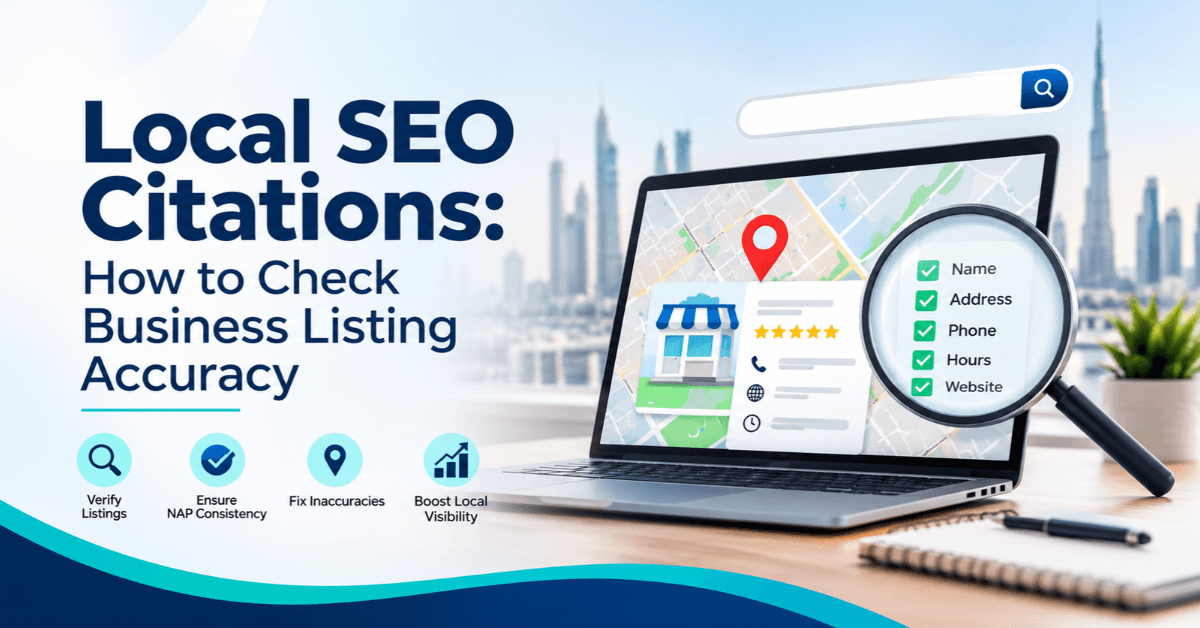
When customers search for a business online, they expect to find the correct address, phone number, website and opening hours. However, many businesses have outdated or inconsistent information across online directories, maps and social platforms. These small errors can create confusion, reduce customer trust and make it harder for people to contact the right business. Local SEO Citations help businesses establish a consistent online presence by displaying important business information across relevant websites and directories. However, creating listings is only part of the process. Businesses must also check their accuracy, correct outdated details and monitor duplicate profiles.
For example, a customer might find one phone number on Google Maps and another on a business directory. If the customer cannot reach the business, they may choose a competitor instead.
What Are Local SEO Citations and Why Do They Matter?
Local SEO citations are online mentions of a business's essential information, usually including its name, address and phone number (NAP). These mentions appear on business directories, review websites, social platforms, maps and industry-specific websites.
For example, when a restaurant appears on Google Business Profile, Apple Maps and a local food directory, each listing can act as a citation.
Businesses generally encounter two types of local citations:
1. Structured Citations
Structured citations display business information in organised directory profiles or listing platforms.
Common examples include:
Google Business Profile
Bing Places
Apple Business Connect
Yelp
Facebook business pages
Industry-specific business directories
These platforms allow businesses to display contact details, operating hours, website links, categories and other relevant information.
2. Unstructured Citations
Unstructured citations mention a business naturally within online content rather than a dedicated directory profile.
Examples include:
Local newspaper articles
Business interviews
Industry blogs
Community websites
Local event sponsorship pages
Online press coverage
Both types can help people discover a business. However, businesses should prioritise accurate information and relevant platforms rather than collecting as many citations as possible.
How Local SEO Citations Support Local Search Visibility
Accurate citations help customers find reliable business information across different online platforms. They also support a consistent business identity.
Google considers several factors when displaying local search results, including relevance, distance and prominence. Complete and accurate Business Profile information can help Google understand what a business offers and where it operates.
However, citations alone do not guarantee higher rankings. They should form part of a broader local SEO strategy that includes a useful website, a well-maintained Google Business Profile, customer reviews and relevant local content.
Why Business Listing Accuracy Matters for Local SEO
Business listing accuracy affects how customers interact with a business online. Even a small mistake can create an unnecessary barrier between a potential customer and a service.
Imagine a cleaning company that moves to a new office but does not update its old address across online directories. Customers may visit the previous location, call the wrong number or assume the company has closed.
Accurate listings help businesses avoid these problems and maintain a reliable online presence.
How Incorrect Listings Create Problems
Outdated or inconsistent business information can lead to several issues:
Missed customer enquiries: An incorrect phone number can prevent customers from reaching the business.
Wrong directions: An outdated address can send visitors to the wrong location.
Customer frustration: Incorrect opening hours can cause unnecessary visits.
Duplicate information: Multiple profiles can confuse customers about which listing is genuine.
Reduced trust: Conflicting contact details can make a business appear poorly managed.
Does NAP Consistency Affect Local SEO Rankings?
NAP consistency refers to maintaining accurate business name, address and phone number information across relevant online platforms.
Search engines use different sources to understand business information. Consistent details help establish a clearer business identity, while inaccurate information can create uncertainty for customers.
Google identifies relevance, distance and prominence as the main factors behind local search rankings. Accurate business information supports the relevance and completeness of a Business Profile, but matching every directory entry does not automatically improve rankings.
Businesses should focus on maintaining correct information rather than trying to create identical listings on every available website.
What Is NAP Consistency in Local SEO?
NAP stands for Name, Address and Phone Number. These three details form the foundation of most local business citations.
For example, a digital marketing agency might display its business name correctly on Google but use an old phone number on an industry directory. This creates an inconsistency that the business should investigate and correct.
Here is what each element means:
Name: The official business name used in real-world branding.
Address: The correct physical business location, where applicable.
Phone number: A working contact number that connects customers to the business.
Businesses should also review other important information beyond NAP.
Business Information You Should Check Beyond NAP
A complete citation audit should include:
Website URL and landing page links
Business opening and closing hours
Primary and secondary business categories
Business descriptions
Service areas
Email addresses, where supported
Holiday opening hours
Location-specific contact information
Consider a business operating in Dubai with customers across several nearby areas. Its website, Google Business Profile and relevant directories should accurately explain its location and service coverage.
Common NAP Inconsistency Examples
Consider this fictional example of a company called ABC Digital Solutions.
Information | Correct details | Incorrect listing |
|---|---|---|
Business name | ABC Digital Solutions | ABC Digital Marketing Solutions |
Address | Office 204, Main Road | Office 240, Main Road |
Phone | +971 50 123 4567 | +971 55 123 4567 |
These differences require investigation. A business name variation may reflect a genuine rebrand, while an incorrect phone number or office number may need immediate correction.
The goal is to make sure customers can identify and contact the right business without confusion.
How to Check Business Listing Accuracy Step by Step
A local SEO audit helps businesses identify outdated information, incorrect contact details and duplicate listings. You do not need to update every directory at once. Start by creating a reliable record of your business information and use it to review each platform.
Step 1: Create a Master Business Information Record
Before checking online listings, prepare one document containing your approved business details.
Include:
Official business name
Complete business address
Main contact number
Website URL
Business email address
Regular opening hours
Holiday hours
Primary business category
Service areas, where applicable
Use this document as your reference whenever you create or update a business listing.
For businesses with multiple locations, maintain separate records for each eligible location. This reduces the risk of mixing addresses, phone numbers and opening hours.
Step 2: Check Your Google Business Profile
Google Business Profile is an important starting point because it helps customers find business information through Google Search and Maps.
Sign in to your Business Profile and review the available information.
Check the following details:
Business name matches your real-world branding.
Address and map location are correct.
Phone number connects to your business.
Website URL opens the correct website.
Opening hours reflect actual operating times.
Primary category accurately describes your main activity.
Service areas reflect the locations you genuinely serve.
Business description clearly explains your services.
Also, check for duplicate profiles and outdated information.
Google requires businesses to represent themselves accurately. For example, adding unnecessary keywords to a business name or using an ineligible virtual office address can violate its guidelines.
Read Google's guidelines for representing your business before making significant changes.
Step 3: Search for Your Business Across Online Directories
After checking Google, search for your business across other relevant websites.
You can use Google Search to find existing citations and identify information that you may have forgotten.
Try these search queries:
"Business Name" "Phone Number""Business Name" "Business Address""Business Name" + City"Phone Number" + Business Name"Business Name" directory
For example, if your company operates in Dubai, search for its name alongside Dubai and its registered contact details.
Review relevant platforms such as:
Google Maps
Bing Places
Apple Business Connect
Facebook
Yelp
Local business associations
Industry-specific directories
Do not assume that every directory deserves equal attention. Prioritise established platforms, relevant industry websites and directories that customers in your target market actually use.
Step 4: Compare Business Information Across Listings
Once you find your business profiles, compare their information against your master business record.
Check each listing for:
Correct business name
Accurate address
Working phone number
Correct website URL
Updated opening hours
Relevant business category
Accurate service information
A simple spreadsheet can help you organise the results.
Record each directory's name, listing URL, current information, identified errors, correction status and last review date.
This makes it easier to track outstanding updates without repeating the same work.
Step 5: Identify Incorrect and Duplicate Business Listings
Duplicate business listings can appear when a company changes its name, relocates or creates additional profiles without checking existing records.
Look for:
Multiple profiles for the same business location
Old business addresses
Previous phone numbers
Incorrect business names
Listings for permanently closed locations
Profiles that belong to another company
Unverified or abandoned business pages
Before requesting removal, confirm that the listing is genuinely a duplicate or inaccurate. A business with multiple legitimate locations may need separate profiles.
Avoid removing a valid profile simply because another listing appears more complete. Follow the platform's verification, ownership and duplicate-resolution procedures.
Step 6: Correct and Update Inaccurate Listings
After identifying errors, prioritise the most important listings.
Follow this process:
Claim the listing if ownership is available.
Complete any required verification.
Correct the business name, address and phone number.
Update the website and operating hours.
Review categories and service information.
Submit the changes according to the platform's policies.
Check the published listing after the platform processes the update.
Some directories may review changes before publishing them. Others may require additional verification.
Keep a record of completed updates so you can identify listings that still need attention.
Best Tools to Check and Manage Local SEO Citations
Businesses can use a combination of free platforms and specialist SEO tools to manage their online listings.
The right choice depends on the number of business locations, directory coverage and available budget.
Google Business Profile
Google Business Profile allows eligible businesses to manage information displayed on Google Search and Maps. Owners can update contact information, business categories, opening hours and other profile details.
It should be one of the first platforms businesses review during a local citation audit.
Google Search and Google Maps
Manual searches help businesses find existing mentions, outdated contact information and duplicate listings.
Search by business name, address and phone number to identify profiles that may require updates.
Bing Places and Apple Business Connect
These platforms help businesses manage their presence on other major search and map services.
Businesses should review their information on each platform rather than assuming that an update on Google automatically changes every other directory.
Third-Party Citation Management Tools
Specialist tools can make citation monitoring easier, especially for businesses managing several locations.
Some options include:
BrightLocal: Supports local SEO audits, citation tracking and reporting.
Moz Local: Offers business listing management and monitoring features.
Semrush: Provides local SEO tools and listing management capabilities.
Features, directory coverage and availability vary by location and subscription. Always check whether a platform supports your target market before purchasing a service.
Common Local SEO Citation Mistakes to Avoid
Even businesses with an established online presence can make mistakes when managing local citations.
Avoid these common problems:
Creating duplicate listings: Multiple profiles for the same location can confuse customers and create management problems.
Using outdated phone numbers: Old contact details can result in missed enquiries.
Adding keywords to business names: Use your genuine business name rather than inserting service or location keywords.
Ignoring previous addresses: Update important directories after relocating.
Submitting to irrelevant directories: Prioritise websites that are relevant to your business and customers.
Using ineligible virtual addresses: Follow the platform's location and eligibility requirements.
Forgetting holiday hours: Review special opening hours before public holidays.
Building citations without checking accuracy: More listings do not automatically mean better local SEO.
Ignoring duplicate profiles: Investigate duplicate information instead of leaving conflicting profiles online.
A better approach is to maintain a smaller, accurate and relevant citation profile.
Local SEO Citations Checklist for Small Businesses
Use this checklist during your next business listing audit.
Business name matches official branding.
Business address is accurate.
Phone number is correct and working.
Website URL opens the correct page.
Opening hours are up to date.
Business categories accurately describe services.
Google Business Profile is verified and accurate.
Important directories display correct information.
Duplicate listings have been investigated.
Old business information has been corrected.
Service areas are accurate where applicable.
Changes are recorded for future reviews.
A consistent review process helps businesses maintain reliable information as they grow or change.
How Often Should You Audit Your Business Listings?
There is no single audit schedule that suits every business. However, a quarterly review provides a practical starting point for many small businesses.
You should also review your citations immediately after important changes, such as:
Moving to a new business address
Changing your contact number
Updating your website
Rebranding your company
Changing business operating hours
Opening or closing a location
Expanding your service areas
Businesses with multiple locations or frequent operational changes may need more frequent checks.
The objective is to prevent outdated information from remaining online for long periods.
FAQs
What are Local SEO Citations?
Local SEO citations are online mentions of a business's name, address and phone number. They commonly appear in business directories, maps, review websites and industry platforms. Accurate citations help customers find reliable business information and support a consistent online business presence.
How do I check my business listings online?
Search for your business name, phone number and address on Google. Review your Google Business Profile, Google Maps and relevant online directories. Compare the displayed information against your official business records and correct any outdated or inaccurate details.
What is NAP consistency in local SEO?
NAP consistency means maintaining accurate business name, address and phone number information across online platforms. It helps customers identify the correct business and contact it without confusion.
Do Local SEO Citations improve Google rankings?
Accurate citations support a consistent business presence and help customers find business information. However, citations alone do not guarantee higher Google rankings. Local results also depend on relevance, distance and prominence, among other factors.
How do I fix incorrect business listings?
First, identify the incorrect information and confirm the correct business details. Claim the listing if possible, update the relevant fields and complete any required verification. Check the listing again after the platform processes your changes.
What are the best websites for local business citations?
Google Business Profile, Bing Places, Apple Business Connect, Facebook and relevant industry directories are useful starting points. The best platforms depend on your business type, location and target customers.
How many local citations does a small business need?
There is no fixed number of citations that guarantees better rankings. Small businesses should focus on accurate information across important search platforms, reputable directories and relevant industry websites rather than chasing a specific citation count.
How often should I update my business citations?
Review important business listings at least quarterly as a practical starting point. Update them immediately whenever your business changes its address, phone number, website, opening hours or other important information.
Improve Your Local Search Visibility with Accurate Business Listings
Accurate business information is an important part of maintaining a trustworthy online presence. Consistent Local SEO Citations help customers find your business, confirm your contact details and access the services they need.
Start by reviewing your Google Business Profile, checking important directories and correcting outdated or duplicate listings. Maintain a master business record and schedule regular audits to keep your information accurate.
Local citations work best when they support a wider SEO strategy that includes relevant content, a well-structured website and a reliable customer experience.
Get Professional Local SEO Support from BrandVexo
BrandVexo helps businesses strengthen their digital presence through practical SEO strategies, website development, content planning and digital marketing solutions.
Our SEO approach covers local search optimisation, Google Business Profile management, citation accuracy, on-page improvements and performance tracking. We focus on building a stronger online presence that connects businesses with relevant customers.
If your business struggles with inconsistent listings or limited local search visibility, our team can help review your current SEO setup and identify areas for improvement.
Contact BrandVexo Digital Solutions
Phone: +971 52 356 5409
Email: info@brandvexo.com
Website: https://brandvexo.com/
Disclaimer: This article is intended for general informational and educational purposes only. Local SEO guidelines and business listing requirements may change over time, so verify important details with the relevant platforms. BrandVexo does not guarantee specific search rankings or business outcomes.
Free growth plan
Ready to grow your business?
Reading is a start — now let's build it. Tell us where you want to grow and a senior strategist will map the fastest, most profitable way to get there. Free, no obligation.
Discussion
Join the conversation
Be the first to comment. Comments are reviewed before they appear, so yours won't show up instantly — but we read every one.
Leave a comment
Keep reading
All articles
Local SEO for Multi-Language Websites: What to Plan First
Learn how to plan Local SEO for multi-language websites with localized keywords, hreflang tags, URL structures, and local business optimization.
Website Migration SEO: Complete Checklist for Business Owners
Follow this website migration SEO checklist to protect rankings, preserve organic traffic, manage redirects, and avoid common technical SEO mistakes.

Local SEO Reviews: A Practical System to Earn More Trust
Learn how Local SEO Reviews build customer trust, support Google rankings, and improve local visibility with practical review management strategies.