AI Chatbots for Business: Use Cases, Costs and Risks
AI chatbots are becoming a practical business tool for customer service, lead generation, sales and internal support. Instead of waiting for an employee to answer every repetitive question, businesses can use conversational AI to provide instant responses and guide customers toward the right next step. But adopting an AI chatbot is not simply a matter of adding a chat window to a website. Businesses need to understand what the technology can actually do, how much it may cost, where it creates value, and what risks it introduces. This guide explains AI chatbots for business, including common use cases, chatbot costs, implementation considerations, security risks and ways to measure return on investment.
What Are AI Chatbots for Business?
AI chatbots for business are software systems that use artificial intelligence to communicate with customers, prospects or employees through natural-language conversations.
Unlike basic rule-based bots that follow fixed decision trees, modern AI systems can interpret questions, use information from approved sources and generate context-aware responses.
A business chatbot can operate on a website, messaging platform, customer portal or other digital channel. Depending on its design, it may answer questions, qualify leads, recommend products, schedule appointments or transfer complex conversations to a human employee.
How Does a Business Chatbot Work?
A typical AI chatbot follows a process such as:
Customer question → Intent recognition → Information retrieval → AI-generated response → Action or human handoff
For example, imagine a customer asks, “Can I book a consultation for next Tuesday?”
The chatbot can understand the request, check an integrated calendar, identify available times and guide the customer through booking.
More advanced implementations can connect with CRM systems, helpdesks, calendars, inventory platforms and other business software.
The quality of the result depends heavily on the information, integrations, instructions and safeguards behind the chatbot.
Why Are Businesses Using AI Chatbots?
Businesses are adopting AI chatbots because they can automate repetitive communication without requiring an employee to respond manually to every basic request.
Common benefits include:
24/7 customer assistance
Faster responses
Automated lead qualification
Reduced repetitive support work
Better access to business information
Appointment and booking automation
Product recommendations
Internal employee assistance
Scalable customer communication
However, automation should support a business objective. A chatbot that answers questions but does not improve customer experience, reduce workload or generate measurable business value may not justify its cost.
AI Chatbot vs Traditional Customer Support
An AI chatbot can handle a large number of routine conversations simultaneously, while human employees remain essential for complex, sensitive or high-value interactions.
A practical model is:
AI handles repetitive requests → Human handles exceptions and complex decisions.
This approach can improve efficiency without forcing customers through an automated system when they actually need a person.
Top AI Chatbot Use Cases for Business
The best chatbot use case depends on the type of business, customer journey and repetitive tasks consuming employee time.
Here are some of the most useful applications.
1. Customer Support and FAQs
An AI chatbot for customer service can answer common questions about products, services, delivery, policies, opening hours and basic troubleshooting.
For example, an online retailer could use a chatbot to answer:
Where is my order?
What is your return policy?
Do you deliver to my location?
Which payment methods do you accept?
The chatbot can provide immediate answers while sending unusual or complicated cases to a support representative.
2. Lead Generation and Qualification
A chatbot can also work as a digital sales assistant. Instead of displaying a contact form and waiting for visitors to submit it, a chatbot can start a conversation and ask relevant questions.
For example:
What service are you interested in?
What type of business do you operate?
When do you need the service?
What is the best way to contact you?
The answers can help a sales team identify high-intent prospects.
This makes chatbot for lead generation a valuable use case for businesses that receive regular website enquiries.
3. Sales and Product Recommendations
Businesses can use AI to help customers find products or services that match their requirements. An eCommerce chatbot, for example, might ask about budget, preferred features and intended use before suggesting relevant products. A professional services company could use a similar approach to identify which service best fits a prospect's needs.
The objective is not to push every visitor toward a sale. It is to reduce friction during the decision-making process.
4. Appointment Booking and Scheduling
Service businesses can use chatbots to automate appointment requests.
Potential applications include:
Consulting firms
Clinics
Salons
Real estate businesses
Training providers
Professional service companies
With the right integration, the chatbot can collect basic information, check availability and direct the customer toward booking.
5. eCommerce and Order Assistance
For eCommerce businesses, an AI chatbot can support customers throughout the buying journey.
It can help with:
Product discovery
Product questions
Order status
Shipping information
Returns
Frequently asked questions
Cart-related assistance
This can reduce the number of repetitive questions handled manually by customer service teams.
6. Internal Employee AI Assistant
An AI assistant does not have to serve customers. Businesses can build internal assistants that help employees find company information, understand policies or locate documents.
Common applications include:
HR policy questions
Employee onboarding
Internal documentation
IT support
Training information
Company procedures
For example, a new employee could ask an internal AI assistant where to find a specific company policy instead of contacting HR for every basic question.
7. WhatsApp and Messaging Automation
Many businesses communicate with customers through messaging platforms. AI can support these conversations by answering common questions, collecting information, and routing enquiries.
For UAE businesses, messaging-based customer journeys can be particularly useful for lead enquiries, appointment requests, and service information.
The important consideration is to design the automation around the channel customers already use rather than forcing them into an unfamiliar process.
Website Chatbot vs AI Assistant: What's the Difference?
The terms chatbot and AI assistant are sometimes used interchangeably, but they can describe different business applications.
What Is a Website Chatbot?
A website chatbot is usually a customer-facing tool placed on a company's website.
It can:
Answer FAQs
Capture leads
Help visitors find information
Recommend products or services
Support basic customer requests
Direct visitors to the right page
Its main purpose is usually to improve the website visitor experience.
What Is an AI Assistant?
An AI assistant can have a broader role. It may support customers, employees or specific business workflows. It can also connect to business systems and retrieve information from approved sources.
For example, an internal AI assistant might help employees find company policies, while a customer-facing assistant handles product questions.
Which One Does Your Business Need?
Use a website chatbot when your main objective is to support website visitors. Consider an AI assistant when you need broader information retrieval, employee support or workflow automation. If your business wants lead generation, customer support and internal automation, you may eventually use several AI-powered workflows rather than one chatbot for everything.
How Much Does an AI Chatbot Cost?
Chatbot cost varies considerably. There is no single price that applies to every business because implementation requirements can range from a simple website chatbot to a custom AI system connected to multiple business platforms.
The main cost drivers include:
Chatbot complexity
Number of conversations
AI model or API usage
Number of communication channels
Website integration
CRM integration
WhatsApp or messaging integration
Knowledge-base preparation
Custom development
Security requirements
Maintenance and monitoring
AI Chatbot Pricing Models
Businesses generally encounter several pricing approaches.
Monthly subscription: A business pays a recurring fee for access to a chatbot platform.
Usage-based pricing: Costs can depend on messages, conversations, API calls or AI model usage.
Custom development: A company may pay for a chatbot built specifically around its workflows and systems.
Ongoing maintenance: Businesses may also need to budget for monitoring, content updates, integrations, and technical support.
The cheapest option is not always the most cost-effective. A low-cost chatbot that provides poor answers or cannot integrate with important systems may create more work rather than less.
What Should a Business Budget For?
Think about chatbot investment in two categories.
Initial investment
Strategy
Setup
Development
Knowledge-base preparation
Integrations
Testing
Ongoing investment
Platform subscription
AI usage
Maintenance
Monitoring
Content updates
Technical support
Before selecting a platform, calculate the expected workload and business value rather than comparing subscription prices alone.
How to Calculate AI Chatbot ROI
Chatbot ROI should be measured using business outcomes, not simply the number of conversations.
Useful metrics include:
Qualified leads generated
Conversion rate
Support tickets deflected
Average response time
Customer satisfaction
Employee hours saved
Revenue influenced
Cost per conversation
For example, suppose a company receives hundreds of repetitive enquiries every month. Employees currently spend several hours each week answering basic questions.
An AI chatbot could handle those routine requests while employees focus on complex customer issues and sales conversations.
The business can then compare the chatbot investment with measurable savings, additional leads, and other improvements.
This is more useful than assuming that every chatbot automatically produces a specific percentage increase in revenue.
Risks and Challenges of AI Chatbots for Business
AI chatbots can create significant value, but businesses should understand their limitations before deployment.
Incorrect or Hallucinated Answers
AI systems can sometimes generate information that sounds convincing but is inaccurate.
This becomes particularly risky when a chatbot provides information about pricing, contracts, legal matters, financial decisions, medical issues or company policies.
Businesses can reduce this risk by:
Using approved information sources
Testing common questions
Monitoring conversations
Limiting unsupported claims
Creating clear escalation rules
Giving users access to human support
A chatbot should never be treated as automatically correct simply because its response sounds confident.
Data Privacy and Security
Chatbots may process names, contact details, customer questions, order information and other personal data.
Businesses should understand:
What data the chatbot collects
Where the data goes
Who can access it
How long it is retained
Which third parties process it
How integrations are secured
For UAE businesses, data protection requirements should be considered when designing systems that process personal information. The UAE's Personal Data Protection Law establishes a framework around the processing, confidentiality and protection of personal data. Businesses should assess their specific obligations rather than relying on a generic chatbot compliance checklist.
Poor Customer Experience
Automation can become frustrating when a chatbot repeatedly gives irrelevant answers or prevents customers from reaching a person. A good system should provide a clear human handoff when the AI cannot resolve the issue.
Integration Problems
A chatbot may work well on its own but deliver limited value if it cannot connect to the systems employees already use.
Potential integration requirements include:
CRM
Helpdesk
Calendar
ERP
Inventory
Booking system
Website
Messaging platforms
Integration planning should happen before selecting a chatbot platform.
Hidden and Ongoing Costs
The initial setup fee is not always the full cost. Businesses may also pay for usage, maintenance, integrations, monitoring, content updates and human escalation. This is why calculating total cost of ownership is important when evaluating chatbot solutions.
Over-Automation
Not every customer conversation should be automated. A customer dealing with a complicated complaint, sensitive issue or high-value transaction may prefer human assistance. The strongest implementation usually combines automation with human judgment.
How to Choose the Right AI Chatbot for Your Business
Start with the problem, not the technology.
Ask:
What repetitive task are we trying to solve?
How many customers experience this problem?
How much employee time does it consume?
Which channels do customers already use?
What outcome should the chatbot produce?
Check Required Integrations
Before selecting a platform, determine whether it can work with the systems your business already relies on.
For example, a sales chatbot may need CRM integration, while an appointment chatbot may require calendar integration.
Evaluate Security and Data Controls
Review the provider's approach to:
Data protection
Access control
Authentication
Data retention
Third-party processing
User permissions
Security should be considered during design rather than after launch.
Test Before Full Deployment
A practical implementation process is:
Choose one high-value use case.
Build a focused knowledge base.
Test real customer questions.
Create human escalation rules.
Launch to a limited audience.
Monitor conversations and KPIs.
Improve the system continuously.
Expand only after proving value.
This approach reduces unnecessary spending and helps identify problems before they affect a larger customer base.
AI Chatbots for Small Businesses: Are They Worth It?
An AI chatbot for small business can be worthwhile when the company receives regular customer enquiries and spends significant time answering repetitive questions.
It may be particularly useful when:
Customers need answers outside business hours.
The website receives consistent traffic.
Employees repeatedly answer the same questions.
Sales teams spend time qualifying basic enquiries.
Customers expect faster responses.
However, a chatbot may not be the right investment for every small company.
If customer interaction volume is very low or conversations require highly specialized human expertise, a chatbot may deliver limited value.
The right question is not “Does my business need AI?”
A better question is:
“Which repetitive business problem could AI solve better or faster?”
UAE Business Considerations for AI Chatbots
UAE businesses can apply AI chatbots across sectors such as real estate, eCommerce, professional services, business setup, hospitality, and appointment-based services. For companies serving an international audience, multilingual experiences can also matter. An Arabic-and-English customer journey, for example, may be more useful than a chatbot designed around one language.
Businesses should also consider where customer information is collected, how it is processed and which external platforms receive it.
For systems handling personal information, businesses should review applicable UAE data protection requirements and any sector-specific obligations before launch.
Common Mistakes Businesses Make With AI Chatbots
Avoid these common implementation mistakes:
Choosing a chatbot before defining the business problem
Trying to automate every conversation
Using outdated company information
Providing no human handoff
Ignoring privacy and security
Failing to test real customer questions
Measuring conversations instead of business outcomes
Ignoring maintenance requirements
Underestimating integration costs
A successful chatbot is not simply one that answers many questions. It should produce a useful business outcome.
FAQ
What are AI chatbots for business?
AI chatbots for business are software systems that use artificial intelligence to communicate with customers or employees. They can answer questions, qualify leads, provide support, recommend products, schedule appointments and perform other automated tasks depending on their integrations and configuration.
How much does an AI chatbot cost?
The cost depends on the platform, AI usage, number of conversations, integrations, customization, security requirements, and ongoing maintenance. A simple subscription chatbot can have very different costs from a custom AI system connected to CRM, ERP, or other business software.
Is an AI chatbot worth it for a small business?
It can be worthwhile when a business receives frequent repetitive enquiries, needs faster responses, or wants to automate lead qualification. Businesses should compare the expected time savings, lead value, and customer-service improvements against the total chatbot investment.
What is the difference between a chatbot and an AI assistant?
A chatbot usually refers to a conversational interface that handles customer or user interactions. An AI assistant can have a broader role, including internal knowledge retrieval, employee support, and business workflow assistance. The exact capabilities depend on how the system is designed.
Can an AI chatbot generate leads?
Yes. A chatbot can ask qualifying questions, collect contact information, identify customer requirements, and route suitable prospects to a sales team. Its effectiveness depends on the quality of the conversation design, traffic, and follow-up process.
Can I add an AI chatbot to my website?
Yes. A website chatbot can typically be embedded into a website using the chatbot provider's integration method. More advanced implementations can connect the chatbot with CRM, booking, customer support, or other business systems.
Can AI chatbots replace customer service employees?
Usually, businesses should view AI chatbots as an automation and support layer rather than a complete replacement for employees. Chatbots can handle repetitive questions while employees manage complex, sensitive, or high-value interactions.
Are AI chatbots safe for business?
They can be deployed responsibly, but businesses need appropriate security, privacy, access controls, monitoring, and human oversight. The level of risk depends on the information processed and the actions the chatbot is allowed to perform.
Final Thoughts
AI chatbots can help businesses respond faster, automate repetitive work, qualify leads, and improve access to information. But buying a chatbot should not be the starting point. Start by identifying a specific problem. If your team spends hours answering the same questions, an AI chatbot may reduce that workload. If your website receives many enquiries, it may help qualify leads. If employees struggle to find internal information, an AI assistant may be more appropriate.
Disclaimer: This article provides general information about AI chatbots for business and should not be considered legal, financial, cybersecurity, or professional advice. Chatbot costs, capabilities, risks, and regulatory requirements may vary depending on the provider, technology, industry, and business circumstances.
Free growth plan
Ready to grow your business?
Reading is a start — now let's build it. Tell us where you want to grow and a senior strategist will map the fastest, most profitable way to get there. Free, no obligation.
Discussion
Join the conversation
Be the first to comment. Comments are reviewed before they appear, so yours won't show up instantly — but we read every one.
Leave a comment
Keep reading
All articles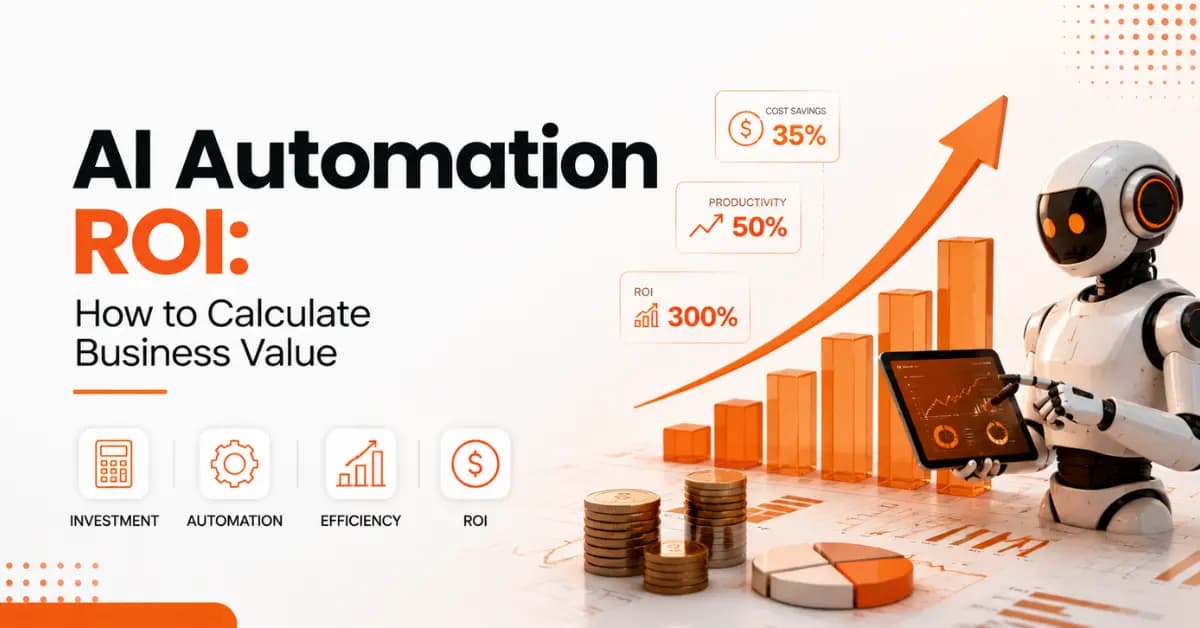 Automation
AI Automation ROI: How to Calculate the Business Case
Learn how to calculate AI Automation ROI with formulas, UAE examples, costs, payback periods, KPIs, and practical steps for building a business case.
 Automation
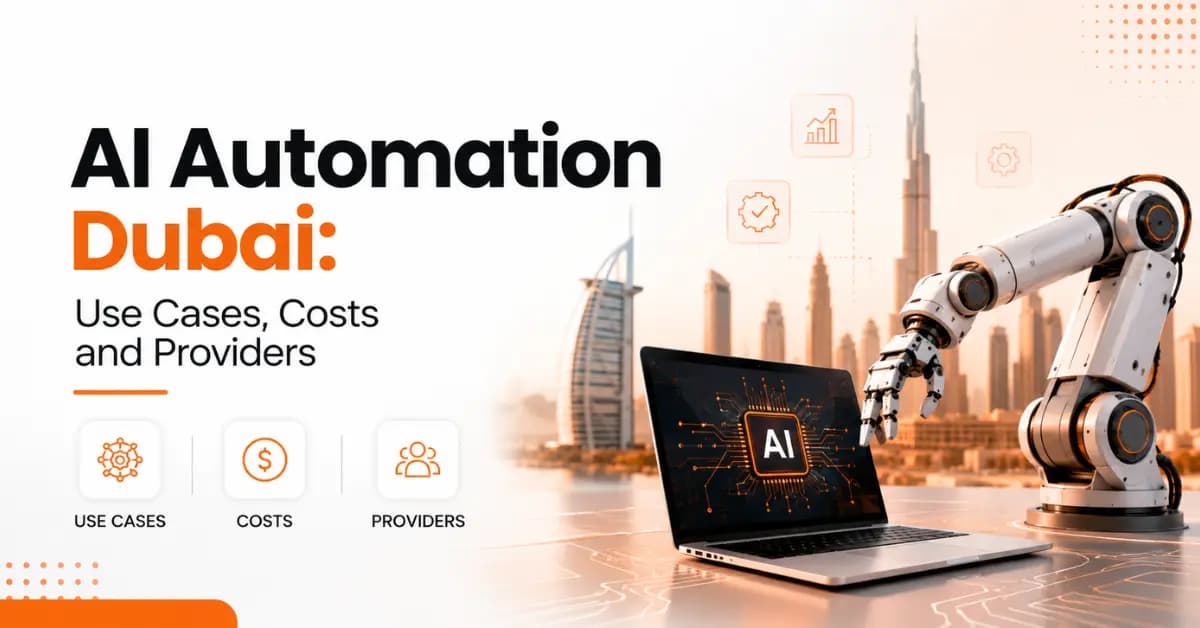
AI Automation Dubai: Use Cases, Costs and Providers
Discover AI automation Dubai, including use cases, costs, AI workflows, implementation tips, and how to choose the right AI automation provider.
 Automation
n8n vs Make vs Zapier: Which Automation Tool Wins?
Compare n8n vs Make vs Zapier for pricing, features, AI automation, integrations, scalability, and business use cases. Find the right tool for you.