

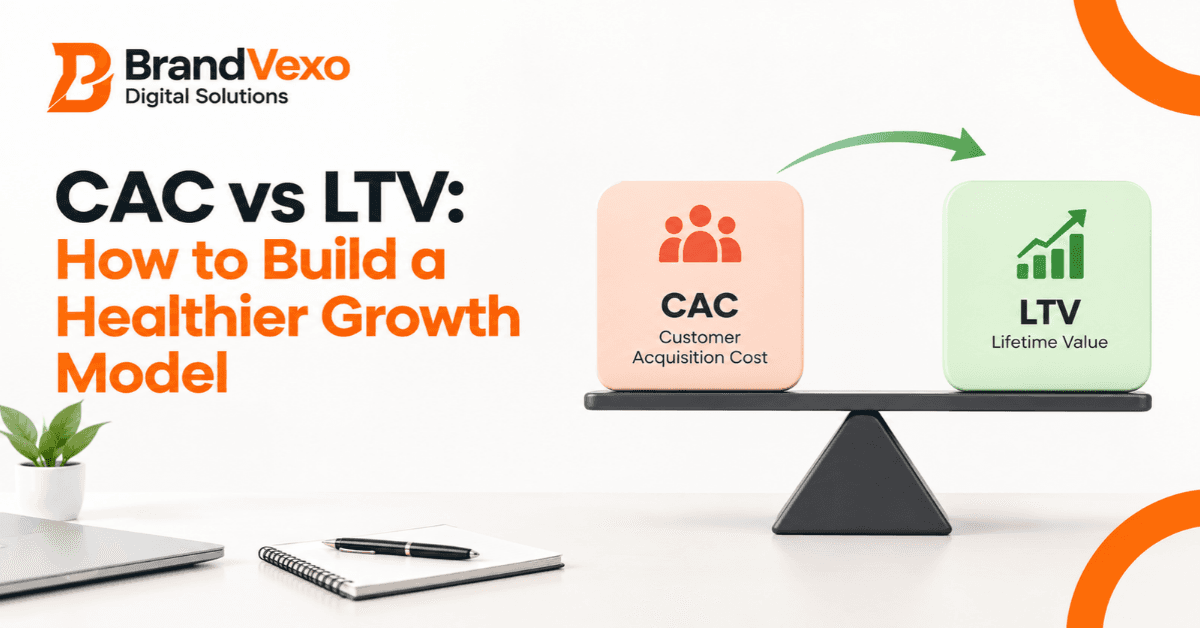
CAC vs LTV: How to Build a Healthier Growth Model
Growing a business is not simply about acquiring more customers. A company can increase leads, sales, and website traffic while still struggling to generate sustainable returns. The bigger question is whether the value generated by each customer justifies the cost of acquiring that customer.
That is where CAC vs LTV becomes important.
Customer acquisition cost (CAC) shows how much a business spends to gain a new customer, while lifetime value (LTV) estimates the value a customer generates during the relationship. Looking at both metrics together gives businesses a clearer view of acquisition efficiency, retention, profitability, and overall unit economics.
For growing companies, these numbers can also reveal whether marketing is creating sustainable growth or simply increasing expenses. This guide explains how to calculate CAC and LTV, interpret the relationship between them, and build a healthier growth model around practical growth metrics.
What Is CAC vs LTV?
CAC and LTV measure two different sides of customer economics. Customer acquisition cost measures the cost of winning a new customer. Lifetime value estimates how much economic value that customer can generate over time.
When businesses compare the two, they can answer a more useful question: Does the value of our customers justify what we spend to acquire them?
What Is Customer Acquisition Cost (CAC)?
Customer acquisition cost is the average amount a business spends to acquire one new customer during a specific period.
A basic formula is:
CAC = Total Sales and Marketing Costs ÷ Number of New Customers Acquired
For example, suppose a business spends $20,000 on sales and marketing in one month and gains 200 new customers.
CAC = $20,000 ÷ 200 = $100
The business therefore spends an average of $100 to acquire each new customer.
Depending on the business model, acquisition costs may include advertising, sales commissions, marketing software, agency fees, sales salaries, content production, and other directly related expenses.
The important point is consistency. A business should define which costs it includes and use the same methodology when comparing periods.
What Is Lifetime Value (LTV)?
Lifetime value estimates the total value a customer generates during their relationship with a business.
A simple revenue-based calculation is:
LTV = Average Revenue per Customer × Average Customer Lifespan
For example, if a customer generates an average of $50 per month and stays for 24 months:
LTV = $50 × 24 = $1,200
However, revenue is not the same as profit. Businesses with significant product, delivery, payment, or service costs should also consider gross margin or contribution margin when evaluating the economic value of customers.
Why CAC vs LTV Matters for Business Growth
CAC becomes much more meaningful when you compare it with customer value. A $50 CAC might appear efficient. But if customers generate only $40 before leaving, the economics are weak. Conversely, a $200 CAC could make sense if customers generate substantially more value and the business can recover the acquisition investment within an acceptable period.
This is why businesses should avoid optimizing acquisition costs in isolation.
The Problem With Looking at CAC Alone
A low CAC does not automatically mean a marketing strategy is healthy.
A company may reduce advertising costs but attract customers who:
Purchase only once
Cancel quickly
Require heavy discounts
Have low average order values
Generate high support costs
In that situation, acquisition may look efficient while the underlying customer economics remain weak.
The Problem With Looking at LTV Alone
A high LTV can also create a misleading picture. Imagine a company estimates that customers are worth $2,000 over their lifetime. That sounds attractive until the company discovers that it spends $1,000 to acquire each customer and takes years to recover the initial investment.
The relationship between CAC, LTV, margins, retention, and cash flow provides much more useful information than any individual metric.
How to Calculate CAC and LTV
Accurate calculations start with consistent data.
How to Calculate Customer Acquisition Cost
Follow these steps:
Choose a measurement period.
Add the sales and marketing costs included in your CAC definition.
Count the new customers acquired during the same period.
Divide total acquisition costs by new customers.
For example:
A SaaS company spends $30,000 on sales and marketing and acquires 150 customers.
CAC = $30,000 ÷ 150 = $200
The company should then compare this figure with customer value and other growth metrics.
Avoid mixing periods. Comparing one month's marketing spend with a customer count from a different period can distort the result.
How to Calculate Customer Lifetime Value
A simple LTV calculation starts with average customer revenue and customer lifespan.
For a subscription company:
LTV = Average Monthly Revenue per Customer × Average Customer Lifespan
For an e-commerce company, businesses may consider:
LTV = Average Order Value × Purchase Frequency × Customer Lifespan
Gross margin can then be incorporated when the objective is to understand the economic contribution rather than revenue alone.
The more reliable the underlying customer and retention data, the more useful the estimate becomes.
What Is a Good CAC to LTV Ratio?
The LTV:CAC ratio compares customer value with acquisition cost.
For example:
LTV = $800
CAC = $200
LTV:CAC = 4:1
This means the estimated customer value is four times the acquisition cost.
A commonly discussed benchmark is around 3:1, but businesses should not treat that figure as a universal rule. The appropriate relationship can vary significantly depending on industry, margins, sales cycle, customer retention, business maturity, and cash-flow requirements.
The ratio also has limitations. Two businesses could have the same LTV:CAC ratio but very different cash-flow profiles.
CAC LTV Ratio Example
Consider two fictional businesses.
Business A has:
CAC: $100
LTV: $300
LTV:CAC: 3:1
Business B has:
CAC: $500
LTV: $1,500
LTV:CAC: 3:1
Both show the same ratio, but Business B requires substantially more cash to acquire each customer.
That is why the ratio should be reviewed alongside CAC payback period, gross margin, churn, and retention.
CAC vs LTV by Business Model
The relationship between acquisition cost and customer value changes depending on how a company makes money.
CAC vs LTV for SaaS Businesses
SaaS companies often focus heavily on recurring revenue, churn, retention, expansion revenue, and customer payback. A customer who remains subscribed for several years can generate significantly more value than a customer who cancels after a few months.
For SaaS businesses, LTV analysis should therefore account for customer retention and recurring revenue rather than relying only on the first transaction.
CAC vs LTV for E-commerce Businesses
E-commerce companies often need to examine repeat purchases. A first purchase may not generate enough margin to recover the acquisition cost. The economics can improve when customers return, purchase complementary products, or increase their order frequency.
Useful measurements include average order value, repeat purchase rate, gross margin, customer retention, and advertising-driven CAC.
CAC vs LTV for Service Businesses
Service businesses may have very different economics. A client acquired through a paid campaign might initially purchase a small project but later move to a monthly retainer. Another customer might make a single purchase and never return.
Service businesses should therefore examine project value, recurring revenue, referrals, sales costs, client retention, and delivery margins.
CAC vs LTV for Startups
Early-stage businesses often have limited historical data. Founders may need to use assumptions and cohort data while clearly separating estimates from established results.
As more customers enter the business, actual retention and purchasing behavior can replace early assumptions.
How CAC and LTV Fit Into Unit Economics
Unit economics examines the economic value and cost associated with an individual customer, transaction, or business unit.
CAC and LTV are important components, but they are not the entire picture.
Businesses should also monitor:
CAC
LTV
LTV:CAC ratio
Gross margin
Churn rate
Customer retention rate
Average revenue per customer
Conversion rate
CAC payback period
Contribution margin
This broader view helps businesses understand whether growth is creating economic value.
A company can grow revenue rapidly while weakening its unit economics. Monitoring these metrics together helps identify that problem earlier.
CAC Payback Period vs LTV
LTV tells you about the potential long-term value of a customer. CAC payback tells you how long it takes to recover the acquisition investment.
For example, a customer may eventually generate $1,000 in contribution margin, but if the company spends $300 to acquire that customer and takes 18 months to recover the cost, the cash-flow implications are very different from recovering it within three months.
Why Payback Period Matters
CAC payback can be especially important for businesses that:
Depend heavily on paid acquisition
Have subscription models
Operate with limited working capital
Need to manage startup runway
Are considering aggressive growth
A strong LTV:CAC ratio does not eliminate the need to understand how quickly acquisition costs return to the business.
What Causes CAC to Increase?
A rising CAC can have several causes.
Common factors include:
Increasing advertising competition
Higher media costs
Lower conversion rates
Poor audience targeting
Weak landing pages
Longer sales cycles
Low-quality leads
Weak sales follow-up
Channel saturation
Instead of immediately cutting marketing expenditure, businesses should identify where the increase occurs.
For example, if traffic remains stable but conversion rates fall, the problem may sit further down the funnel rather than with the advertising channel itself.
What Causes LTV to Decrease?
LTV can fall when customers generate less revenue or leave sooner.
Common causes include:
Higher churn
Lower repeat purchase rates
Poor onboarding
Weak customer support
Declining product value
Lower engagement
Excessive discounting
Reduced purchase frequency
Improving retention can increase LTV without requiring the business to acquire more customers.
That makes retention an important part of a sustainable growth strategy.
How to Improve Your CAC vs LTV Relationship
Businesses can improve customer economics from both sides.
Ways to Reduce CAC
Consider:
Improving landing-page conversion rates
Targeting higher-intent audiences
Strengthening organic acquisition
Optimizing paid campaigns
Improving lead qualification
Creating better sales follow-up
Comparing CAC across acquisition channels
Removing campaigns that consistently produce poor-quality customers
The goal should not simply be to spend less. It should be to acquire the right customers more efficiently.
Ways to Increase LTV
Businesses can increase customer value by:
Improving onboarding
Increasing repeat purchases
Introducing relevant upsells
Improving customer support
Creating retention campaigns
Building loyalty programs
Increasing product adoption
Reducing churn
These improvements can increase the value generated by existing acquisition spending.
Improve Both Instead of Optimizing Only One
A healthier growth model usually combines efficient acquisition with strong retention.
Reducing CAC while customers leave quickly does not solve the underlying problem. Increasing LTV while acquisition costs continue rising can also create pressure.
The strongest approach is to understand how acquisition, conversion, retention, margin, and customer value work together.
CAC vs LTV Example: A Practical Growth Scenario
Imagine an e-commerce company that spends $40 to acquire an average customer.
The customer initially generates $180 in revenue, but the company's gross margin is 50%. That means the initial transaction produces $90 in gross profit before other relevant costs.
If the customer makes additional purchases, the economic value can increase significantly.
Suppose the business improves its post-purchase communication, product recommendations, and customer experience. More customers return for a second and third purchase.
The company may not need to dramatically reduce its $40 CAC. Instead, it can improve the economics by increasing customer value.
This illustrates an important principle: growth does not always require cheaper acquisition. It can also come from creating more value from the customers a business already acquires.
Which Growth Metrics Should You Track With CAC and LTV?
CAC and LTV should sit within a broader growth metrics dashboard.
Acquisition Metrics
Track:
Website leads
Conversion rate
Cost per lead
CAC
Acquisition-channel performance
Retention Metrics
Track:
Customer retention rate
Churn rate
Repeat purchase rate
Subscription renewal rate
Customer engagement
Monetization Metrics
Track:
Average revenue per customer
Average order value
Gross margin
LTV
Contribution margin
Efficiency Metrics
Track:
LTV:CAC ratio
CAC payback period
Marketing return
Sales efficiency
This structure helps teams connect marketing activity with actual business outcomes.
Common CAC vs LTV Mistakes to Avoid
Avoid these common measurement problems:
Calculating CAC from incomplete marketing costs
Comparing metrics from different periods
Treating revenue as profit
Ignoring churn
Using one LTV estimate for every customer segment
Looking only at blended CAC
Ignoring channel-level performance
Scaling paid acquisition before validating customer economics
Treating benchmarks as universal rules
Updating metrics too infrequently
The biggest mistake is treating CAC and LTV as fixed numbers. Customer behavior, acquisition costs, pricing, retention, and margins can all change.
How to Segment CAC and LTV for Better Decisions
Blended metrics can hide important differences between customers.
For example, one acquisition channel might produce a $70 CAC while another produces a $100 CAC. At first glance, the first channel looks more efficient.
But if customers from the $70 channel have significantly lower retention and LTV, the conclusion may change.
Segment by Acquisition Channel
Compare:
Google Ads
Meta Ads
Organic search
Referrals
Email
Partnerships
Look at both acquisition cost and customer quality.
Segment by Customer Type
You can also compare:
New versus returning customers
Different subscription plans
Geographic markets
Product categories
Small versus high-value accounts
Cohort analysis can make these comparisons even more useful because it shows how groups of customers behave over time.
How to Build a Healthier Growth Model With CAC vs LTV
A practical framework can help turn these metrics into business decisions.
Step 1: Measure Your Current CAC
Define which acquisition costs you include and calculate CAC consistently.
Step 2: Calculate LTV Using Real Customer Data
Use actual purchasing and retention behavior where sufficient data exists. Clearly identify assumptions where it does not.
Step 3: Compare LTV and CAC
Calculate your LTV:CAC relationship and examine how it changes by channel and customer segment.
Step 4: Check Retention and Gross Margin
Do not evaluate customer value using revenue alone. Consider how much economic value remains after relevant costs.
Step 5: Calculate CAC Payback
Understand how quickly the business recovers its acquisition investment.
Step 6: Segment Customers and Acquisition Channels
Find out which customers and channels generate stronger economics.
Step 7: Test Improvements Before Scaling
Improve conversion, retention, onboarding, pricing, or acquisition efficiency and measure the effect before significantly increasing spend.
This process turns CAC and LTV from reporting numbers into practical decision-making tools.
BrandVexo Digital Solutions
BrandVexo helps businesses build practical digital growth systems across digital marketing, SEO, web development, AI automation, and business solutions. We focus on measurable outcomes rather than vanity metrics, helping businesses improve visibility, customer acquisition, conversion, and long-term growth.
Our approach combines strategy with practical execution, so businesses can make better use of their digital channels and growth data. For support with building a more measurable and sustainable digital growth strategy, contact BrandVexo Digital Solutions.
Phone: +971 52 356 5409
Email: info@brandvexo.com
Website: www.brandvexo.com
FAQs
What is CAC vs LTV?
CAC measures the average cost of acquiring a customer, while LTV estimates the value that customer generates throughout the relationship. Comparing both helps businesses understand acquisition efficiency and customer economics.
What is a good LTV to CAC ratio?
A commonly referenced benchmark is around 3:1, but there is no universal ratio that applies to every business. Industry, margins, retention, sales cycles, growth stage, and cash requirements all matter.
How do you calculate CAC?
Divide the relevant sales and marketing costs for a specific period by the number of new customers acquired during that same period.
How do you calculate customer lifetime value?
A basic revenue-based calculation multiplies average revenue per customer by the average customer lifespan. More detailed models can incorporate purchase frequency, churn, gross margin, and contribution margin.
Why is LTV higher than CAC important?
When customer value exceeds acquisition cost, the business may have positive customer-level economics. However, businesses should also consider margins, payback period, operating expenses, and cash flow.
What happens when CAC is higher than LTV?
If the acquisition cost consistently exceeds the economic value generated by customers, the business may be losing value on each customer acquired. Management should investigate acquisition efficiency, pricing, retention, margins, and customer quality.
Is a 3:1 LTV to CAC ratio always good?
No. A ratio alone does not explain how quickly the business recovers its acquisition investment or whether the LTV estimate is reliable. Payback period and margins provide important additional context.
How often should businesses calculate CAC and LTV?
The appropriate frequency depends on the business model and data volume. Fast-moving businesses may monitor these metrics monthly, while businesses with longer sales cycles may need longer measurement periods and cohort analysis.
Which metrics should be tracked alongside CAC and LTV?
Useful supporting metrics include churn, retention, gross margin, conversion rate, average revenue per customer, repeat purchase rate, contribution margin, and CAC payback period.
Final Takeaway
CAC and LTV become much more useful when businesses treat them as connected parts of a larger growth model. Customer acquisition cost tells you what you spend to gain customers. Lifetime value shows the value those customers can create. But healthy growth also depends on retention, margins, conversion rates, payback periods, and customer quality.
Instead of asking whether CAC is “low” or LTV is “high,” look at how the metrics work together across customer segments and acquisition channels.
Disclaimer: The information in this article is provided for general educational and informational purposes only and should not be considered financial, accounting, or business advice. CAC, LTV, and other growth metrics can vary by business model, industry, and data quality, so businesses should evaluate their own circumstances before making decisions.
Free growth plan
Ready to grow your business?
Reading is a start — now let's build it. Tell us where you want to grow and a senior strategist will map the fastest, most profitable way to get there. Free, no obligation.
Discussion
Join the conversation
Be the first to comment. Comments are reviewed before they appear, so yours won't show up instantly — but we read every one.
Leave a comment
Keep reading
All articles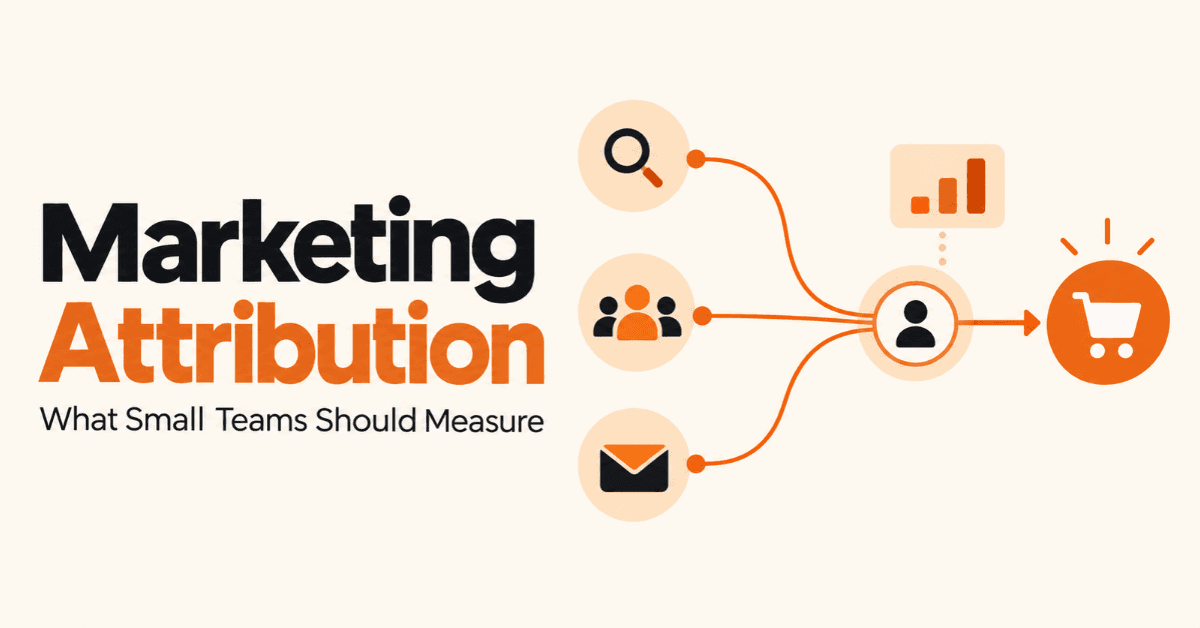 Growth
Marketing Attribution: What Small Teams Should Measure
Marketing Attribution helps small teams measure channels, conversions, CRM data, and marketing ROI to make smarter, data-driven marketing decisions.
 Growth
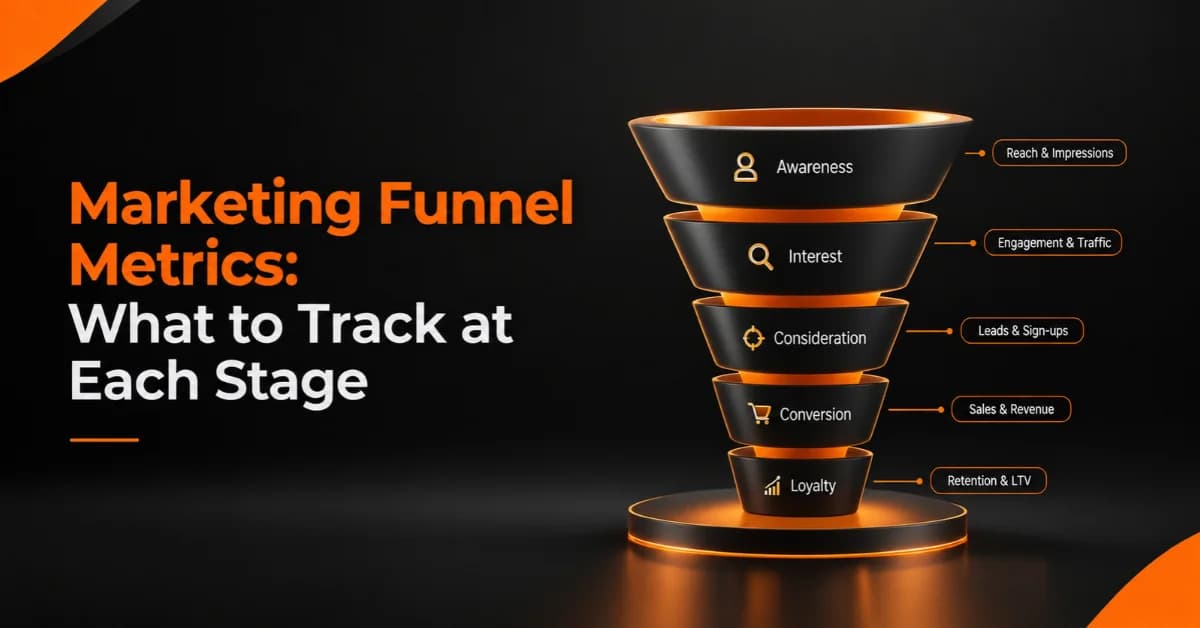
Marketing Funnel Metrics: What to Track at Each Stage
Learn which marketing funnel metrics to track at awareness, consideration, conversion, and retention stages, with formulas, examples, and KPI tips.
 Growth
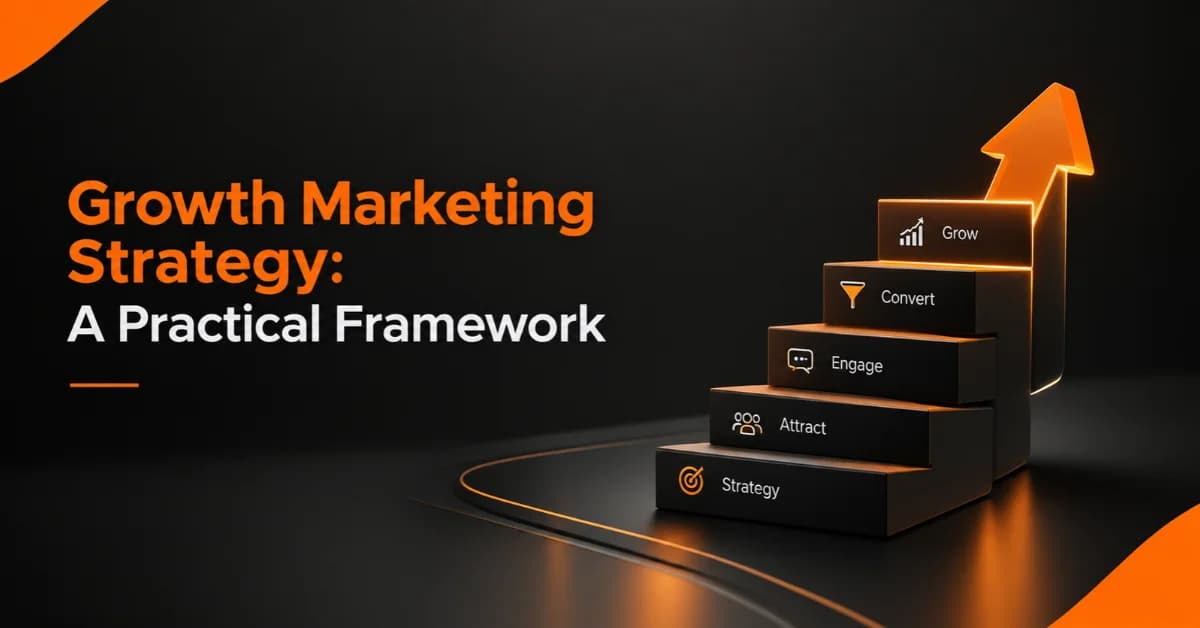
Growth Marketing Strategy: A Practical Framework
Build a Growth Marketing Strategy with practical steps for acquisition, retention, growth experiments, conversion, metrics, and sustainable business growth.