
How to Use AEO vs GEO vs SEO for Better Online Visibility
Compare AEO vs GEO vs SEO and learn how to improve organic rankings, answer visibility, and AI search presence with a practical strategy for your business.
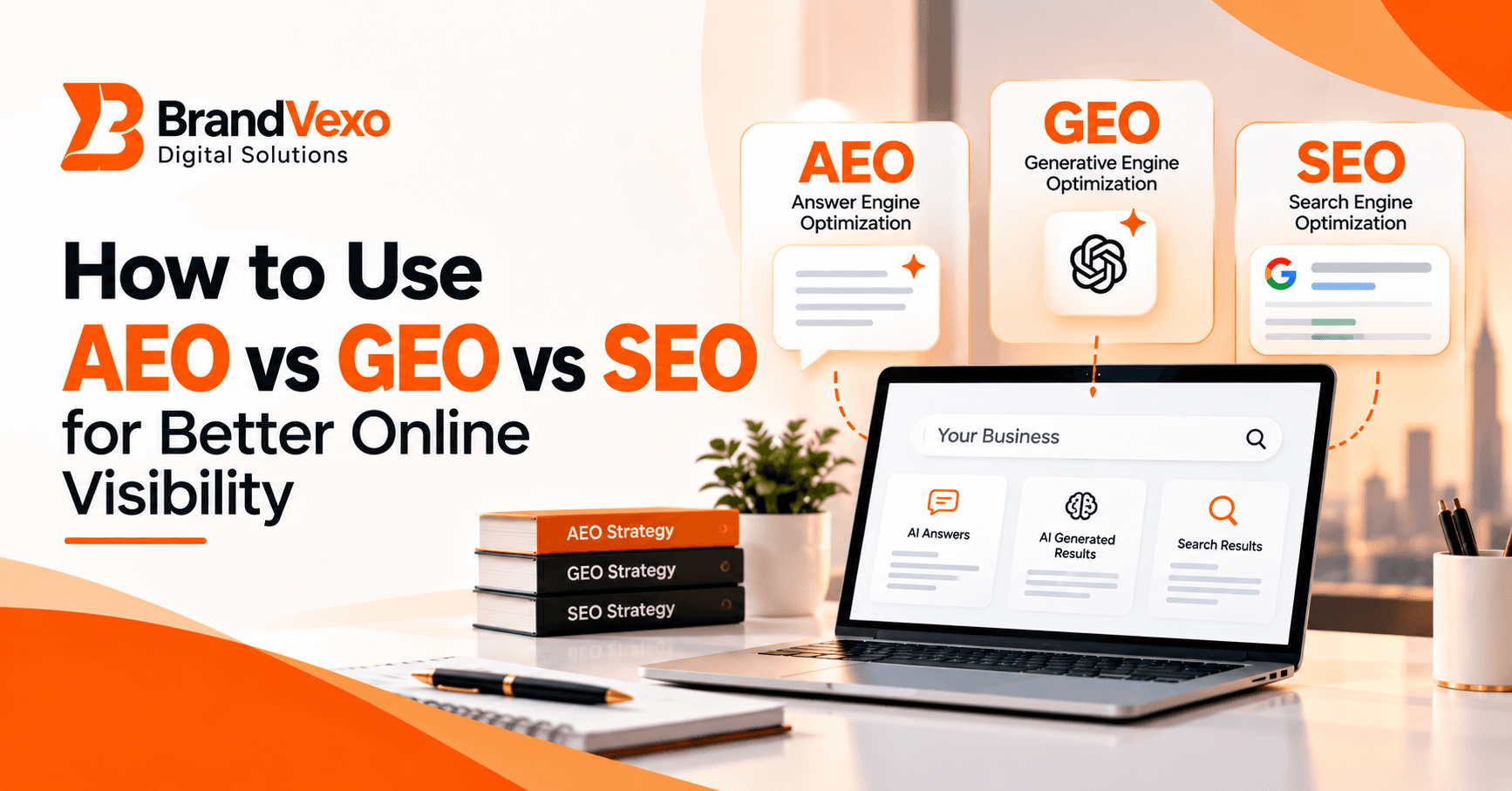
Businesses can no longer rely on traditional search rankings alone to reach every potential customer. People still use Google to find websites, compare services, and research products, but they also ask questions through AI assistants and explore AI-generated search summaries before making decisions. Understanding AEO vs GEO vs SEO helps businesses build a more complete search visibility strategy. Search Engine Optimization (SEO) improves a website's ability to appear in organic search results. Answer Engine Optimization (AEO) focuses on providing clear, direct answers to user questions, while Generative Engine Optimization (GEO) aims to improve the chances that credible content will appear in or be referenced by generative AI responses.
These approaches share a common foundation: useful content, accessible websites, relevant information, and a clear understanding of user intent. The best strategy does not treat them as competing methods. Instead, it combines their strengths to help customers find, understand, and trust your business across different search experiences.
What Is the Difference Between AEO, GEO, and SEO?
Although AEO, GEO, and SEO overlap, each approach emphasizes a different way people find information online.
SEO (Search Engine Optimization): Improves a website's visibility in organic search results through relevant content, technical accessibility, useful page experiences, and other established practices.
AEO (Answer Engine Optimization): Makes content easier to identify and use when search engines or answer-focused systems respond directly to questions.
GEO (Generative Engine Optimization): Focuses on improving the likelihood that useful, credible content will be surfaced, mentioned, or cited in AI-generated responses.
For example, a Dubai-based digital marketing agency might use SEO to rank a service page for relevant marketing queries, AEO to answer questions about marketing costs, and GEO practices to make its expertise and supporting evidence easier for AI-powered search systems to interpret.
The three approaches can support the same customer journey. A person might discover a business through a Google result, find an answer in a search summary, and use an AI assistant to compare providers.
The key difference is the visibility opportunity each approach targets, not a completely separate set of ranking rules.
What Is SEO and How Does It Improve Organic Search Visibility?
Search Engine Optimization helps search engines discover, understand, and present relevant website content to users. It remains an essential part of digital marketing because people continue to use traditional search results to research questions, evaluate services, and find businesses.
A strong SEO strategy connects the content on your website with the questions and needs of your target audience. It also ensures that search engines can access important pages and that visitors can navigate them easily.
Key Elements of a Strong SEO Strategy
Search intent and keyword research: Identify the questions, problems, and services your audience searches for.
On-page SEO: Use descriptive titles, relevant headings, clear page content, and meaningful internal links.
Technical SEO: Help search engines crawl and index important pages correctly.
Website experience: Improve mobile usability, loading performance, and Core Web Vitals where relevant.
Content quality: Provide accurate information, practical examples, and meaningful answers instead of repeating generic advice.
Authority and trust: Support important claims with reliable sources and demonstrate relevant experience and expertise.
Consider a UAE accounting firm targeting business owners who need bookkeeping support. A dedicated service page that explains the firm's services, process, suitability, and common client questions can attract relevant organic traffic and encourage qualified enquiries.
Traditional SEO strategies therefore provide a strong foundation for AEO and GEO. Clear, accessible, useful website content gives different search systems a better opportunity to understand what your business offers.
What Is AEO and How Does Answer Engine Optimization Work?
Answer Engine Optimization focuses on making content clear, direct, and useful when a platform responds to a user's question. It is relevant to question-based search queries, featured snippets, voice assistants, and other answer-oriented search experiences.
For businesses, AEO starts with understanding what customers want to know before they make a decision. Instead of creating pages that only describe services, businesses should answer common questions about pricing, processes, requirements, benefits, and potential challenges.
How to Optimize Content for Answer Engines
Use question-based headings: Address questions your customers actually ask.
Give direct answers: Start each section with a concise response before adding supporting details.
Explain complex topics simply: Break complicated processes into clear steps.
Use FAQs strategically: Answer relevant questions that are not already fully addressed elsewhere on the page.
Support answers with evidence: Reference reliable sources and explain important limitations.
For example, a UAE business consultancy could answer, “What documents are required to register a company in Dubai?” It could provide a short overview, explain how requirements vary by business activity and jurisdiction, and link to a detailed guide.
This approach improves usability and makes information easier to interpret. However, clear answers do not guarantee a featured snippet or inclusion in an AI-generated response.
What Is GEO and How Does It Improve AI Search Visibility?
Generative Engine Optimization focuses on making content useful and accessible to generative AI systems that produce responses from information gathered from different sources. These experiences include AI-powered search summaries and conversational research tools. Depending on the platform and query, a response may summarize information, mention a brand, or provide links to supporting sources.
GEO digital marketing strategies therefore emphasize useful information, original insights, credible evidence, and a clear explanation of a business's expertise. They should build on established SEO practices rather than replace them.
How to Optimize Content for Generative AI Search
Publish original insights: Include practical examples, expert commentary, research, or analysis that adds value beyond existing articles.
Provide specific information: Explain processes, define terms, and support factual claims with reliable sources.
Build topical depth: Create related pages that cover the main topic and its important subtopics without repeating the same information.
Maintain consistent business details: Keep service descriptions, contact information, and other public business information accurate.
Improve technical accessibility: Ensure important content can be crawled, indexed, and accessed as intended.
Use structured data appropriately: Make sure markup accurately reflects visible page content and follows relevant search engine guidelines.
For example, a Dubai-based cybersecurity company could publish a detailed guide to network security, explain common business risks, and provide a practical assessment checklist. These original resources can help demonstrate expertise and give search systems useful information to reference.
Google's guidance confirms that foundational SEO practices remain important for AI search experiences. It also emphasizes unique, valuable content over supposed GEO shortcuts. No particular heading format, schema type, or keyword technique guarantees an AI citation.
AEO vs GEO vs SEO: Which Strategy Should Your Business Choose?
The right approach depends on your business goals, target audience, and current website performance. Most businesses benefit from combining all three instead of choosing just one.
When to Prioritize SEO
Focus on SEO when you want to:
Improve organic rankings for relevant service and product searches.
Attract visitors who are actively comparing solutions.
Fix website indexing, technical, or content-quality issues.
Build a sustainable source of organic traffic over time.
When to Prioritize AEO
Prioritize AEO when your customers frequently ask specific questions before making a purchase or contacting a service provider.
For example, a business setup company could answer questions about company registration, licence renewals, visa requirements, and business bank account preparation. These answers help potential customers understand their options before requesting professional assistance.
When to Prioritize GEO
Focus on GEO when your audience uses generative AI tools to research providers, compare solutions, or understand complex topics. Useful actions include publishing original research, explaining industry concepts accurately, and strengthening the quality and credibility of your content. Monitor whether relevant AI platforms mention or cite your business, but recognize that results can vary between queries and platforms.
The practical recommendation: Establish a strong SEO foundation first, incorporate AEO into your content planning, and apply GEO principles to make your information more useful across generative search experiences.
How to Combine AEO, GEO, and SEO for Better Online Visibility
An integrated search visibility strategy helps your business reach people at different stages of their research. You can implement it through five practical steps.
Step 1: Research Search Intent Across Platforms
Identify the questions your audience asks before, during, and after comparing solutions.
Group your keywords into three broad categories:
Informational: What is SEO? How does AI search work?
Commercial investigation: Which digital marketing agency should I choose?
Transactional: How can I request an SEO audit?
Use keyword research, website analytics, customer enquiries, and relevant search suggestions to identify genuine content opportunities. Avoid assuming that every query requires a separate page.
Step 2: Create Helpful, Search-Optimized Content
Build pages around specific user needs rather than producing articles solely to target keywords. For example, a digital marketing agency serving UAE businesses could publish a comprehensive SEO service page supported by articles about technical audits, local search visibility, and content strategy.
Each page should have a clear purpose, answer the intended query, and direct readers to relevant next steps.
Step 3: Strengthen Technical Accessibility
Review your website to ensure that search engines can access important content.
Check for:
Indexing problems and unintended crawl restrictions.
Broken internal links and confusing navigation.
Slow or unstable page experiences.
Important information hidden in formats that search systems may struggle to interpret.
Structured data that does not match visible page content.
Google recommends these foundational practices for its AI search features as well as traditional search.
Step 4: Add Clear Answers and Supporting Evidence
Structure your content so readers can find essential information quickly. Use descriptive headings, concise explanations, practical examples, and reliable references. Where appropriate, include original observations, expert-reviewed guidance, or relevant case studies. Never invent customer results, research findings, or professional credentials to make content appear more authoritative.
These practices support trust and usefulness while giving search systems clearer information about your topic.
Step 5: Measure Results and Refine Your Strategy
Review performance regularly and adjust your approach according to what the data shows.
Track organic clicks, impressions, and queries in Google Search Console.
Measure qualified organic leads and conversions in your analytics platform.
Check relevant question-based queries and answer features where visibility can be observed.
Monitor brand mentions and citations across selected AI platforms.
Evaluate referral traffic and assisted conversions where reliable data is available.
Use these results to identify gaps, update weak pages, and prioritize topics that support business goals.
A Practical UAE Business Example
Imagine a Dubai-based digital consultancy that wants to attract more small-business clients.
Its integrated strategy could include:
SEO: Optimize its core service pages for relevant Dubai digital marketing searches.
AEO: Publish clear answers to questions about SEO audits, service costs, and expected timelines.
GEO: Develop original industry insights, practical checklists, and well-supported explanations that AI systems may find useful.
The consultancy can then assess whether these activities improve qualified enquiries, organic visibility, and relevant brand mentions. This is a practical framework, not a guarantee of specific rankings or AI citations.
Common AEO, GEO, and SEO Mistakes to Avoid
Businesses can waste time and resources when they follow search trends without understanding the underlying principles.
Avoid these common mistakes:
Treating AEO, GEO, and SEO as competing strategies: Their goals overlap, and their best practices often reinforce one another.
Publishing generic AI-generated articles: Content that simply repeats existing information offers little additional value.
Stuffing keywords into every heading: Use phrases naturally and prioritize the reader's question.
Assuming schema markup guarantees visibility: Structured data can help search engines interpret supported content, but it does not guarantee rich results or AI citations.
Ignoring technical SEO: Useful content cannot reach its full potential if important pages remain inaccessible or unindexed.
Measuring visibility without business outcomes: Traffic and mentions matter, but qualified leads and conversions help establish commercial value.
Google's people-first guidance emphasizes useful, reliable content that provides meaningful value rather than content created primarily to manipulate rankings.
How to Measure AEO, GEO, and SEO Performance
Each approach requires relevant performance indicators. Do not rely on a single metric to judge whether your search visibility strategy works.
SEO performance: Monitor organic clicks, impressions, search queries, landing-page traffic, and conversions.
AEO performance: Track relevant answer-feature appearances and question-based search visibility where reliable data is available.
GEO performance: Check verified brand mentions, citations, referral visits, and visibility across selected AI platforms.
Business performance: Measure qualified leads, enquiries, conversion rates, and revenue contribution.
Google Search Console can help you evaluate website performance in Google Search. Analytics tools can help you connect visits with business outcomes. For AI platforms that do not provide comprehensive reporting, use a consistent monitoring process and treat manually observed results as directional rather than definitive.
The goal is not simply to appear in more places. It is to reach the right audience and turn relevant visibility into meaningful business results.
FAQs
Is GEO replacing SEO?
No. GEO complements SEO by focusing on visibility in generative AI responses. Traditional SEO remains important because search engines use established crawling, indexing, and quality systems to understand and surface relevant content.
What is the main difference between AEO and GEO?
AEO focuses on making content suitable for direct answers to user questions. GEO focuses on improving the chances that useful content will be surfaced, mentioned, or cited in generative AI responses. Their methods overlap, and neither guarantees visibility.
How do I optimize my website for ChatGPT and Google AI Overviews?
Start with accessible, useful, accurate website content. Address relevant user questions, demonstrate expertise, support claims with credible sources, and maintain sound technical SEO. Google confirms that its AI search features do not require a separate set of special SEO optimizations.
Does schema markup help with AEO and GEO?
Structured data can help supported search systems interpret page information. Use relevant schema types and ensure that the markup matches visible content. However, schema does not guarantee featured snippets, AI mentions, or citations.
Can small businesses use SEO, AEO, and GEO together?
Yes. Small businesses can start with their core service pages, improve technical SEO, and publish useful answers to common customer questions. They can then strengthen their content with original insights and monitor visibility across relevant AI platforms as resources allow.
Build a Stronger Search Visibility Strategy with BrandVexo
BrandVexo Digital Solutions helps businesses strengthen their digital presence through SEO, digital marketing, content strategy, web development, and AI-driven business solutions. A well-planned approach to AEO, GEO, and SEO can help align your content with customer needs across traditional and AI-powered search experiences. Rather than chasing every new search trend, start by identifying gaps in your current website, improving your most important pages, and measuring results against your business goals.
Want to improve your search visibility? Contact BrandVexo to discuss a practical strategy that connects your website content, organic search performance, and evolving AI search opportunities.
Phone: +971 52 356 5409
Email: info@brandvexo.com
Website: www.brandvexo.com
Disclaimer: Search rankings, featured snippets, and AI-generated citations depend on multiple factors and cannot be guaranteed. Businesses should treat AEO and GEO as complementary to established SEO practices and review their strategies as search technologies evolve.
Free growth plan
Ready to grow your business?
Reading is a start — now let's build it. Tell us where you want to grow and a senior strategist will map the fastest, most profitable way to get there. Free, no obligation.
Discussion
Join the conversation
Be the first to comment. Comments are reviewed before they appear, so yours won't show up instantly — but we read every one.
Leave a comment
Keep reading
All articles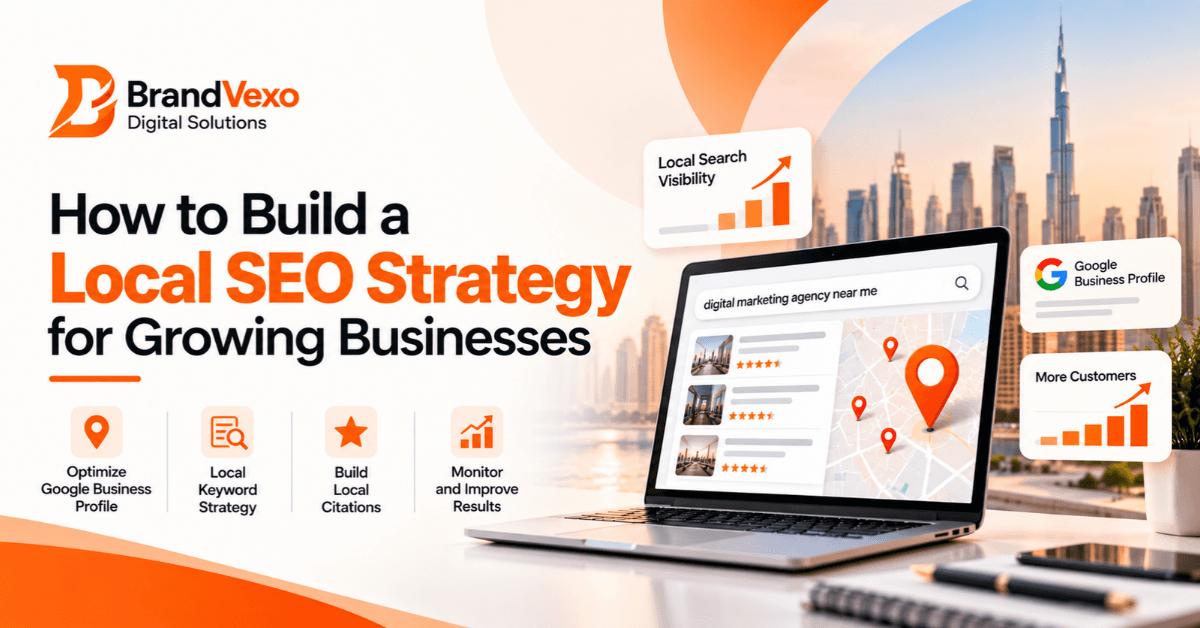
How to Build a Local SEO Strategy for Growing Businesses
Build a local SEO strategy that improves search visibility, attracts nearby customers, strengthens your Google presence, and supports business growth.
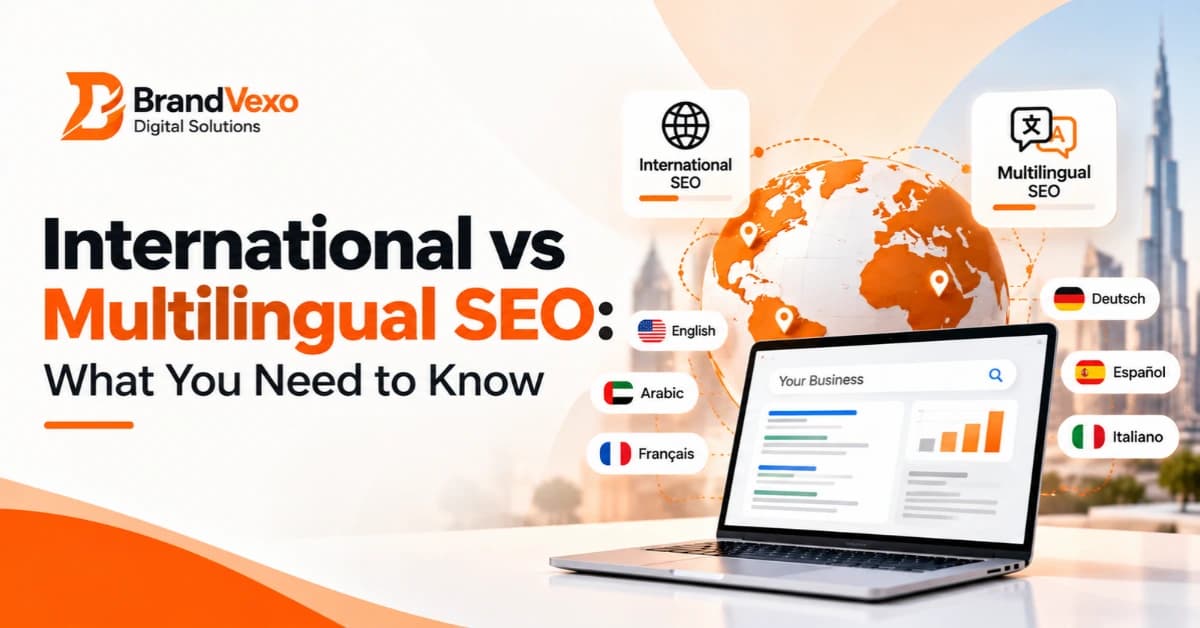
International vs Multilingual SEO: What You Need to Know
International vs Multilingual SEO explained. Compare key differences, URL structures, hreflang tags, and strategies for reaching global audiences.
AI Search Visibility: Strategies to Grow Your Brand Online
Improve AI Search Visibility with practical SEO, GEO, and AEO strategies to strengthen brand authority, earn citations, and reach more potential customers.