

How to Build a Local SEO Strategy for Growing Businesses
Build a local SEO strategy that improves search visibility, attracts nearby customers, strengthens your Google presence, and supports business growth.
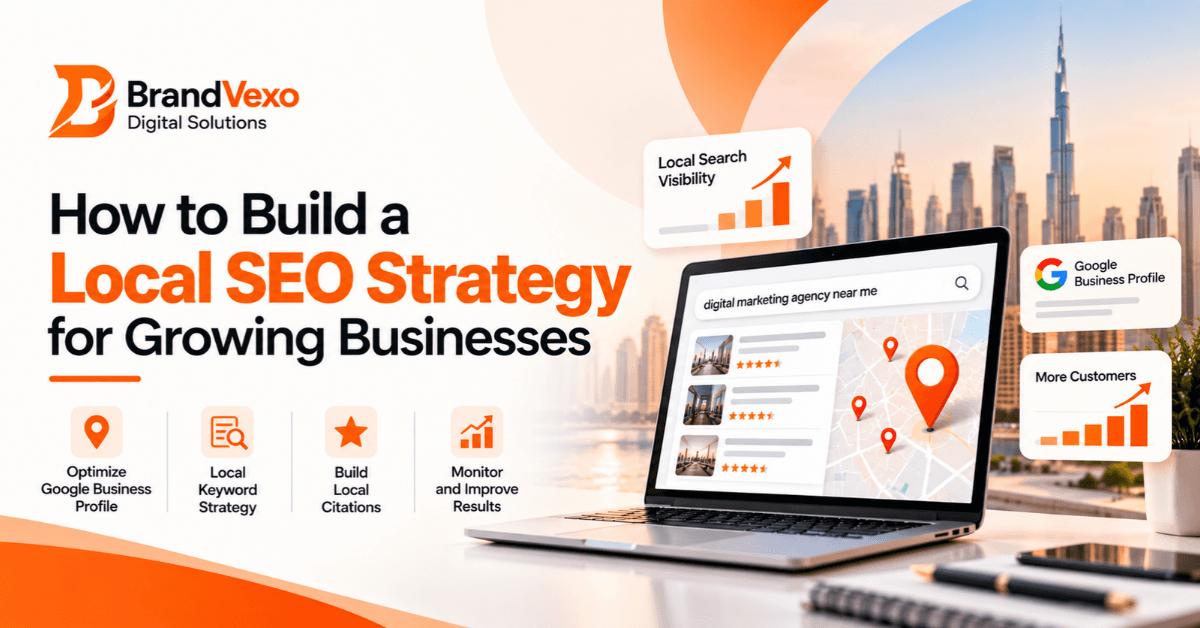
A well-planned Local SEO Strategy helps growing businesses reach customers who actively search for products and services in their area. When people search for terms such as "digital marketing agency near me" or "accounting firm in Dubai," they usually want relevant businesses they can contact or visit. Appearing in these local search results can help businesses attract qualified visitors, generate enquiries, and build brand awareness. However, improving local search visibility requires more than creating a Google Business Profile. Businesses need an optimized website, relevant location-based keywords, accurate business listings, positive customer reviews, and quality local backlinks.
What Is a Local SEO Strategy and Why Does It Matter?
A local SEO strategy helps businesses improve visibility in search results for location-based searches. It connects businesses with potential customers searching for relevant products or services in a specific city, neighbourhood, or service area. Unlike traditional SEO, which targets a broader audience, local search engine optimization focuses on geographic relevance and customer location. For example, a person searching for an accounting firm in Dubai wants relevant businesses that serve that market rather than accounting information from anywhere in the world.
A strong local SEO marketing strategy helps businesses:
Improve visibility in Google Search and Google Maps.
Attract customers searching for nearby products and services.
Generate relevant website traffic and enquiries.
Build trust through genuine customer reviews.
Strengthen local brand awareness.
Increase opportunities for long-term organic growth.
For growing businesses, local SEO creates an opportunity to compete with established brands by targeting relevant searches and serving customers in specific locations.
How to Build a Local SEO Strategy Step by Step
Building an effective local SEO strategy requires consistent work across your website, business listings, content, and online reputation. The following steps provide a practical approach that businesses can follow to improve their local search presence.
1. Research Local Keywords and Understand Search Intent
Keyword research is the foundation of every successful local SEO campaign. Before optimizing your website, identify the terms potential customers use when searching for your products or services.
Focus on keywords that combine your business category, service, and target location. These terms help search engines understand what your business offers and which customers may find your website relevant.
For example, a digital marketing agency might target:
Digital marketing agency in Dubai
SEO services in Abu Dhabi
Website development company in Sharjah
Digital marketing services near me
Best SEO company in Dubai
Use keyword research tools such as Google Keyword Planner, Google Search Console, and other SEO platforms to identify relevant search terms and understand their search intent.
Consider three types of search intent:
Informational: Users want answers, guides, or explanations.
Commercial: Users compare businesses and available services.
Transactional: Users are ready to contact a business, request a quote, or make a purchase.
Choose keywords based on your services, audience, and business objectives. Avoid targeting locations where your business cannot genuinely serve customers.
2. Optimize Your Google Business Profile
Google Business Profile optimization is an important part of local SEO. It allows eligible businesses to manage how their information appears across Google Search and Maps.
Start by claiming and verifying your business profile. Then complete the information accurately so customers can understand what your business offers.
Follow this Google Business Profile checklist:
Use your real business name.
Provide an accurate business address or service area, as applicable.
Add your primary and relevant secondary business categories.
Include a clear business description.
Update opening hours and holiday schedules.
Add relevant services and products.
Upload genuine business photographs.
Keep contact information accurate.
Publish useful business updates when relevant.
For example, a Dubai-based accounting firm should select an appropriate accounting-related business category, describe its actual services, and provide accurate contact details.
Regularly review your profile to ensure that customers see current information. Respond to customer reviews and update photographs when your business changes.
Google identifies relevance, distance, and prominence as the main factors behind local search rankings. Complete business information helps Google understand your business and match it with relevant searches.
3. Optimize Your Website for Local Search
Your website plays an important role in local search engine optimization. A complete Google Business Profile cannot replace a useful website that explains your services and helps customers take action.
Start by optimizing your main website pages with relevant location-based keywords. Include geographic information naturally in your page titles, headings, descriptions, and service content.
Important website optimization tasks include:
Write unique SEO title tags and meta descriptions.
Include relevant local keywords in H1 and H2 headings.
Create dedicated service pages.
Add location-specific landing pages when useful.
Display accurate business contact information.
Optimize images with descriptive alt text.
Improve mobile usability and page loading speed.
Add relevant internal links between website pages.
For example, a company providing digital marketing services in Dubai and Abu Dhabi can create separate location pages if it genuinely serves both markets.
Each page should provide useful information about the services, customer needs, and relevant location. Avoid publishing multiple pages with almost identical content and only changing the city name.
A mobile-friendly website is also essential because many customers use smartphones to find nearby services. Make your phone number, enquiry forms, and service information easy to access.
4. Maintain NAP Consistency Across Business Listings
NAP stands for Name, Address, and Phone Number. These details help customers identify and contact your business across different online platforms. Inconsistent business information can create confusion. For example, if your website displays one phone number while an online directory shows an outdated number, customers may struggle to contact you.
To improve citation building for local SEO:
Review your existing business listings.
Use accurate business information across platforms.
Update old addresses and phone numbers.
Correct duplicate or outdated listings.
Submit your business to relevant industry directories.
Monitor important business profiles regularly.
Focus on trusted platforms and directories that are relevant to your industry and location. Avoid submitting your business to low-quality directories simply to increase the number of citations.
Consistent business information supports a reliable online presence and makes it easier for customers to find accurate details.
5. Build Customer Reviews and Manage Your Online Reputation
Online reviews and ratings influence how potential customers evaluate a business. Positive feedback can strengthen trust, while professional responses show that your company values customer experiences. Create a simple process for requesting genuine reviews after completing a service or transaction.
For example, an accounting firm can send customers a follow-up message after completing a bookkeeping project and invite them to share honest feedback.
Use these practices to manage customer reviews:
Ask satisfied customers for honest feedback.
Provide a convenient review link.
Respond to positive reviews professionally.
Address negative feedback politely.
Resolve genuine customer complaints.
Monitor reviews across important platforms.
Never purchase fake reviews or offer incentives in exchange for positive ratings. Focus on delivering good customer experiences and encouraging authentic feedback.
Consistent review management helps businesses develop a stronger reputation and gives potential customers useful information when comparing local service providers.
6. Create Localized Content That Attracts Nearby Customers
Localized content marketing helps businesses connect with customers by addressing the needs, interests, and questions of specific communities. Instead of publishing general articles repeatedly, create useful content that relates to your services and target locations.
For example, a marketing agency serving businesses in Dubai could publish articles about digital marketing challenges for UAE startups, local ecommerce trends, or SEO opportunities for service-based businesses.
Consider these local content ideas:
City-specific service guides.
Local industry insights.
Customer success stories.
Neighborhood and service-area guides.
Frequently asked customer questions.
Relevant community and business updates.
Location-specific service comparisons.
You can also develop dedicated location pages for different service areas. However, each page should provide unique value instead of repeating the same content with different geographic keywords.
Answer real customer questions, include practical examples, and explain how your services address local requirements.
Useful localized content can attract organic search traffic while helping potential customers understand your business.
7. Build Quality Local Backlinks and Business Partnerships
Local link building tactics help businesses strengthen their online authority through relevant references from other websites. A backlink is a link from another website to your website. However, the quality and relevance of links matter more than simply collecting large numbers of backlinks.
Growing businesses can develop local backlinks through:
Partnerships with complementary businesses.
Local business associations.
Community sponsorships.
Industry events and conferences.
Relevant local publications.
Genuine business collaborations.
Useful local resource contributions.
For example, a digital marketing agency could collaborate with a local business association to publish an educational article about online growth opportunities for small businesses.
Focus on earning relevant links through useful contributions and genuine relationships. Avoid paid link schemes, excessive link exchanges, and unrelated backlink placements.
How Do Small Businesses Rank Higher on Google Maps?
Small businesses can improve their Google Maps visibility by maintaining accurate business information, building a strong reputation, and making their services relevant to local searches.
Google primarily considers three factors when determining local results:
Relevance: How closely a business matches the customer's search.
Distance: How far the business is from the searcher or the location mentioned in the search.
Prominence: How well-known the business is, including information such as reviews and links from other websites.
Businesses should maintain complete Google Business Profiles, choose accurate categories, respond to reviews, and publish useful website content.
However, no business can guarantee a specific Google Maps position. Search results can vary depending on the customer's location and search query.
Common Local SEO Mistakes Growing Businesses Should Avoid
Even a well-designed SEO campaign can struggle when businesses make avoidable mistakes. Review your local SEO checklist regularly to identify problems and improve performance.
Common mistakes include:
Targeting broad keywords: Focus on relevant service and location-based searches instead of relying only on generic keywords.
Ignoring business information: Keep addresses, phone numbers, and business hours accurate.
Neglecting Google Business Profile: Review and update your profile regularly.
Buying fake reviews: Build your reputation through genuine customer experiences.
Creating duplicate location pages: Publish unique, helpful content for every location.
Ignoring mobile users: Make your website easy to navigate on smartphones.
Neglecting customer feedback: Respond to reviews and address customer concerns.
Ignoring performance data: Track enquiries and conversions instead of focusing only on rankings.
Avoiding these issues helps businesses build a more reliable and sustainable local SEO marketing strategy.
How to Measure the Success of Your Local SEO Strategy
Tracking performance helps you understand whether your local SEO efforts are producing meaningful results. Instead of measuring success through keyword rankings alone, focus on visibility, customer engagement, and business enquiries.
Monitor these important performance indicators:
Google Business Profile interactions: Track calls, website clicks, and direction requests where available.
Organic search traffic: Measure visitors arriving through unpaid search results.
Local keyword rankings: Monitor how relevant service and location keywords perform.
Google Maps visibility: Review your presence across important local searches.
Customer reviews: Track review growth and customer feedback.
Website conversions: Measure enquiry forms, calls, bookings, and quote requests.
Qualified leads: Identify how many enquiries come from relevant local customers.
Use Google Analytics 4 to understand website traffic and conversions. Google Search Console helps you monitor search impressions, clicks, queries, and website performance.
You can also review Google Business Profile performance reports to understand how customers interact with your listing.
Review these metrics monthly and adjust your strategy based on actual results. A campaign that generates qualified enquiries provides more business value than one that only increases website visits.
How Long Does It Take for Local SEO to Work?
Local SEO is a long-term process, and results vary depending on competition, website quality, business location, and the consistency of optimization efforts. Some businesses may notice early improvements within a few weeks after correcting profile information or technical issues. However, stronger and more stable results often require several months of ongoing work.
Businesses should regularly improve their website, publish useful content, manage reviews, and monitor local search performance.
Avoid agencies or service providers that guarantee first-page rankings within a fixed number of days. Sustainable local SEO depends on multiple factors that no business can completely control.
FAQs
1. What Is a Local SEO Strategy?
A local SEO strategy is a plan to improve a business's visibility in location-based search results. It combines website optimization, Google Business Profile management, local keywords, customer reviews, and relevant backlinks.
2. How Do Small Businesses Rank Higher on Google Maps?
Small businesses can improve Google Maps visibility by maintaining accurate business profiles, selecting relevant categories, collecting genuine reviews, and strengthening their online presence. Relevance, distance, and prominence also influence results.
3. How Long Does It Take for Local SEO to Work?
Local SEO results vary by industry, location, and competition. Some improvements may appear within weeks, while meaningful and consistent growth often requires several months of ongoing optimization.
4. Why Is Local SEO Important for Growing Businesses?
Local SEO helps growing businesses reach customers searching for nearby products and services. It improves online visibility, builds customer trust, attracts relevant website traffic, and creates more opportunities for enquiries.
5. How Do I Optimize My Website for Local Search?
Use relevant location-based keywords, create helpful service pages, optimize title tags and meta descriptions, improve mobile usability, display accurate contact information, and add useful internal links.
How BrandVexo Can Help!
BrandVexo helps businesses build a stronger digital presence through practical digital marketing, SEO, website development, AI automation, and business solutions. We focus on creating digital growth strategies that support real business objectives rather than vanity metrics.
Our approach combines search visibility, content strategy, website optimization, and lead generation to help businesses reach the right audience. Whether you want to improve local search performance or strengthen your overall online presence, we focus on practical solutions that support sustainable growth.
If your business needs a stronger local SEO strategy, our team can help assess your digital presence and identify opportunities to improve search visibility and attract relevant customers.
Get in touch with BrandVexo:
Phone: +971 52 356 5409
Email: info@brandvexo.com
Website: https://www.brandvexo.com
Build a stronger online presence with a local SEO strategy that connects your business with the customers who matter.
Disclaimer: This article is for informational and educational purposes only. Local SEO strategies, ranking factors, and search results may change over time. Businesses should review their SEO performance regularly and adapt their approach based on their goals, industry, and target audience.
Free growth plan
Ready to grow your business?
Reading is a start — now let's build it. Tell us where you want to grow and a senior strategist will map the fastest, most profitable way to get there. Free, no obligation.
Discussion
Join the conversation
Be the first to comment. Comments are reviewed before they appear, so yours won't show up instantly — but we read every one.
Leave a comment
Keep reading
All articles
How to Use AEO vs GEO vs SEO for Better Online Visibility
Compare AEO vs GEO vs SEO and learn how to improve organic rankings, answer visibility, and AI search presence with a practical strategy for your business.
International vs Multilingual SEO: What You Need to Know
International vs Multilingual SEO explained. Compare key differences, URL structures, hreflang tags, and strategies for reaching global audiences.

AI Search Visibility: Strategies to Grow Your Brand Online
Improve AI Search Visibility with practical SEO, GEO, and AEO strategies to strengthen brand authority, earn citations, and reach more potential customers.