
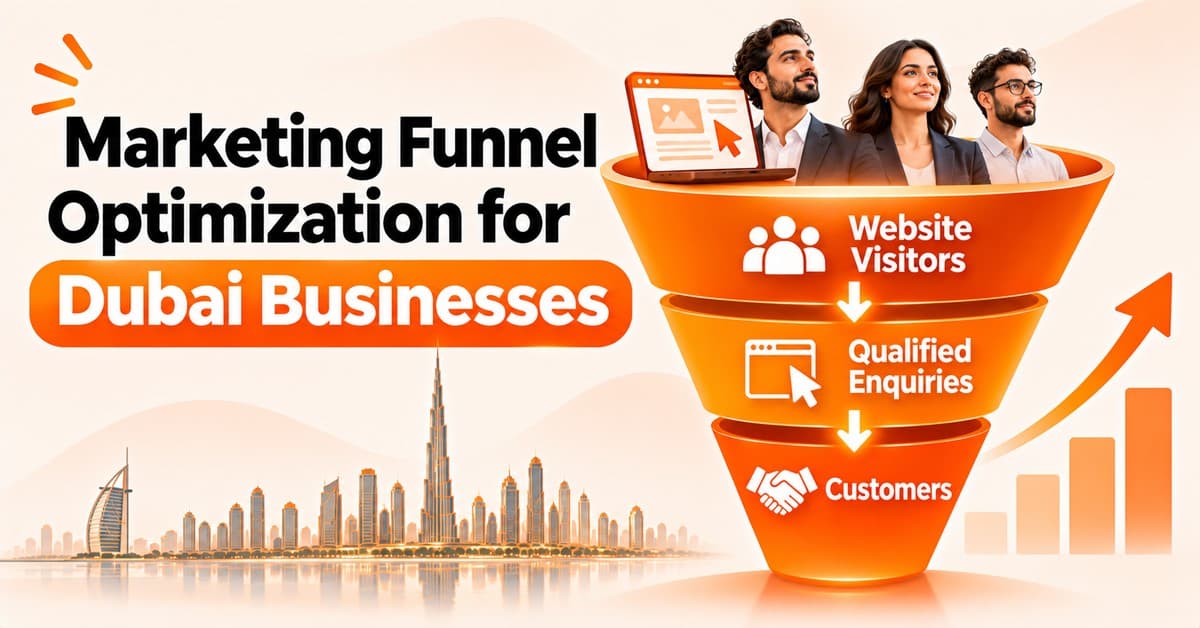
Marketing Funnel Optimization for Dubai Businesses
Your Dubai business may be attracting website visitors, running paid campaigns and receiving WhatsApp enquiries. Yet if too few prospects become paying customers, increasing the advertising budget may only make the leak more expensive. The real opportunity is often inside the journey people already take: the pages they visit, the questions they ask, the forms they abandon and the follow-up they receive.
Marketing funnel optimization Dubai businesses need is not about adding more software or pushing every visitor toward a sales call. It is about removing the barriers that stop the right prospects from taking the next useful step, then measuring whether those changes create better business results.
Introduction
Dubai is a competitive market with businesses serving local residents, international customers, tourists, corporate buyers and regional audiences. A funnel that works for one audience may not work for another. A property consultancy, clinic, B2B technology provider and e-commerce store have different buying journeys, trust requirements and conversion actions.
That is why marketing funnel optimization Dubai companies invest in should begin with evidence from their own customers rather than generic conversion-rate promises. This guide explains how to diagnose weak points, improve each stage, connect digital channels and build a practical optimization plan. It is intended for Dubai business owners and marketing teams who want more qualified enquiries and sales from their existing marketing investment.
1. Understand What Your Marketing Funnel Needs to Achieve
A marketing funnel describes the steps a potential customer takes from discovering a business to making a purchase and, ideally, returning. It is a useful model, but real customer journeys are rarely perfectly linear. Someone may discover your company through Google, check reviews, visit Instagram, ask a colleague, return through a branded search and then contact you on WhatsApp.
For a Dubai business, the funnel should reflect the actual way customers research and buy. Start by identifying the primary conversion you want. It might be a qualified consultation request, a booked appointment, a product purchase, a property viewing or a request for a quotation.
Then define the smaller actions that indicate progress. A visitor reading a service page is showing interest. Someone comparing packages or viewing case studies may be evaluating options. A person who starts a booking form or clicks a WhatsApp enquiry button may be closer to making a decision.
Do not treat every interaction as equal. A thousand low-intent visits may be less valuable than a smaller number of relevant prospects who match your service area, budget and ideal customer profile.
2. Diagnose Where Prospects Leave the Funnel
Before changing campaigns or redesigning a website, map the journey from first interaction to sale. Use analytics, advertising platforms, your CRM and sales feedback to understand where people stop progressing. The objective is to identify a specific bottleneck, not to label the entire funnel as broken.
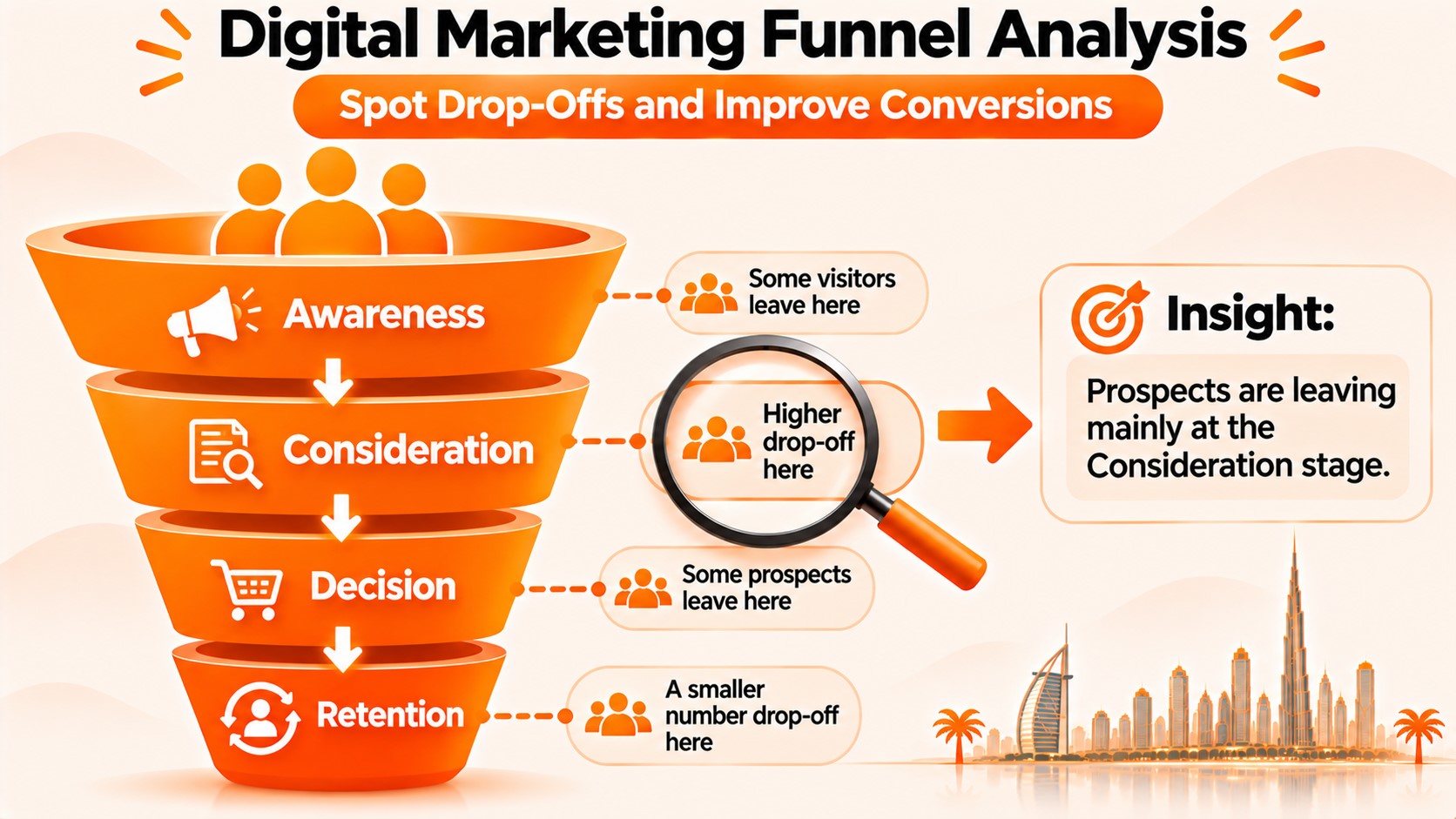
Look for patterns such as:
High ad clicks but few relevant landing-page visits or enquiries.
Strong service-page traffic but low engagement with calls to action.
Form starts that rarely become completed submissions.
Many enquiries that do not meet your location, budget or service criteria.
Qualified leads that receive slow responses or no clear next step.
Proposals that are sent but rarely followed by a decision.
Segment the evidence by channel, campaign, landing page, device, audience and service. A paid search campaign may bring people who are ready to request a quote, while social media may introduce prospects who need more education. Combining both into one average can hide the real problem.
For local campaigns, check whether the landing page matches the location and service in the ad. If someone searches for a service in Dubai Marina but reaches a generic page with no service-area information, the experience may feel less relevant. Do not create dozens of near-identical location pages simply to insert neighbourhood names. Each page should offer genuinely useful local information.
3. Match the Funnel to Dubai Customer Intent
A funnel performs better when each page and message answers the question a prospect has at that moment. A person discovering a service may need a clear explanation of the problem you solve. Someone comparing providers needs evidence, scope and pricing context. A decision-ready prospect needs confidence about the next step.
At the awareness stage, explain the problem, the service category and the outcomes a customer can reasonably expect. Educational articles, short videos, social content and search-focused service pages can introduce your business to relevant prospects.
During consideration, help prospects compare approaches. Show your process, relevant experience, service inclusions, frequently asked questions and examples that can be substantiated. At the decision stage, remove uncertainty around the enquiry. Explain what happens after a form submission, how a consultation works, what information is needed and when the team will respond.
The journey continues after a purchase. Onboarding, helpful communication, service reminders and relevant follow-up can support retention and referrals. This stage-based approach reflects established funnel guidance: match content and actions to the buyer's current needs rather than using one generic message throughout the journey. HubSpot's conversion funnel guide also emphasizes mapping the buyer journey, creating stage-specific content and measuring movement between stages.
4. Improve the Landing Pages That Matter Most
Your landing page should continue the promise made by the ad, search result, social post or referral. If a campaign promises a free consultation, the page should make that consultation easy to understand and request. If the ad promotes a specific service, send visitors to a relevant service page rather than forcing them to search through the homepage.
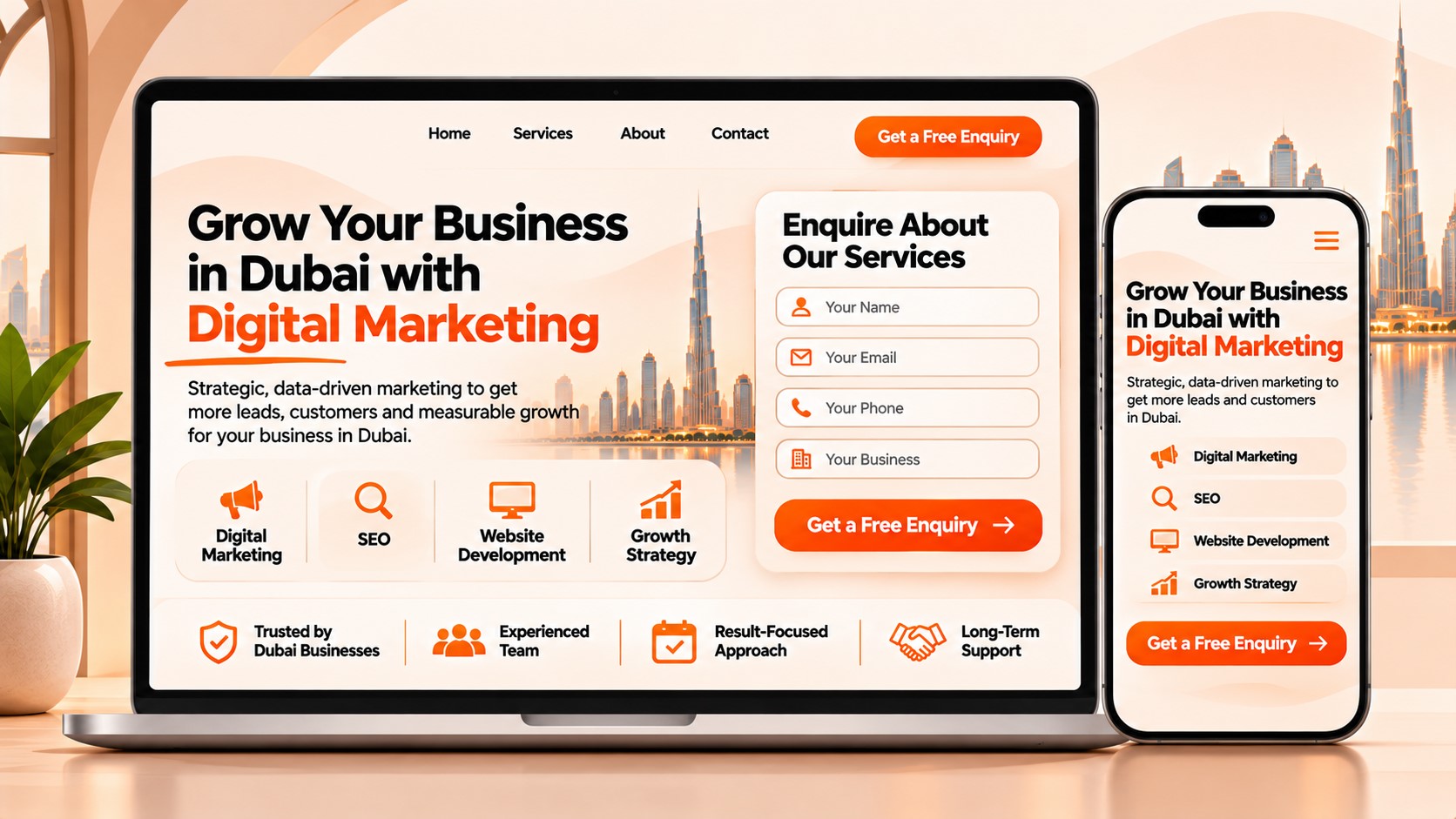
A strong landing page usually needs a clear headline, a concise explanation of the offer, evidence that supports your claims, a visible next step and answers to the most important objections. Keep the main action obvious. Multiple competing buttons can make visitors unsure whether to call, book, download, browse or message.
For Dubai audiences, review the practical details that can affect trust. Make your service area clear. Display accurate contact information. Explain whether prices include VAT where relevant to your offer, and avoid presenting an estimate as a guaranteed final price. If your customers prefer WhatsApp, make the option visible while keeping a trackable form or booking route for enquiries that need qualification.
Mobile usability deserves particular attention because many people discover and contact businesses on phones. Test the page on real mobile devices. Check that text is readable, buttons are easy to tap, forms are not frustrating and key information appears before a visitor has to scroll excessively.
If the page is slow, confusing or difficult to use, more advertising will not solve the underlying issue. BrandVexo's website development service focuses on mobile-first, search-ready websites designed around enquiries. The right decision, however, depends on whether your current site has a technical problem, a messaging problem or both. This is one practical area where marketing funnel optimization Dubai businesses can act on before increasing traffic spend.
5. Reduce Friction in Forms, Calls and WhatsApp Enquiries
Every extra step asks a prospect to spend more time and share more information. Some questions are necessary to qualify a lead, but asking for everything at the first contact can reduce completion.
Start with the minimum information your team needs to respond usefully. A local service business may need a name, contact method, service required and location. A B2B provider may also need company name and a short description of the requirement. Ask for budget or timeline when it helps route the enquiry, not simply because the CRM has a field for it.
Make the next step explicit. Tell visitors whether they will receive a call, an email, a WhatsApp response or a calendar confirmation. If a form submission leads to a thank-you page, use that page to explain what happens next and provide a useful alternative for urgent enquiries.
WhatsApp can be a convenient contact channel, but it should not become an unmeasured dead end. Use campaign-specific links or tracking parameters where appropriate, record the enquiry source in your CRM and establish a clear process for assigning and responding to messages. Avoid sending unsolicited marketing messages or making assumptions about consent. For telemarketing by phone, review the UAE's official telemarketing regulations, including the requirements described under Cabinet Resolution No. 56 of 2024.
6. Improve Lead Quality, Not Just Lead Volume
A funnel can appear successful when measured by form submissions but still produce little revenue. If the sales team spends time on enquiries that cannot be served, the business may be paying to create operational work rather than profitable opportunities.
Agree on what makes an enquiry qualified. Consider service fit, location, urgency, budget range, decision authority and the problem the prospect wants solved. The criteria will differ by business. A clinic, for example, may need to route enquiries by treatment and appointment availability, while a B2B consultancy may qualify by company size, need and buying timeline.
Use the information to improve targeting and messaging. If a campaign generates many enquiries outside your service area, refine its geographic targeting and clarify the service area on the landing page. If prospects repeatedly ask for a service you do not provide, adjust the ad copy and page content so expectations are accurate.
Do not optimize toward the cheapest lead by default. Compare channels by qualified lead rate, appointment attendance, proposal rate, closed revenue and acquisition cost. The best source is the one that produces commercially useful customers at an acceptable cost, not necessarily the one with the lowest cost per form submission. For businesses evaluating marketing funnel optimization Dubai services, this distinction is important: more leads are not automatically better leads.
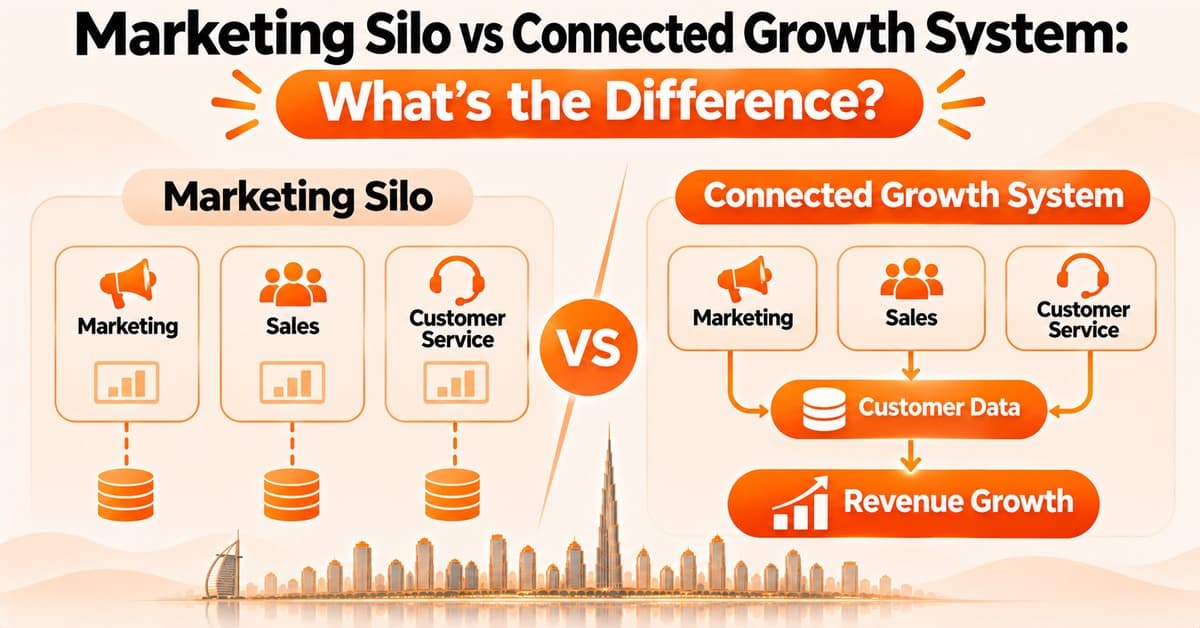
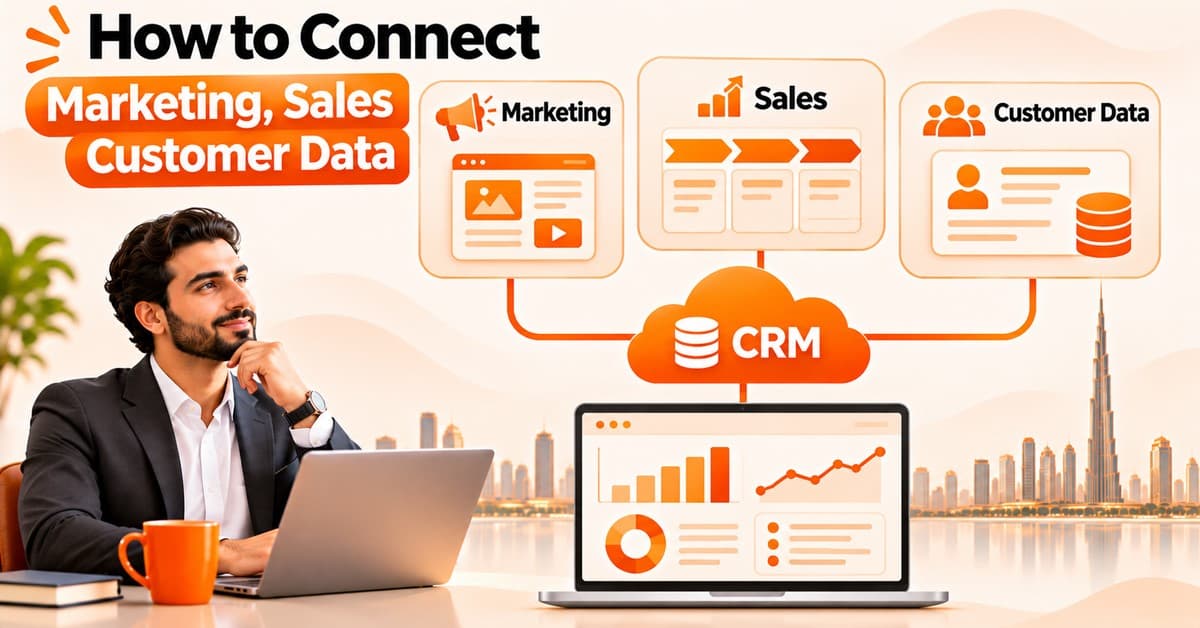
7. Connect Marketing, Sales and Follow-Up
The funnel does not end when someone submits a form. A delayed response, unclear ownership or inconsistent follow-up can waste the demand that marketing has generated. Decide who receives each enquiry, how quickly the team should respond during business hours and what happens if the prospect does not reply.
A simple follow-up process should include:
Capture the enquiry source and the service or offer requested.
Assign the lead to a named person or team.
Send an immediate confirmation that sets a realistic expectation.
Make a relevant human response within the response window your business can consistently meet.
Record the outcome, next action and reason if the lead is not qualified.
Review lost opportunities and recurring objections with the marketing team.
Automation can help with routing, reminders, confirmations and CRM updates, but it should support a useful customer experience rather than create a stream of generic messages. BrandVexo's AI Automation service is relevant when manual lead handling or inconsistent follow-up is a measurable bottleneck. Keep a human involved where the enquiry needs judgment, reassurance or a detailed answer.
8. Measure the Metrics That Reveal Funnel Performance
Choose a small set of metrics that connect customer behaviour to commercial outcomes. Review them by channel and funnel stage, not just as a single monthly total.
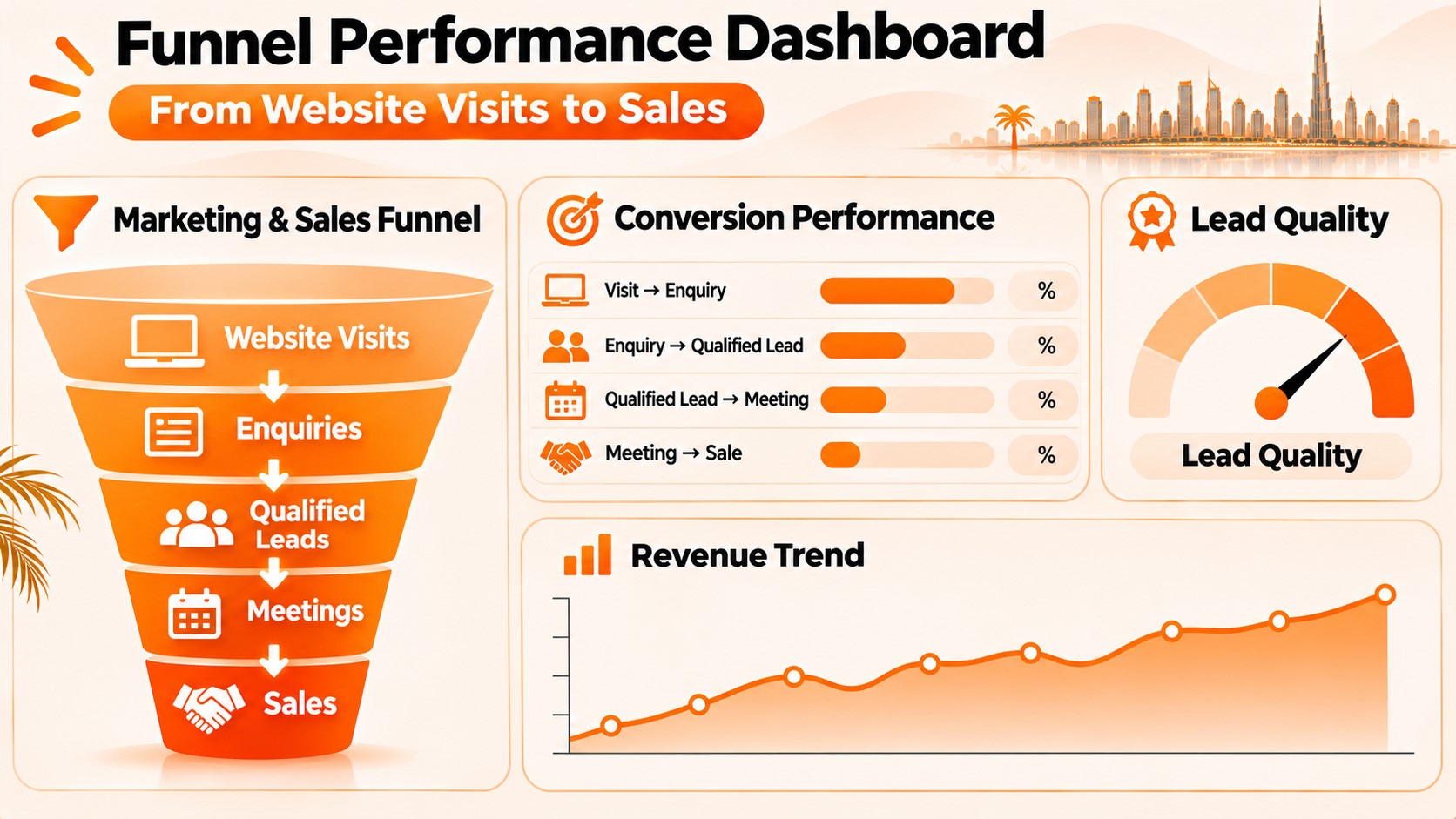
Useful measures include:
Visitor-to-enquiry rate for the landing pages that support lead generation.
Enquiry-to-qualified-lead rate to assess targeting and message fit.
Qualified-lead-to-meeting or appointment rate to assess follow-up and intent.
Meeting-to-proposal and proposal-to-sale rates for sales progression.
Customer acquisition cost and revenue by channel where reliable attribution is available.
Time to first response and time spent at each sales stage.
Use consistent definitions. If one team counts every form submission as a lead and another counts only sales-accepted enquiries, their reports will not agree. Document what each metric means, which system supplies it and who is responsible for checking data quality.
Do not compare your business with a generic benchmark without considering the service, price, audience, channel and sales cycle. Your own historical performance is often the most useful starting point. Establish a baseline, make one meaningful change and compare results over a suitable period. A reliable marketing funnel optimization Dubai process should make it easier to see which changes improve qualified enquiries and which simply increase activity.
9. Run Controlled Experiments Instead of Random Redesigns
Once you identify a bottleneck, write down the problem, the evidence and the change you expect to help. For example: "Visitors from the Dubai service campaign reach the page but rarely submit the form. We believe the form asks for too much information. We will test a shorter version while keeping the offer and traffic source consistent."
Prioritize experiments by likely business impact, confidence in the diagnosis, effort and risk. A broken form or incorrect phone number should be fixed immediately. A headline test may be worth running after tracking is reliable. A complete website redesign should not be the default response to a problem that could be caused by poor targeting or slow sales follow-up.
Change one major variable at a time when possible. Keep a record of the original page, test dates, traffic sources and outcomes. Avoid declaring a winner after a handful of conversions. If traffic is limited, combine quantitative data with user testing, sales feedback and direct observation, while being honest about the uncertainty.
10. Build a Practical 30-Day Optimization Plan
A focused plan gives the team a way to improve the funnel without trying to rebuild every channel at once.
Days 1–7: Audit. Map the customer journey, check analytics and conversion tracking, review campaign-to-page consistency, and speak with the people who handle enquiries.
Days 8–14: Prioritize. Select the biggest evidenced bottleneck. Fix tracking errors, broken forms, unclear calls to action or slow response processes before moving to cosmetic changes.
Days 15–21: Test. Launch one or two controlled improvements. Examples include simplifying a form, improving the service-page headline, adding a clear consultation explanation or changing lead routing.
Days 22–30: Review. Compare the results with the baseline. Check lead quality and sales outcomes, document what changed and decide whether to keep, refine or reverse the test.
The plan should be adjusted to your traffic volume and sales cycle. A business with a small number of high-value B2B enquiries may need more time to judge a change than an online store with frequent purchases. The goal is a repeatable improvement process, not an arbitrary deadline for a guaranteed uplift.
Conclusion
Marketing funnel optimization Dubai businesses can rely on starts with understanding how real prospects move from discovery to enquiry, purchase and repeat business. Audit the journey, identify the stage where qualified customers are being lost, improve the relevant page or process, and measure the effect on sales rather than clicks alone. When your website, campaigns, follow-up and reporting work together, you can make better use of existing demand and invest with greater confidence. If you are unsure where to begin, BrandVexo can review your current funnel and help identify the most practical growth priorities.
Ready to find where your funnel is losing qualified opportunities? Book a free growth call with BrandVexo or request a service review. Bring your website, campaign and lead data, and use the conversation to identify the next improvement worth testing.
Frequently Asked Questions
1. What is marketing funnel optimization?
Marketing funnel optimization is the process of improving the steps that move potential customers from first discovering a business to becoming qualified leads and paying customers. It involves finding friction, improving relevant experiences and measuring whether more suitable prospects progress.
2. Why do Dubai businesses need funnel optimization?
Dubai businesses often serve different customer groups, locations and buying situations. A clear funnel helps them make campaigns, landing pages, contact options and follow-up more relevant to the audience they want to reach. It can also reveal where marketing spend is producing activity without enough qualified opportunities.
3. How do I know which stage of my funnel is underperforming?
Track movement between stages, such as landing-page visit to enquiry, enquiry to qualified lead, and qualified lead to sale. Review the results by channel, campaign, device and service. Combine analytics with CRM outcomes and feedback from the people speaking to customers.
4. Should I improve my website or increase my advertising budget first?
Check whether the current website and conversion tracking can turn relevant visitors into enquiries. If the page is confusing, slow, poorly matched to the campaign or difficult to use on mobile, fix those issues before scaling traffic. If the funnel converts well but needs more qualified visitors, increasing investment may be worth testing.
5. Is WhatsApp suitable for a business marketing funnel in Dubai?
WhatsApp can be a useful contact option when customers prefer messaging, but enquiries should be tracked and assigned just like form submissions. Make the expected response clear, protect customer information and follow applicable rules for marketing communications and telemarketing.
6. How long does funnel optimization take?
The time required depends on traffic volume, conversion frequency, sales cycle and the size of the change. Technical fixes can be implemented quickly, while reliable conclusions from experiments may take longer. Set a baseline and evaluate results over a period that gives the data enough context.
7. What should a funnel audit include?
A useful audit reviews the customer journey, campaign targeting, landing-page relevance, mobile experience, calls to action, forms, WhatsApp and phone enquiries, analytics, CRM tracking, lead quality and sales follow-up. It should finish with prioritized actions linked to evidence, not a generic list of redesign suggestions.
Free growth plan
Ready to grow your business?
Reading is a start — now let's build it. Tell us where you want to grow and a senior strategist will map the fastest, most profitable way to get there. Free, no obligation.
Discussion
Join the conversation
Be the first to comment. Comments are reviewed before they appear, so yours won't show up instantly — but we read every one.
Leave a comment