
What Is Full-Funnel Marketing? A Business Growth Guide
Many businesses invest in marketing across search, social media, email, content and sales outreach, yet still struggle to understand why some prospects buy while others disappear. One campaign creates awareness, another collects enquiries, and a sales team follows up later. When these activities are planned separately, the customer experiences a disconnected journey.
Full funnel marketing brings those activities together. It gives each interaction a purpose, from the first moment someone discovers a business to the point they become a customer and recommend it to others. The aim is not to push every person toward an immediate sale. It is to provide the right information and next step based on what the person needs.
Introduction
A marketing funnel is a model of how potential customers move from discovering a brand to considering an offer, making a purchase and building an ongoing relationship. The funnel is wider at the beginning because many people may encounter a business, while a smaller number become customers.
Full funnel marketing means planning and connecting marketing activities across the entire journey instead of optimizing only one stage. It combines awareness, consideration, conversion and post-purchase engagement into one coordinated approach. A clear full funnel marketing plan makes these activities work toward the same business outcome. The framework can help founders and marketers decide what content to create, which channels to use, what to measure and where to improve. In practice, full funnel marketing connects each of those decisions.
The model is useful for service companies, ecommerce brands and B2B providers. Customers do not always move in a straight line, so treat the funnel as a planning and measurement tool rather than a perfect map of every buyer's behaviour.
1. What Is Full-Funnel Marketing?
Full funnel marketing is a strategy that aligns messaging, channels, content, sales activity and measurement with the different stages of the customer journey. Instead of treating brand awareness, lead generation and sales conversion as separate campaigns, it connects them.
A software company might publish an educational guide, share a product comparison, offer a demo and provide onboarding resources. Each activity supports a different customer need while serving the same objective.
Shopify's full funnel marketing strategy guide also describes how top-, middle- and bottom-of-funnel activities support different points in the buyer journey.
A returning visitor may already be comparing solutions, while a referral may arrive with strong trust. Full funnel marketing helps teams recognize different starting points and respond appropriately.
Marketing funnel vs. sales funnel
The marketing funnel attracts attention and creates qualified demand. The sales funnel focuses on evaluating opportunities and closing customers. Both teams should agree on lead quality and share feedback about why deals are won or lost.
2. Understand the Main Stages of the Funnel
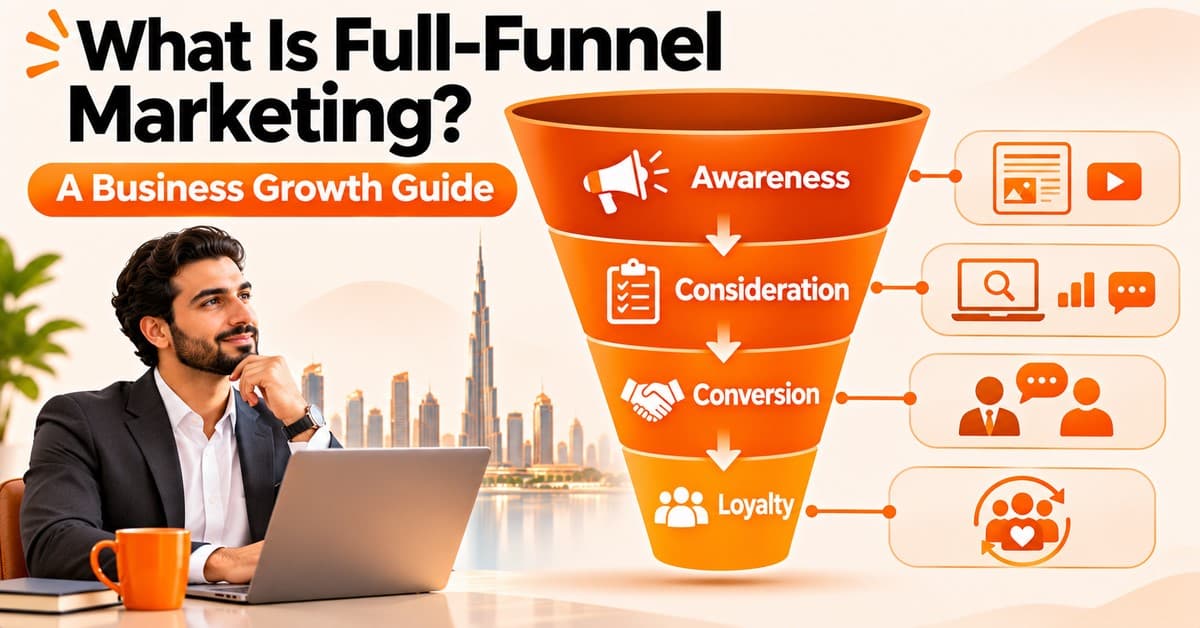
Most teams use three broad stages: top of funnel, middle of funnel and bottom of funnel. Some models add loyalty and advocacy after the first purchase. For a business growth strategy, including post-purchase activity matters because the customer relationship does not end at conversion.
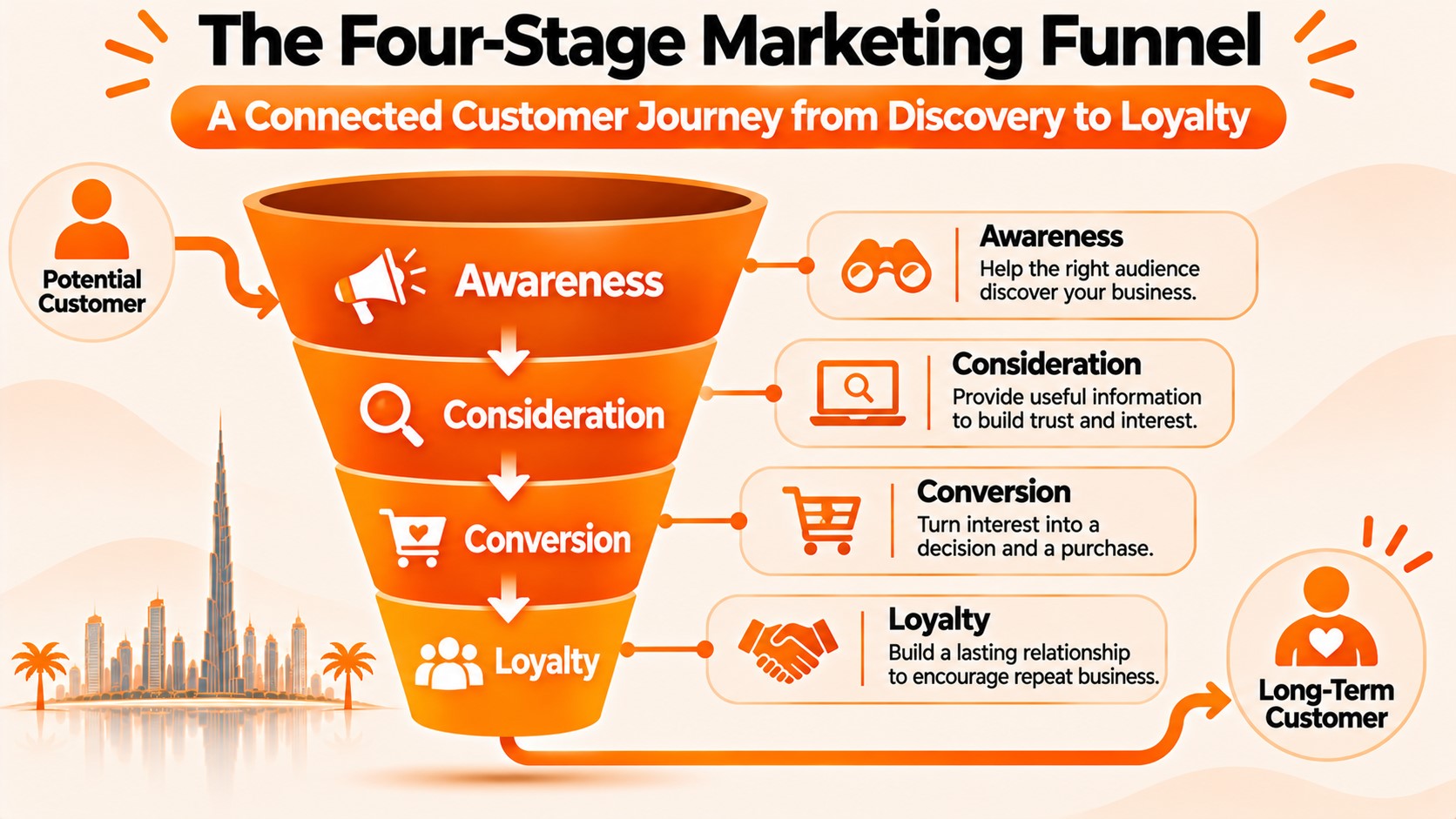
Top of funnel: Awareness
At the awareness stage, people are discovering a problem, learning about a category or becoming familiar with a brand. They may not be ready to contact a supplier. They need useful explanations, clear definitions and content that helps them understand their situation.
Useful formats include educational articles, short videos, social posts, podcasts, introductory webinars, search content and public relations. The goal is to earn relevant attention, not force a sales conversation too early.
An accounting firm, for example, could publish a guide to common bookkeeping mistakes and introduce its services to owners researching the problem.
Middle of funnel: Consideration
At the consideration stage, prospects understand their problem and are comparing possible solutions. They may review providers, explore service details, read case studies, compare product features or ask for recommendations.
Full funnel marketing supports this stage with comparison pages, webinars, customer stories, FAQs and demonstrations. Content should help people evaluate options honestly. B2B prospects may also need material to explain the business case internally, such as implementation outlines, service scope or pricing details.
Bottom of funnel: Decision and conversion
At the decision stage, a prospect is close to taking action but may still have unanswered questions. They need confidence that the offer fits their requirements and that the next step is straightforward.
Useful assets include consultation pages, demos, proposals, transparent pricing, trials and customer references. Reduce friction with visible contact options, clear next steps and prompt responses.
A conversion may be a qualified consultation request, a paid subscription or an online purchase. Define the action that matters before building reports.
Loyalty and advocacy: After the first sale
The journey continues after purchase. Onboarding, support, product education and useful follow-up help customers get value. Satisfied customers may renew, buy additional services or refer others.
A post-purchase plan should fit the business model. An ecommerce store may use replenishment reminders, while a B2B provider may use onboarding meetings and service reviews.
3. Match Content to Customer Intent
Publishing content without deciding which customer need it serves is a common mistake. A beginner's guide and a pricing page should not use the same message.
Use awareness content to explain problems and concepts. Use consideration content to compare approaches and demonstrate expertise. Use decision content to reduce uncertainty about choosing your business. Post-purchase content should help customers use the product or service successfully.
A practical content plan assigns educational blog posts, explainer videos and introductory guides to awareness; case studies, comparison articles and webinars to consideration; pricing information, demos and testimonials to decision; and onboarding resources, service updates and referral information to loyalty.
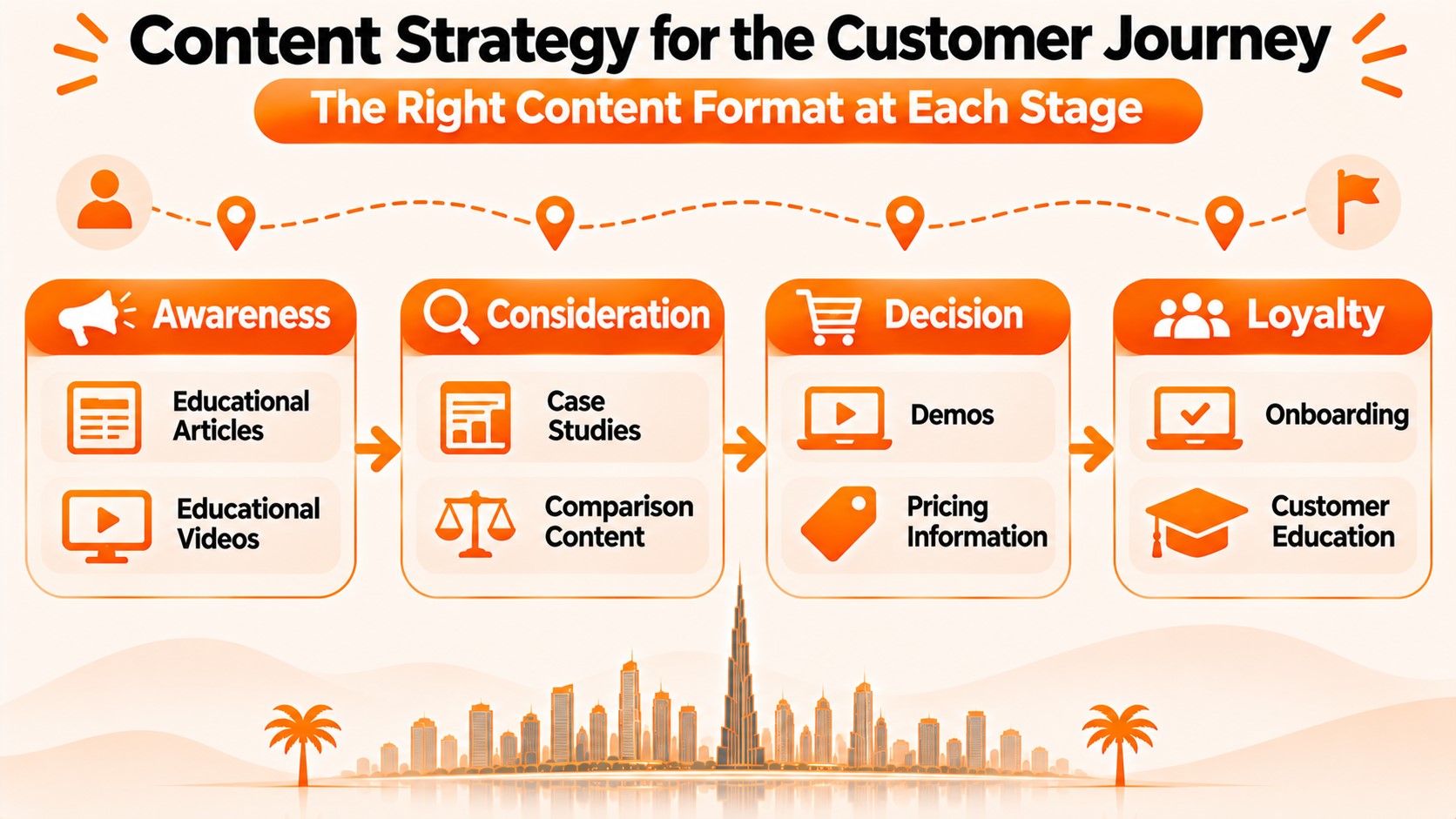
The same topic can serve different stages when the angle changes: a general article builds awareness, a comparison supports consideration, and a project scope page helps a buyer decide.
4. Connect Channels Instead of Running Them in Silos
A full-funnel approach works best when channels support one another. Search content attracts people with a question, landing pages convert some into enquiries, email provides more information, and sales follow-up helps qualified prospects decide.
Not every channel is necessary for every company. Choose based on customer behaviour, budget, sales cycle and the resources available to maintain it. A small professional services firm may prioritize search, referrals, its website and consistent follow-up.
BrandVexo's Growth Marketing Strategy framework explains how acquisition, activation, conversion, retention and revenue connect within a broader growth process. For businesses looking at the system as a whole, the Growth Strategy service is designed around connecting channels, conversion activity and measurement rather than treating each tactic as a separate project.
5. Build a Full-Funnel Marketing Plan
Start with the business outcome, then work backward through the customer journey. A plan should clarify who the business wants to reach, what those people need at each stage, what action should happen next and how the team will know whether the process is working.
Use this sequence to build a practical plan:
Define the business objective. Choose a specific outcome such as qualified pipeline, paid subscriptions, ecommerce revenue or repeat purchases. Set a timeframe and make sure the target is realistic for the business.
Describe the ideal customer. Identify the audience's needs, buying roles, budget considerations, common objections and the situations that trigger a search for a solution.
Map the journey. Document how customers discover the business, evaluate options, make decisions and experience the product or service after purchase. Include the channels and people involved.
Assign content and channels to each stage. Choose assets that answer the questions customers have at that point. Give every asset a clear purpose and next step.
Define handoffs and follow-up. Decide when a lead becomes sales-ready, who owns the next contact and what information must be recorded in the CRM.
Measure, learn and improve. Review performance by stage, identify the largest drop-off and test changes that address the cause rather than changing everything at once.
Keep the plan practical and revisit it regularly with marketing and sales.
6. Measure the Funnel With the Right Metrics
The metrics you track should reflect the job of each stage. This is how full funnel marketing becomes measurable rather than just a diagram. Awareness metrics show whether relevant people are discovering the brand. Consideration metrics show whether those people are engaging with useful information. Conversion metrics show whether qualified prospects take the desired action. Retention metrics show whether customers continue to receive value.
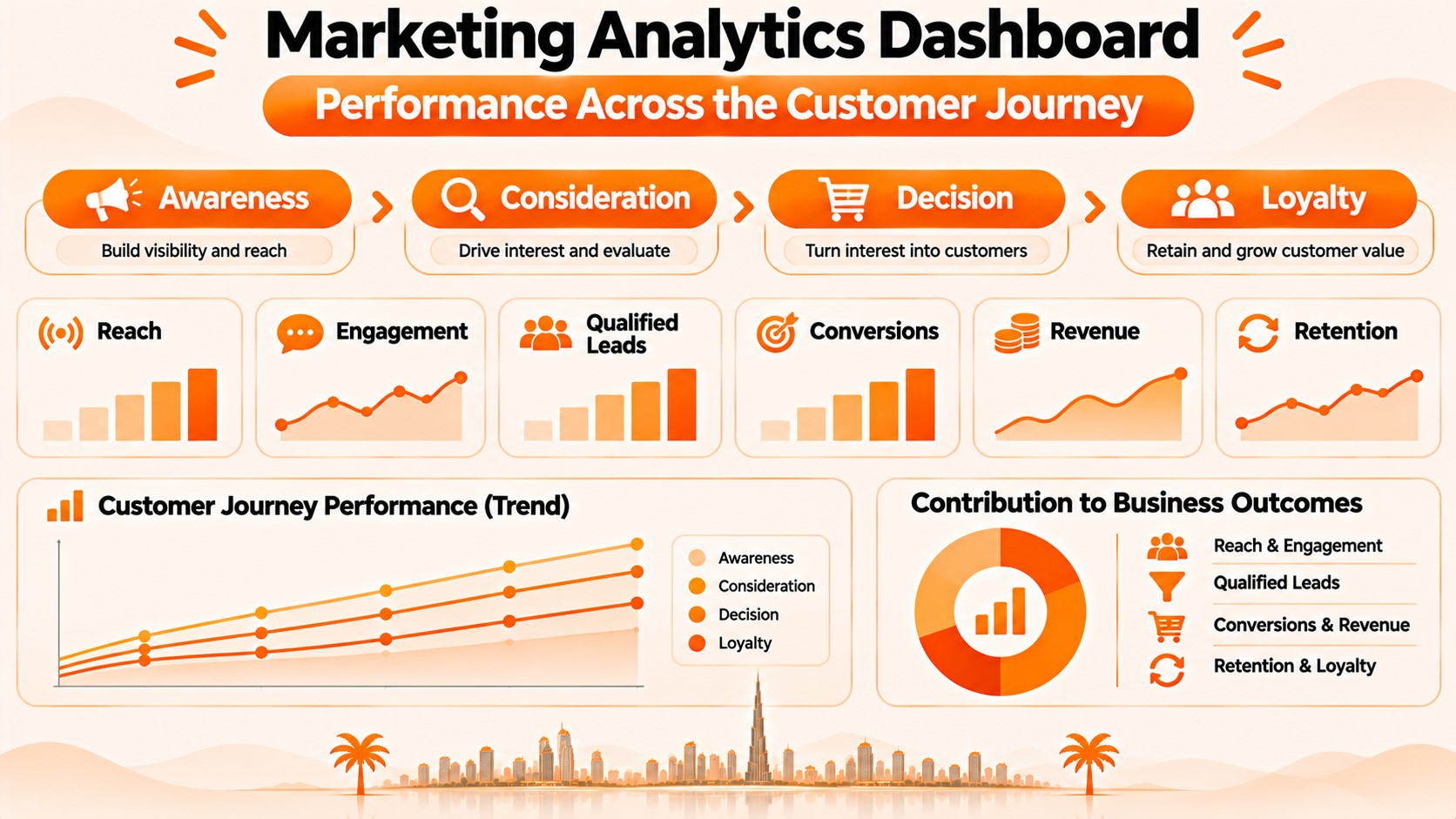
Examples of useful measures include:
Awareness: relevant reach, impressions, new users, organic search visibility and engaged visits.
Consideration: return visits, content engagement, qualified leads, comparison-page activity and demo requests.
Decision: lead-to-customer conversion, proposal win rate, sales cycle length, cost per acquisition and revenue.
Loyalty: renewal rate, repeat purchase rate, churn, customer lifetime value and referral activity.
Do not treat every metric as equally important. Impressions do not prove profitable customer acquisition, and a low cost per lead is not positive if leads are poorly qualified.
Google Analytics 4 includes Funnel exploration, which lets teams define journey steps and examine where users progress or drop out. Its documentation explains how steps can be based on events or dimension values, with options such as segment comparisons and breakdowns. Read the GA4 Funnel exploration documentation when setting up an analysis. The report is only as useful as the events and definitions configured in the property.
For paid campaigns, connect platform reporting to business outcomes. Google's conversion tracking guidance explains how advertisers can measure website actions, phone calls, app activity and offline conversions. If a sale happens after a phone call or CRM process, consider how that outcome is recorded rather than measuring only the initial click.
7. Common Full-Funnel Marketing Mistakes
A funnel can look complete on a presentation slide and still fail in practice. The problem is usually a gap between what the business publishes, what customers need and what the team measures.
Watch for these recurring issues:
Creating awareness content that attracts a broad audience but has little relevance to the actual offer.
Asking new visitors to book a sales call before giving them enough information to understand the value.
Sending the same email sequence to every contact regardless of interest or buying stage.
Treating lead volume as proof of success without checking qualification and sales outcomes.
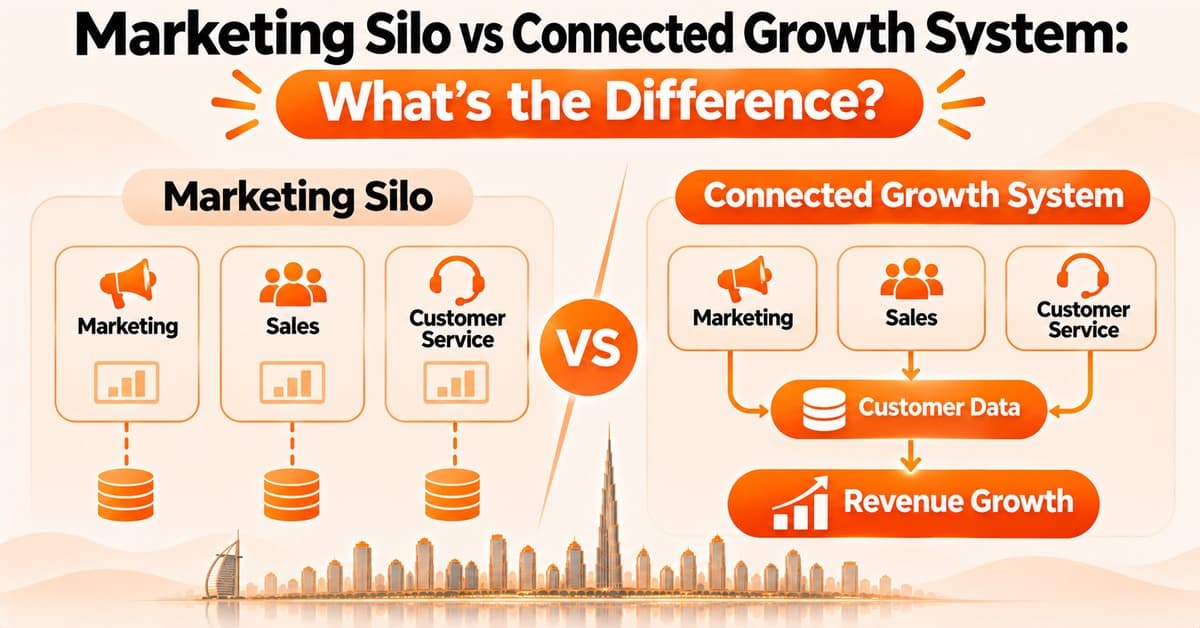
Running channels independently, with inconsistent messaging and no shared reporting.
Ignoring onboarding, retention and customer feedback after the first purchase.
Customers may arrive through referrals, search or several interactions. Use the funnel to organize work while allowing for different entry points.
8. Improve the Funnel Through Continuous Testing
Once the first version is in place, focus on the stage with the clearest problem. If relevant people are not finding the business, improve reach and discovery. If visitors arrive but do not engage, review the page, message and offer. If qualified leads do not close, examine sales conversations, proof, pricing and response times.
A practical test cycle can stay simple:
Identify one funnel stage with a measurable problem.
Change one important element, such as the message, page layout or follow-up timing.
Compare the result with the previous baseline and keep the change only if it improves a meaningful outcome.
Test one meaningful change at a time where possible. For example, a business could compare two landing-page headlines, simplify an enquiry form or add a case study near a decision-stage call to action. Define the success measure before the test and give it enough time and data to support a useful conclusion.
Record what changed and what happened afterward. Avoid declaring a winner based on too few conversions or a short test period. Full funnel marketing improves as the business learns; review the journey with sales and customer support so marketing promises match the actual customer experience.
Conclusion
Full funnel marketing helps businesses connect awareness, consideration, conversion and customer retention into one coordinated growth process. By understanding what customers need at each stage, choosing relevant content and channels, agreeing on clear sales handoffs and measuring outcomes consistently, founders and marketers can reduce disconnected activity and make better decisions. The funnel should remain a practical model rather than a rigid sequence, because real buyers revisit information, compare options and enter through different channels. Start with the customer journey you can observe today, improve the biggest gap and keep refining the system as your business grows.
Want to connect your marketing activity into a clearer growth system? Explore BrandVexo's Growth Strategy service to review your channels, customer journey, conversion process and measurement approach. You can also read BrandVexo's marketing funnel metrics guide to understand what to track at each stage.
Frequently Asked Questions
What does full funnel marketing mean?
Full funnel marketing is an approach that plans and connects marketing activity across the customer journey, from awareness and consideration to conversion and post-purchase engagement.
What are the main stages of a marketing funnel?
The common stages are awareness, consideration and conversion. Many businesses also include loyalty and advocacy to account for what happens after the first purchase.
Why is full funnel marketing important?
It helps teams coordinate messaging, content, channels and measurement. This makes it easier to identify gaps in the customer journey and understand how marketing contributes to business outcomes.
What is the difference between full-funnel and traditional marketing?
Traditional campaigns may focus on a single channel or outcome. Full-funnel marketing considers how different activities work together across the customer journey and after the sale.
Which channels work best for a full-funnel strategy?
There is no universal channel mix. SEO, paid search, social media, email, content, events, referrals and sales outreach can all play a role depending on the audience, offer and buying process.
How do you measure full-funnel marketing?
Set metrics for each stage. Track relevant reach and traffic for awareness, engagement and qualified leads for consideration, customers and revenue for conversion, and retention or repeat purchases after the sale.
Is a marketing funnel always linear?
No. People may revisit content, compare providers, ask for advice or enter through a referral at different points. The funnel is a planning tool, not a strict description of every buyer's behaviour.
How can a small business start using full-funnel marketing?
Start with one audience and one important business goal. Map the steps customers take, create useful content for the main stages, define how leads are followed up and measure whether the process creates customers. Expand the system as the business learns what works.
Free growth plan
Ready to grow your business?
Reading is a start — now let's build it. Tell us where you want to grow and a senior strategist will map the fastest, most profitable way to get there. Free, no obligation.
Discussion
Join the conversation
Be the first to comment. Comments are reviewed before they appear, so yours won't show up instantly — but we read every one.
Leave a comment